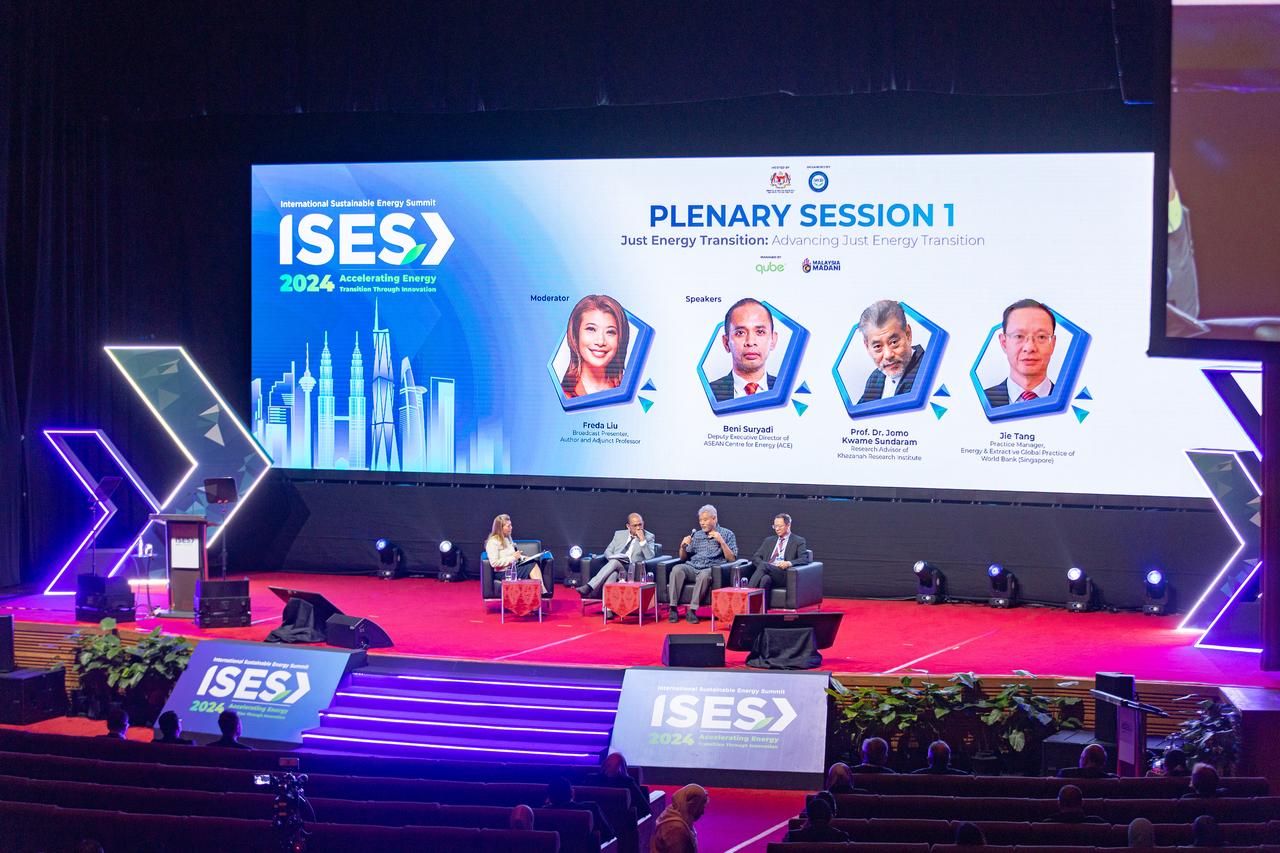
The 2024 International Sustainable Energy Summit (ISES) in Kuala Lumpur, organized by PETRA and SEDA, gathers over 5,000 global participants to advance sustainable energy solutions. (Photo: ISES)
This article expands on the discussions from the International Sustainable Energy Summit (ISES) in Kuala Lumpur Malaysia from August 20 to 21, 2024, focusing on on Malaysia’s current status and future planning around grid modernization and new energy sources.
Grid modernization: Renewable energy utilization empowered by a stable and flexible grid
Variable renewable energy’s (VRE) nature presents challenges for grid stability. For Malaysia, electricity generation from VRE has seen the fastest growth in the past decade compared to that from dispatchable renewable energy and fossil fuels (Graph 1).
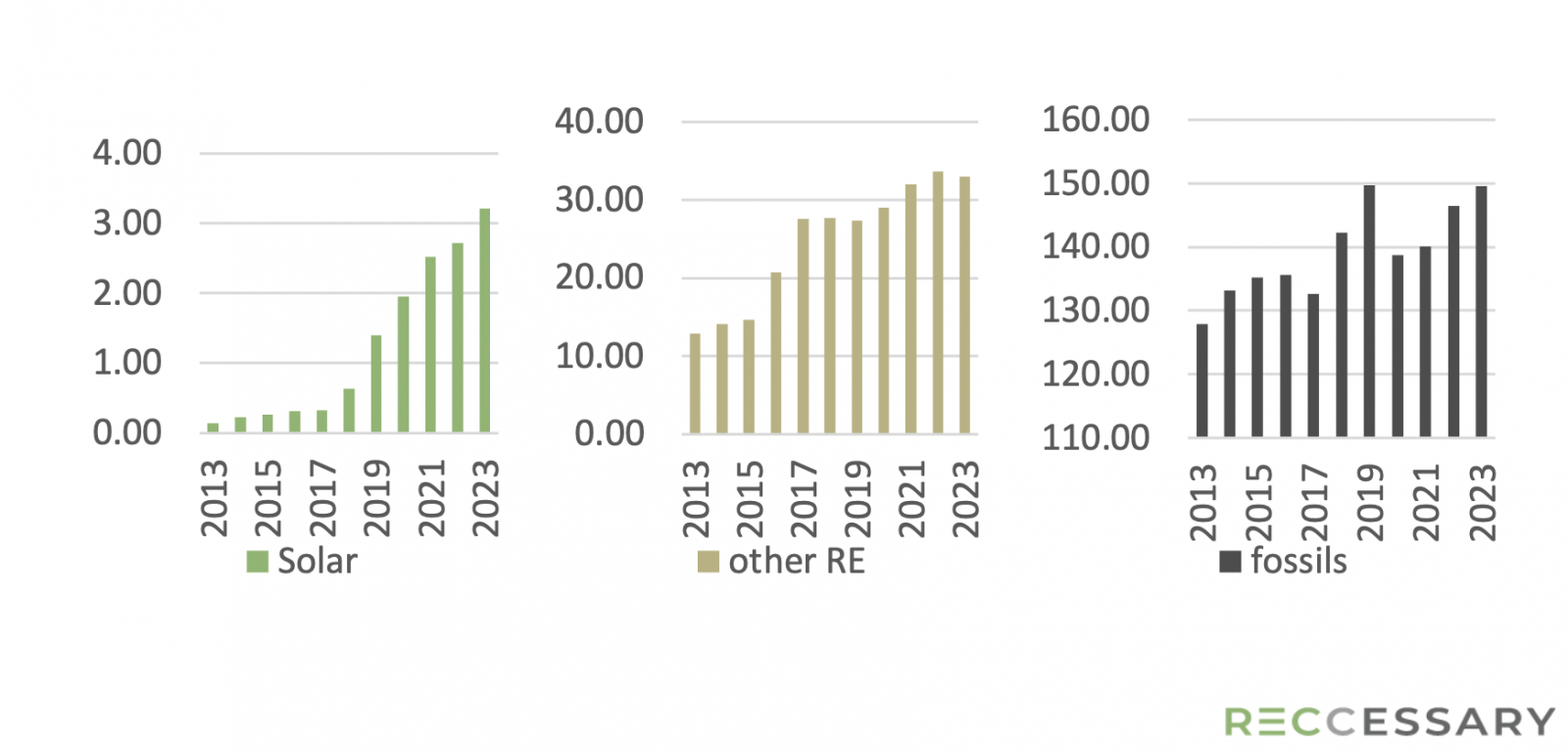
Graph 1. Electricity generation by energy sources (TWh)
As solar generation take up greater proportion in the energy mix to meet national renewable energy target, gird modernization becomes a necessity. While currently solar only made up 1.7% of Malaysia’s total electricity generation in 2023, the Malaysian government has designated solar to provide 35% of the energy generation in 2050. A boom in solar generation will assert great pressure on the grid. As can be seen from Vietnam’s frequent power outages last year, grid stability can be easily compromised in the events of hydropower generation shortfall due to a dry season or exception periodic electricity demand from the heat in the equatorial region.
Additionally, the Internation Energy Agency has identified 20% to 30% VRE penetration as the critical point of grid flexibility upgrade . In other words, the current 3 GW installed capacity may be within the grid capacity but as solar’s role increases in Malaysia’s power generation, it is necessary that the grid can adopt to the intermittent nature of solar.
Grid modernization can be looked at through two lenses: stability and flexibility. On increasing grid stability, battery storage has been highlighted on the panel as a crucial technology to provide grid stability and fully utilize solar generation. Just as Germany uses storage to leverage 60% of its solar, Southeast Asian countries like Malysia and Vietnam that are seeing unprecedented solar capacity growth can adopt the same grid ancillary services design.
On adding flexibility, demand response was brought up as a solution for consumers to help alleviate grid burden at peak hours. Likewise, as Malaysia opens up for third party access, the prospect of independent power producers to act as distributed energy resources (DERs) is added to the formula. But it is noted that for DERs to play a role in the grid, a transparent and efficient energy management system is of paramount significance. Several speakers stressed the importance of AI integration to interpret big data in the management of the distribution and transmission network. On this front, one of the guest speakers reflected on the difficulty in data collection and management in Malaysia at this stage.
Is it bioenergy’s time to shine yet?

As the world's second-largest palm oil producer, Malaysia is working to convert industry waste into sustainable energy. (Photo: iStock)
Having the world’s second largest palm oil industry, Malaysia aims to tap into the potential of converting the residual wastes of the industry into sustainable energy. At the moment, bioenergy only makes up 3% of all renewable energy installed capacity and generation in the country. The reasons for this slow development is multifold.
On the regulatory side, historically bioenergy has been overshadowed by solar project programs like LSS. While the minimum feed-in tariffs (FIT) for biogas increased by 26% from 2022 to 2023 and remains at the new rate in 2024, biomass FIT did not adjust upwardly in the past five years.
|
| Solar (max) Don't fall behind the market Carbon prices, CBAM rules and energy policy shift weekly. Subscribe to unlock this article and all of RECCESSARY's market intelligence. BEST VALUE · SAVE US$19.80 ANNUAL US$8.25 /mo US$9.90 US$99 billed annually · 2 months free Start your 14-day free trial Unlimited article access Green power & carbon price data Members-only newsletter Report downloads New readers enjoy a 14-day free trial · Already a member? Log in Can Vietnam’s impressive renewable energy buildout satisfy corporate demand? ASEAN's energy evolution: Market liberalization vs. state control
Back |