.JPG)
Hsiao I-chun (蕭義俊), Google’s senior lead for energy and infrastructure in Asia-Pacific. (Photo:Daisy Chuang)
Global digitalization is driving a surge in demand for AI data centers, which have become major sources of energy consumption and carbon emissions. With the global energy transition accelerating and companies under mounting pressure to meet net-zero goals, decarbonizing data centers has become an urgent task. This series, “Race to green data centers,” explores how businesses, technologies, and markets are shaping solutions and charting the path toward sustainable digital infrastructure.
Fueled by the rapid growth of AI, global cloud service giants such as AWS, Microsoft, and Meta are planning to build large-scale AI data centers in Taiwan. NVIDIA has also announced a partnership with Foxconn and TSMC to build a major facility in Taiwan, underscoring the pace of global data center expansion.
RECCESSARY interviewed Hsiao I-chun (蕭義俊), Google’s senior lead for energy and infrastructure in Asia-Pacific, who oversees the company’s data center in Changhua, to discuss green power development in data centers and the challenges facing major tech companies from a perspective of energy use.
Data centers drive high power use and water stress, prompting tighter government oversight
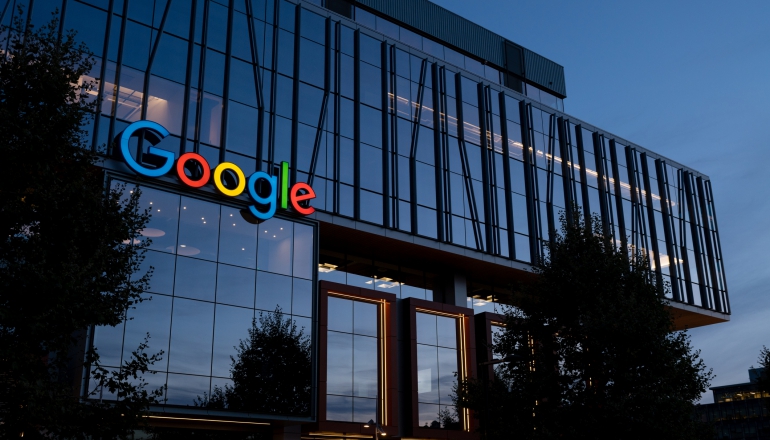
Google’s data center in Changhua Coastal Industrial Park, established in 2013, is the company’s largest facility in Asia. Since 2022, it has relied entirely on industrial water. To meet its climate targets, Google has also become one of the most active buyers of diverse green energy sources in Taiwan.
With the rapid growth of AI, electricity consumption from data centers and related infrastructure is expected to rise further. Hsiao noted that Google is seeking to improve efficiency on three fronts—its Gemini AI model, TPU chips, and infrastructure—to reduce AI’s overall impact and resource demand.
In infrastructure, power usage effectiveness (PUE) is a key measure for data centers. According to Hsiao, Google has steadily reduced the PUE of its own facilities year by year. While the industry average stood at 1.58 in 2023, Google’s global data centers achieved an average of about 1.09 in 2024. Despite the subtropical climate in Changhua, its facility maintained an average PUE of around 1.12 over the past 12 months.