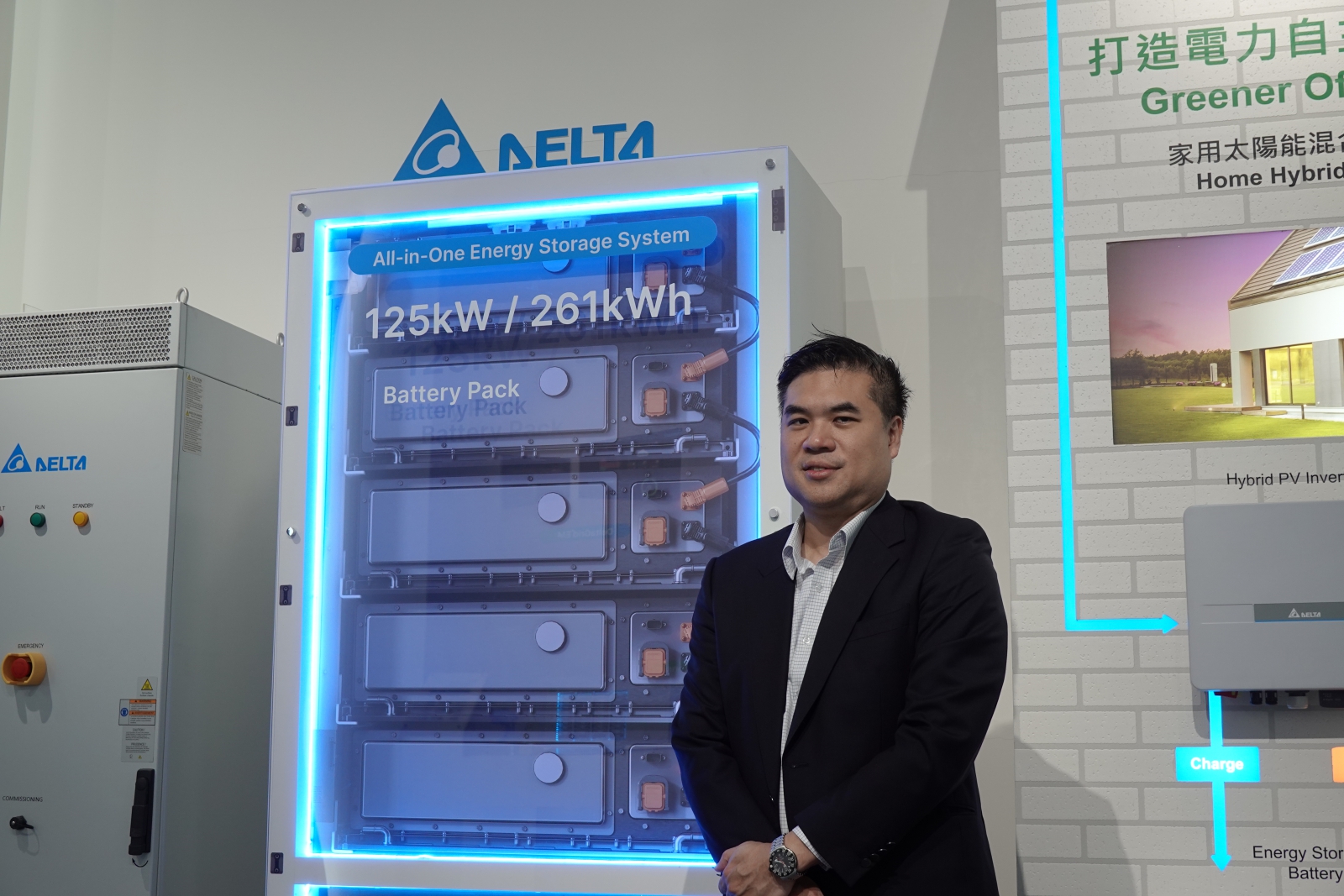
Jim Chen (陳治閔), vice general manager of Delta Electronics.
Global digitalization is driving a surge in demand for AI data centers, which have become major sources of energy consumption and carbon emissions. With the global energy transition accelerating and companies under mounting pressure to meet net-zero goals, decarbonizing data centers has become an urgent task. This series, “Race to green data centers,” explores how businesses, technologies, and markets are shaping solutions and charting the path toward sustainable digital infrastructure.
As AI data centers drive up energy demand, the main challenge is not GPUs but securing power, said Jim Chen (陳治閔), vice general manager of Delta Electronics. In the U.S., it can take at least five years to obtain feeder line approvals, creating power shortage risks. In Taiwan, constraints come from limited renewable supply and a lack of baseload low-carbon energy. As a result, companies are expected to take on greater responsibility for their own power needs, with microgrids based on co-location expected to become a key area of development.
AI data centers prioritize energy independence, driving demand for microgrids
Demand for renewable energy among major corporations is growing more urgent. Beyond committing to RE100, many are now moving toward 24/7 low-carbon energy (CFE), which promotes round-the-clock use of zero-carbon power. More than 130 organizations worldwide, including Google and Microsoft, have joined the initiative.
“24/7 will reshape the entire grid structure,” said Chen. As data centers consume more energy, the challenge is not only access to green and low-carbon power but also to basis feeder supply. In the U.S., the three largest data center hubs—Texas, California, and Virginia—face an average feeder approval process of five years, with no guarantee of eventual connection.