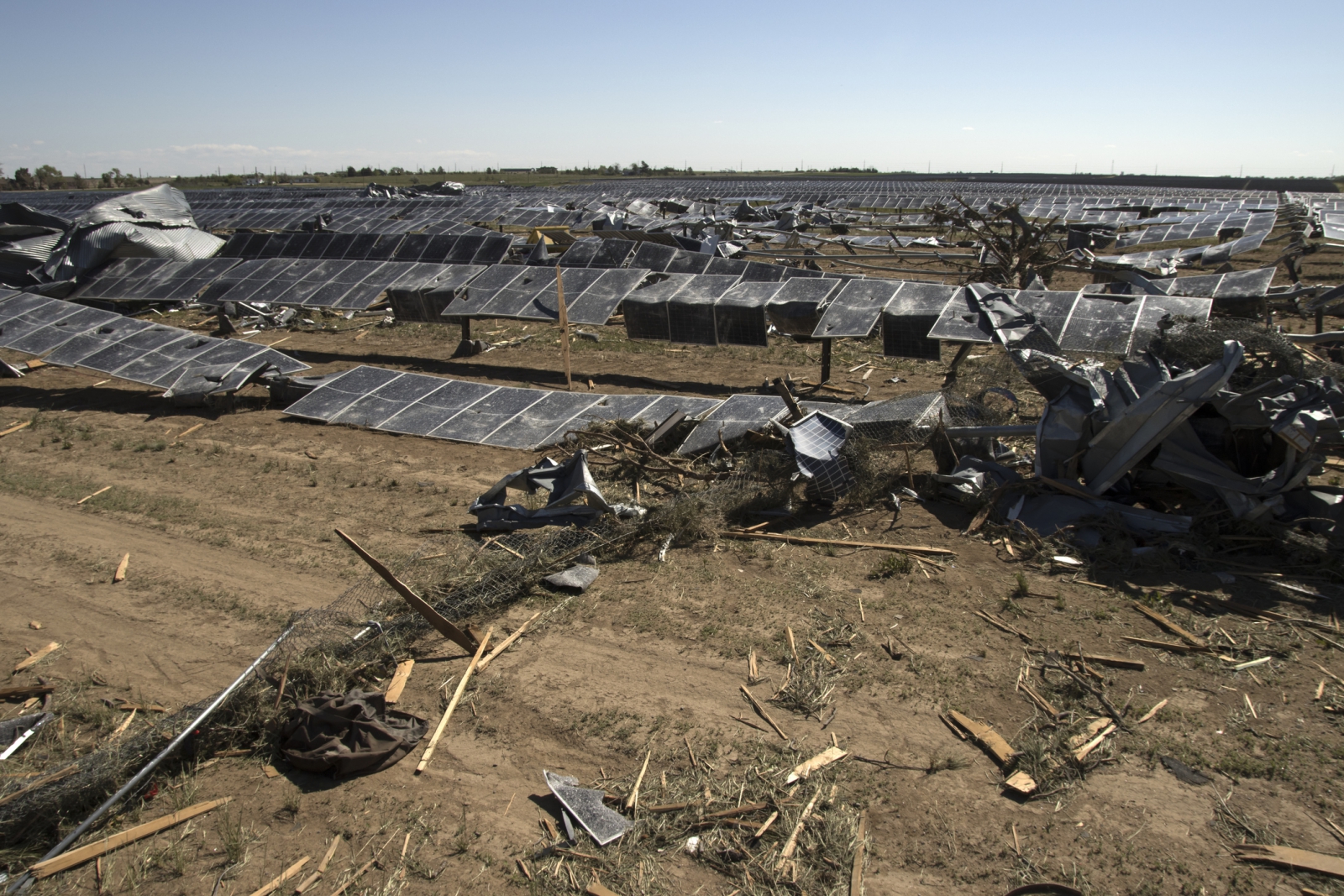
Ground-mounted solar panels in Colorado damaged by a tornado. (Photo: iStock)
Several solar farms in Taiwan suffered severe damage from typhoons in July and August, raising concerns over waste management and panel recycling. Earlier this year, Europe experienced a wind drought that cut wind power generation and dealt a blow to German energy giant RWE’s first-half earnings. Both cases underscore how renewable energy projects are increasingly exposed to the impacts of climate change, highlighting the need for companies to better diversify and manage climate-related risks.
Parametric insurance gains traction in renewables
The unpredictable nature of weather, coupled with construction and maintenance costs, makes it difficult for traditional insurers to accurately assess the risks of renewable energy projects. The complexity of emerging technologies adds another layer of uncertainty, often undermining project feasibility and dampening investor confidence. To address these challenges, some clean energy companies are turning to parametric, or index-based insurance as a potential solution.
Indian consultancy Mordor Intelligence predicts that the global renewable energy insurance market will grow to USD 27.24 billion by 2030. Parametric insurance is expected to lead the sector with a compound annual growth rate of 10.21%, driven by its ability to provide rapid payouts following non-damage business interruptions, helping companies maintain liquidity.
Traditional insurance determines payouts based on the actual losses incurred by the policyholder. In contrast, parametric insurance operates on a simpler model: coverage is triggered by specific measurable events such as earthquakes, typhoons, or floods. The payout is determined by parameters like seismic intensity, wind speed, or water depth. Once the agreed threshold is reached or exceeded, the insured party automatically qualifies for compensation. The advantages of parametric insurance include: