.jpg)
COP30 concluded on Nov. 22, widely referred to as “the Forest COP” for its focus on forests and conservation. (Photo: UN Climate Change - Kiara Worth)
This year’s COP30 brought the world’s climate spotlight to the Southern Hemisphere, as leaders gathered in Belém—a gateway city to the Amazon rainforest. With forest protection, climate finance, and updated Nationally Determined Contributions (NDCs) at the heart of the agenda, the summit also marked the 10th anniversary of the Paris Agreement, drawing global attention. RECCESSARY unpacks the key decisions and emerging trends from this landmark event.
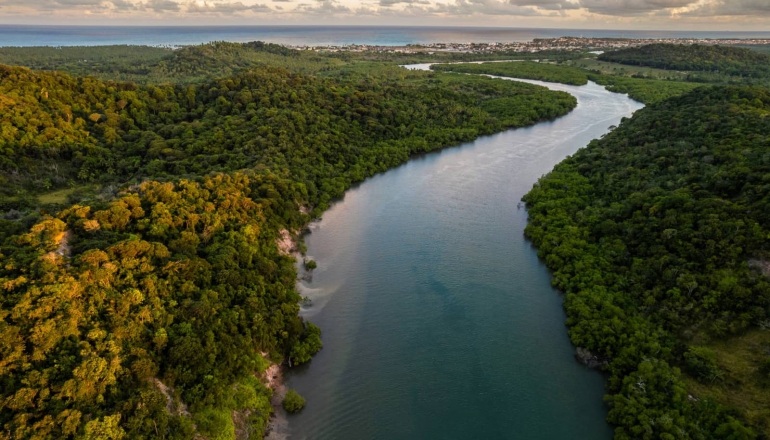
This year’s COP30 took place in Belém, Brazil, near the entrance to the Amazon rainforest. Tropical forests and nature conservation were among the summit’s key themes, with nature-based solutions receiving particular attention. One of the most closely watched developments was the growing interest in biodiversity credits.
Several Taiwanese organizations took part in COP30 this year, including Delta Electronics, Cathay Financial Holdings, and the National Taiwan University. Representatives from all three spoke at the summit.
Sophia Cheng (程淑芬), CIO at Cathay Financial Holdings, highlighted that global investment in nature finance has exceeded USD 100 billion. She noted that many viable models are ready to be scaled and replicated, with the private sector expected to play a key role in driving that momentum.
The choice of Belém, Brazil, as the host city for COP30 carried strong symbolic meaning, according to Wim Chang (張楊乾), executive director of the Delta Electronics Foundation, who joined the summit and was interviewed remotely by RECCESSARY.
He noted that the Amazon rainforest, often called the “lungs of the Earth,” is one of the regions most directly threatened by climate change. As parts of the rainforest gradually shift toward savanna-like conditions, the impact is being felt not only in local agriculture and Indigenous communities, but also in the potential global consequences. Scientists warn that dying trees in the Amazon could release vast amounts of carbon dioxide, further accelerating global warming.