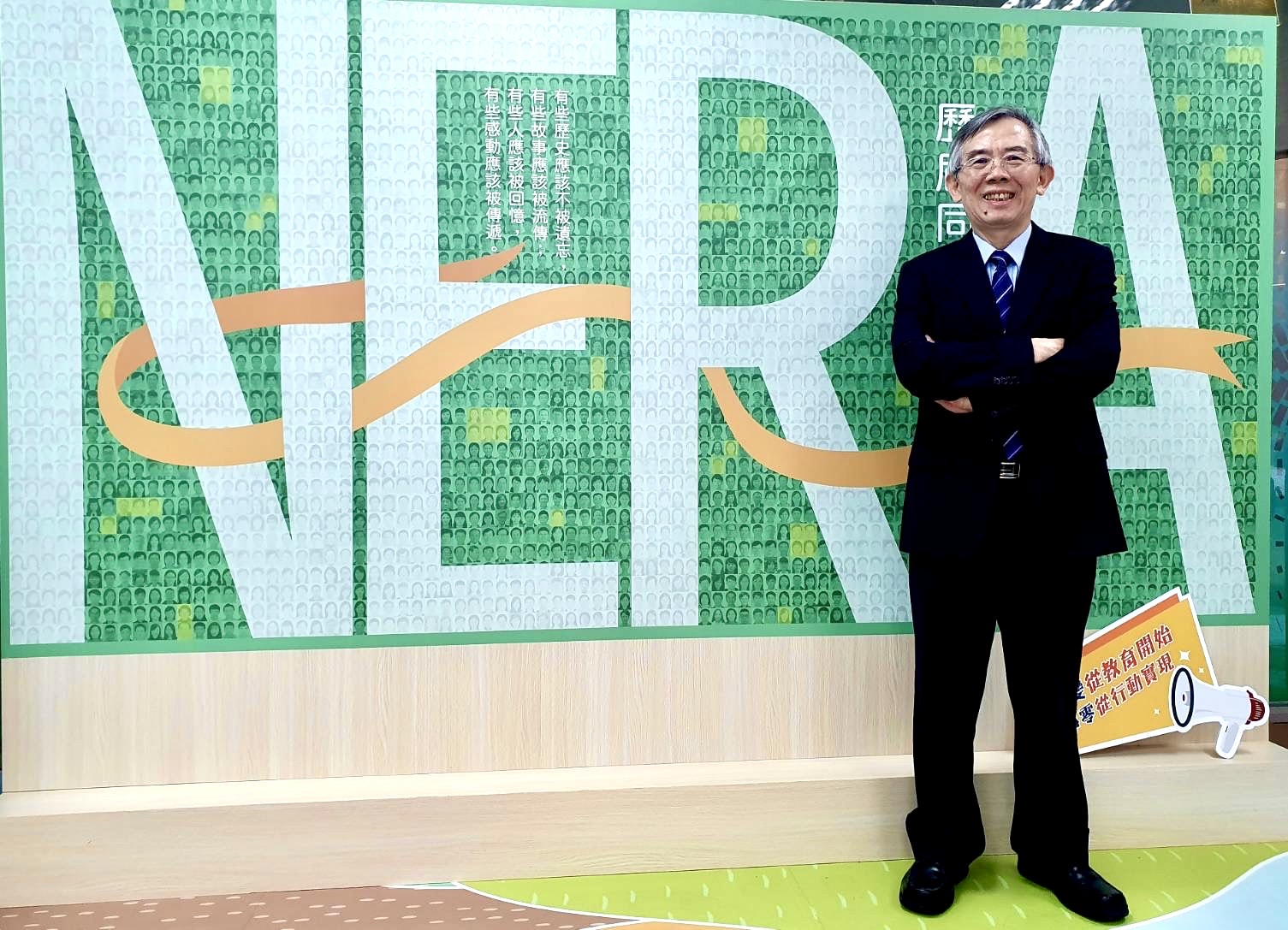
National Environmental Research Academy President Chang Shuenn-chin said expanding access to green education is key to narrowing knowledge gaps. (Photo: Daisy Chuang)
Since the government unveiled its 2050 net zero roadmap in 2022 and announced plans to introduce carbon fees, a growing number of training programs focused on net zero, carbon markets, and sustainability leadership have emerged in Taiwan.
Yet the quality of these programs varies widely. Some have been linked to misleading claims or even fraud, while others charge tuition fees of more than USD 12,000. Despite the growing number of courses, many have done little to address the shortage of green talent facing businesses.
In response to calls from lawmakers, government agencies and universities have begun building more credible training pathways for green talent. Since 2025, the Ministry of Environment (MOENV) has worked with universities to establish the Net Zero Green Talent Alliance, with participating institutions expanding from 28 to 37. Meanwhile, the Taiwan Carbon Solution Exchange (TCX) has partnered with the British Standards Institution (BSI) to offer training programs focused on international standards, carbon management, and climate policies, helping address Taiwan’s shortage of more than 30,000 green professionals.
Unlock the full article to explore three key takeaways:
- Carbon fees and CBAM are driving demand for green talent. The Ministry of Environment has partnered with 37 universities to help address a talent shortage of more than 30,000 workers.
- The Taiwan Carbon Solution Exchange and BSI have launched training programs on ISO standards, CBAM, and nature-based carbon removals to strengthen companies’ carbon management capabilities.
- Green education is evolving from basic awareness to advanced interdisciplinary training, with the circular economy, climate adaptation, and AI emerging as key focus areas.