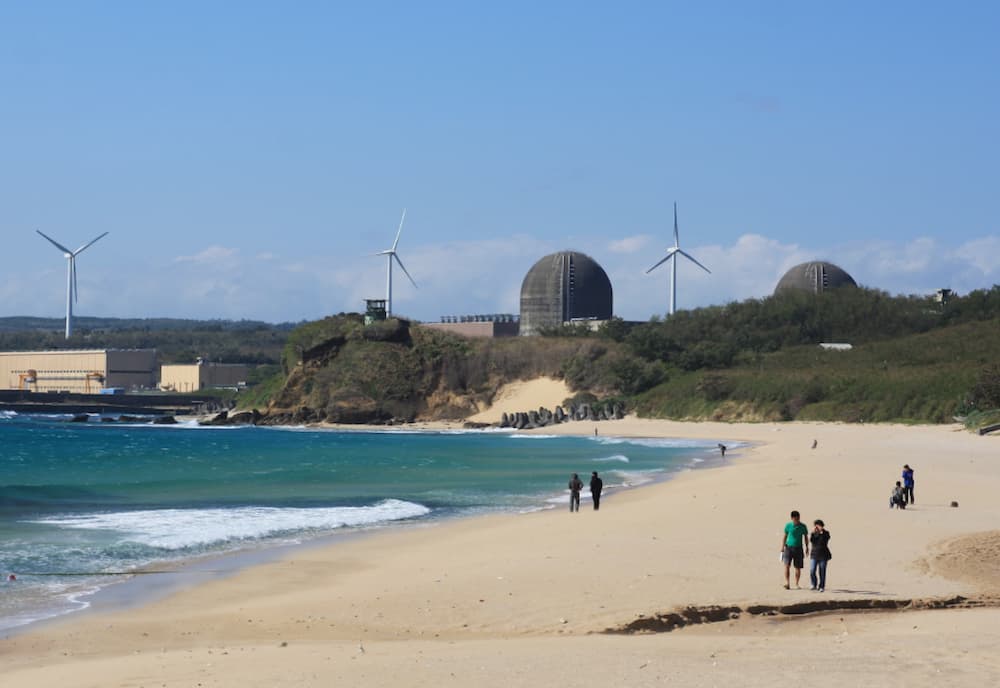
Taiwan's Maanshan Nuclear Power Plant (NPP3) Unit 2 was officially shut down on May 17. A referendum on Aug. 23 will play a decisive role in determining whether the country continues to use nuclear power. (Photo: Wikimedia Commons)
Unit 2 of the Maanshan Nuclear Power Plant (NPP3) in Pingtung County, Taiwan’s last operating nuclear reactor, was decommissioned on May 17, marking the beginning of the country’s nuclear-free era. Just three days later, however, the Legislative Yuan approved a proposal for a referendum to restarting the plant, scheduled for Aug. 23, giving its future a new twist.
Japan’s Fukushima nuclear accident in 2011 sparked worldwide opposition to nuclear power, and Taiwan was no exception. In recent years, however, the rapid growth of AI and the push for net-zero emissions have driven up demand for electricity, putting nuclear power back in the spotlight.
Regarding the nuclear power referendum, which asks “whether NPP3 should continue operating if approved by regulators as safe,” RECCESSARY outlines four key points of public concern to explain both sides of the debate.
Question 1: Can Taiwan achieve net-zero emissions without nuclear power?
- Proponents: Taiwan needs nuclear power to supply low-carbon, stable electricity, especially in the face of carbon tariffs.
- Opponents: A nuclear-free policy does not mean power shortages. Taiwan is earthquake-prone, densely populated, and still lacks a solution for nuclear waste, making it unsuitable for nuclear development.
Amid the AI boom, Taiwan’s rising energy consumption has drawn growing attention. Supporters of restarting nuclear point to delays in renewable energy development, arguing that stable, low-carbon electricity is essential to achieve the 2050 net-zero goal. Opponents counter that the nuclear power’s carbon footprint should be assessed over its entire life cycle, not just during generation.
In its 2023 National Electricity Supply and Demand Report, the Ministry of Economic Affairs projected an average annual growth rate of 2.8% in energy demand from 2024 to 2033. (Chart: RECCESSARY; Source: Ministry of Economic Affairs)
Yeh Tsung-kuang (葉宗洸), professor of the National Tsing Hua University’s Department of Engineering and System Science, said that while countries around the world are pursuing net-zero emissions, no one can guarantee the goal will be met by 2050. Therefore, many have designated nuclear power as a key energy option.
“Taiwan must have nuclear power,” Yeh said, noting that the country’s independent grid makes securing stable, low-carbon electricity the biggest challenge to achieving net-zero emissions. Renewable energy development has lagged behind, and under the government’s current plan, 80% of electricity would come from thermal power generation. Without extending nuclear power, he argued, meeting the target would be nearly impossible.
Taiwan must not only extend but also expand its use of nuclear power, Yeh said. If all four nuclear plants and their eight reactor units were restarted by 2030, they could supply at most 18% of the country’s electricity. With annual electricity demand growing by 2%, that share would fall to around 16%. This means low-carbon sources would still account for less than half of the total generation even when combined with renewable energy.