.jpg)
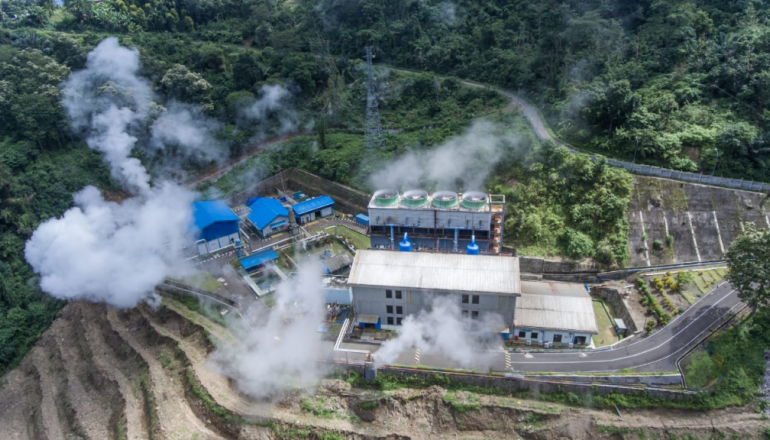
The Philippine government is drafting new policies as part of its effort to reclaim geothermal leadership. (Photo: iStock)
“When the government looks at geothermal, they see it as an old technology, which is why for the longest time, we haven’t been receiving any government support,” said Jay Joel Soriano, vice-president and head of strategy and planning at the Philippine power giant First Gen, on the sidelines of the Asia Clean Energy Summit.
The Philippines’ geothermal sector is indeed an “old” industry by global standards: development began in the 1970s, and the country has already tapped nearly 49% of its estimated geothermal potential. Growth has slowed in recent years, yet the Philippines still ranks as the world’s third-largest geothermal producer with 1,984 MW of installed capacity behind only the United States and Indonesia.
With rising power demand, high electricity prices, and pressure to strengthen energy security, geothermal is once again becoming a strategic asset. The government is now seeking to reclaim its leadership position, Energy Secretary Sharon Garin said in October at the Singapore International Energy Week 2025.
Policy reforms to reignite geothermal investments
Under the Philippine Energy Plan, total geothermal capacity is projected to reach 2,190 MW by the end of 2025, supported by new projects such as the 22 MW Tanawon plant, which began operations in August. The government’s third Green Energy Auction (GEA-3) awarded 30.887 MW of geothermal energy, well below the 100 MW target, underscoring the need for clearer incentives and stronger mechanisms to improve investor confidence.
The Philippine government is now drafting a new geothermal bill aimed at making the industry a safer bet for investors by tackling the high exploration costs and resource risks that have long deterred private investment.