.jpg)
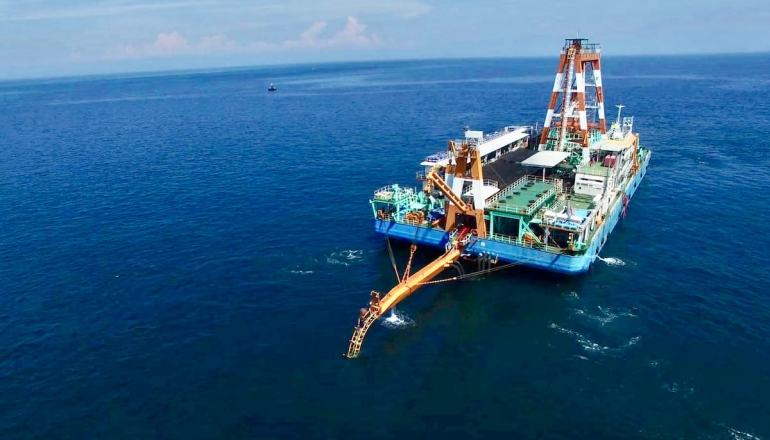
The subsea cable project connects Taiwan and Penghu to send surplus renewable energy back to the main island. (Photo: Ministry of Economic Affairs)
Taiwan, surrounded by water on all sides, operates an islanded power grid with no connections to neighboring countries. In the event of an energy crisis, it has no external support to fall back on. As a result, effective power management by the state-run utility Taipower has become essential. Yet as countries across the world deepen cross-border electricity cooperation to accelerate decarbonization, regional power grids are emerging as a major trend—one Taiwan can no longer afford to overlook.
In our special series Rewiring Asia, RECCESSARY explores regional grid developments around the world and assesses their relevance and feasibility for Taiwan, analyzing the key opportunities and challenges on the road ahead.
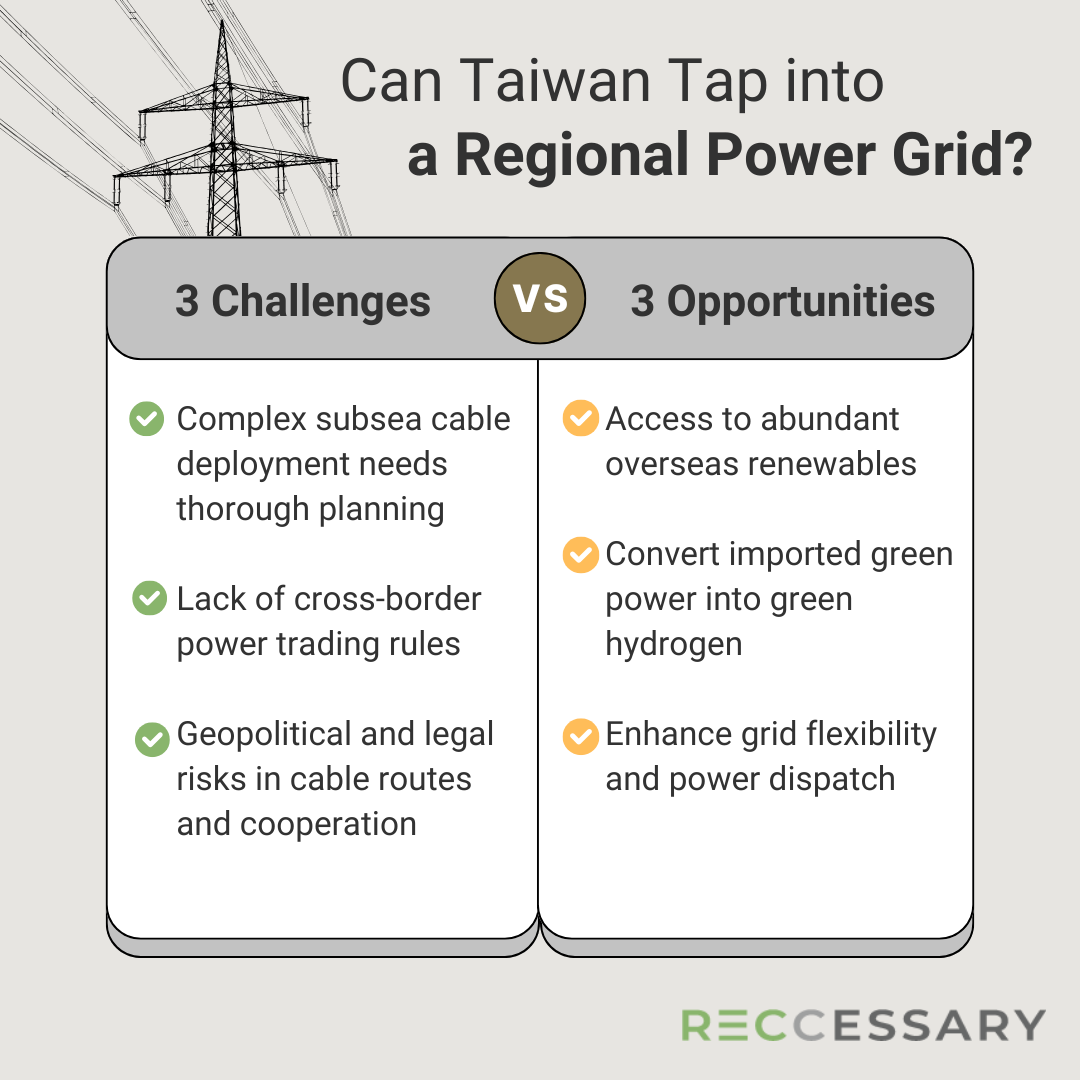
As Taiwan explores the feasibility of cross-border power imports from renewable-rich countries like the Philippines, the question remains: can the island realistically plug into a regional grid?
In this final installment of Rewiring Asia, RECCESSARY speaks with Walsin Lihwa—Taiwan’s first cable manufacturer to enter the subsea sector—and renewable energy supplier HDRE, which is expanding operations in the Philippines. Together, they unpack what it would take for Taiwan to join a regional grid—and what’s standing in the way.
Subsea grid links pose greater complexity than offshore wind
Walsin Lihwa has long seen opportunity in Taiwan’s offshore wind sector. In September 2023, the company partnered with global cable giant NKT HV Cables AB of Denmark to establish a joint venture—Walsin Energy Cable System (WECS)—focused on producing advanced submarine cables. With plans to lease land at Kaohsiung Port, the facility is scheduled to begin trial production of high-voltage export cables and medium-voltage AC submarine cables by late 2025, and commence full operations by 2027.