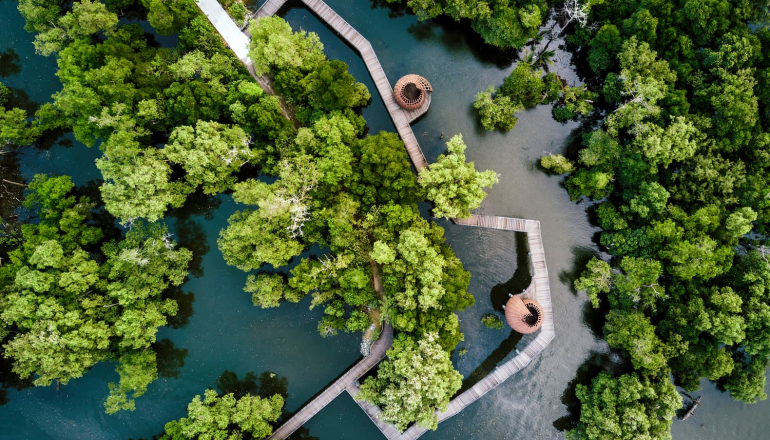
The country aims to bring thousands of hectares of mature mangroves into its new carbon market, but local communities are concerned about the consequences.
.jpg)
Watchara Kumpai used to work in the logging and tin mining industries, but now helps his community protect its mangroves in the south of Thailand (Image: Luke Duggleby)
Watchara Kumpai, 68, spends most of his time in boots, stomping through coastal mangrove forests in southern Thailand.
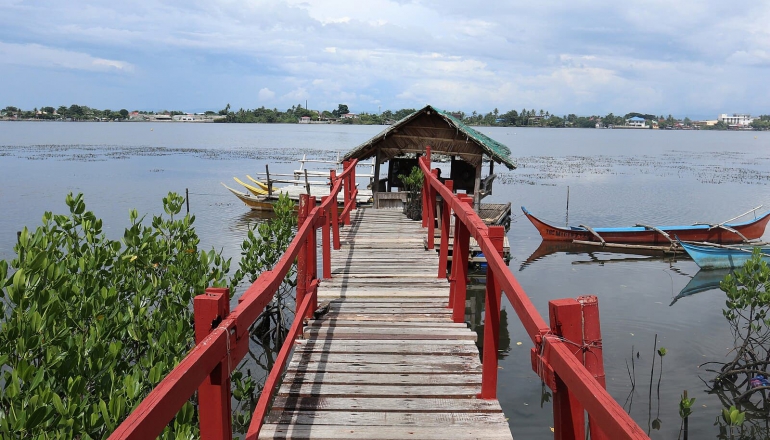
He used to work in the tin mining and logging industries that contributed to mangrove loss, until all concessions in mangrove areas were cancelled in 1991. Today, Watchara is dedicated to restoring and protecting these vital ecosystems in Ranong province, as Thailand aims to restore 500,000 rai (80,000 hectares) for carbon credits by 2031.
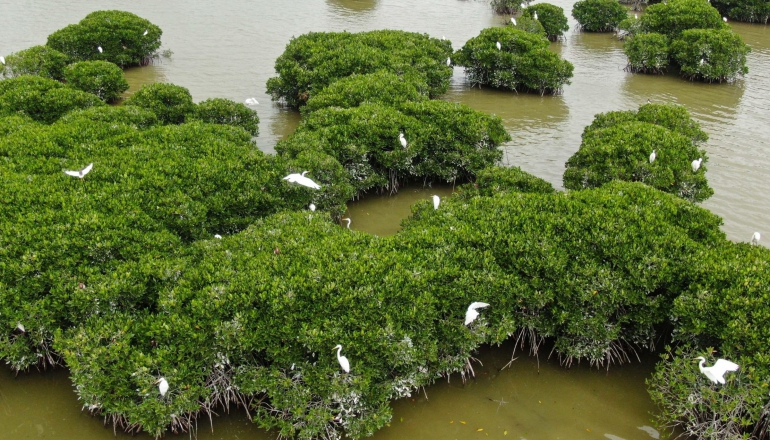
The Bang Rin sub-district, where Watchara lives, was among the first of 98 communities to join Thailand’s Coastal Community Mangrove for Carbon Credit programme in March 2023. His conservation group protects mangrove patches scattered around three villages in the sub-district, and has so far registered 1,881 rai (301 hectares) of mangrove to generate carbon credits.
“The project is good because we receive additional money for the communities to spend on mangrove restoration,” says Watchara.
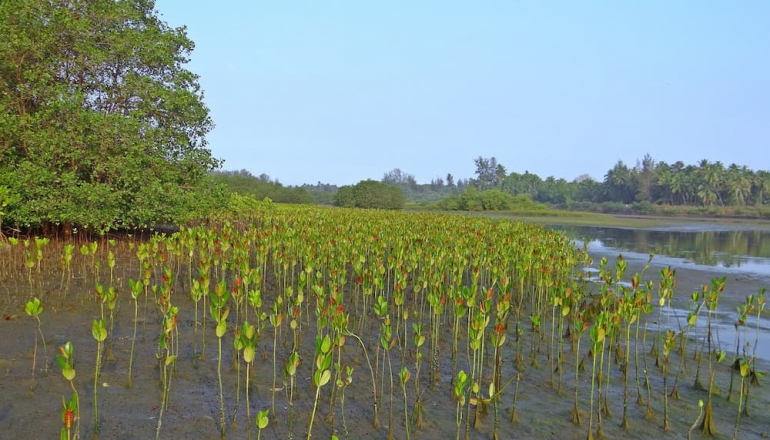
After 30 years of concessions for mining, charcoal production and shrimp farming, Watchara and the communities have filled the mud with saplings.
However, only 60km away, a deep-sea port is being planned on Thailand’s Andaman Sea coast. This will connect to an upcoming port on the Gulf of Thailand side via a six-lane motorway of 90km. Dubbed a “land bridge”, the project will allow cargo to bypass the Malacca Strait, and is the centrepiece of the government’s efforts to turn southern Thailand into an industrial hub. Some environmentalists are concerned that the peninsula and mangrove restoration projects will be co-opted by high-polluting companies as part of their greenwashing schemes.