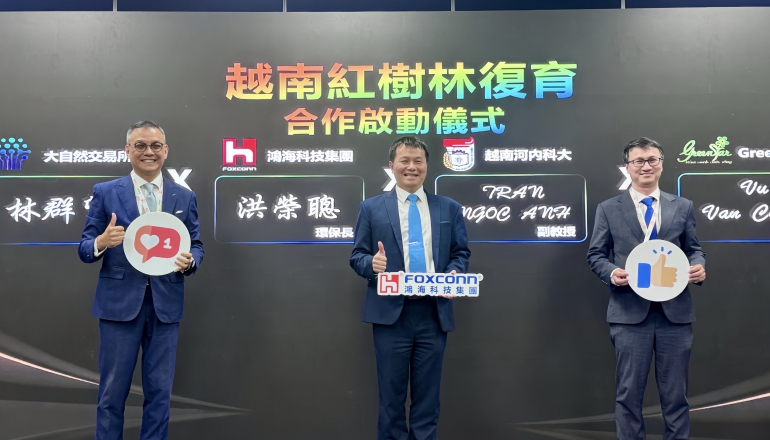
 Foxconn launches a supply chain-linked ecosystem restoration initiative, starting with mangroves in Vietnam. (Photo: Foxconn)
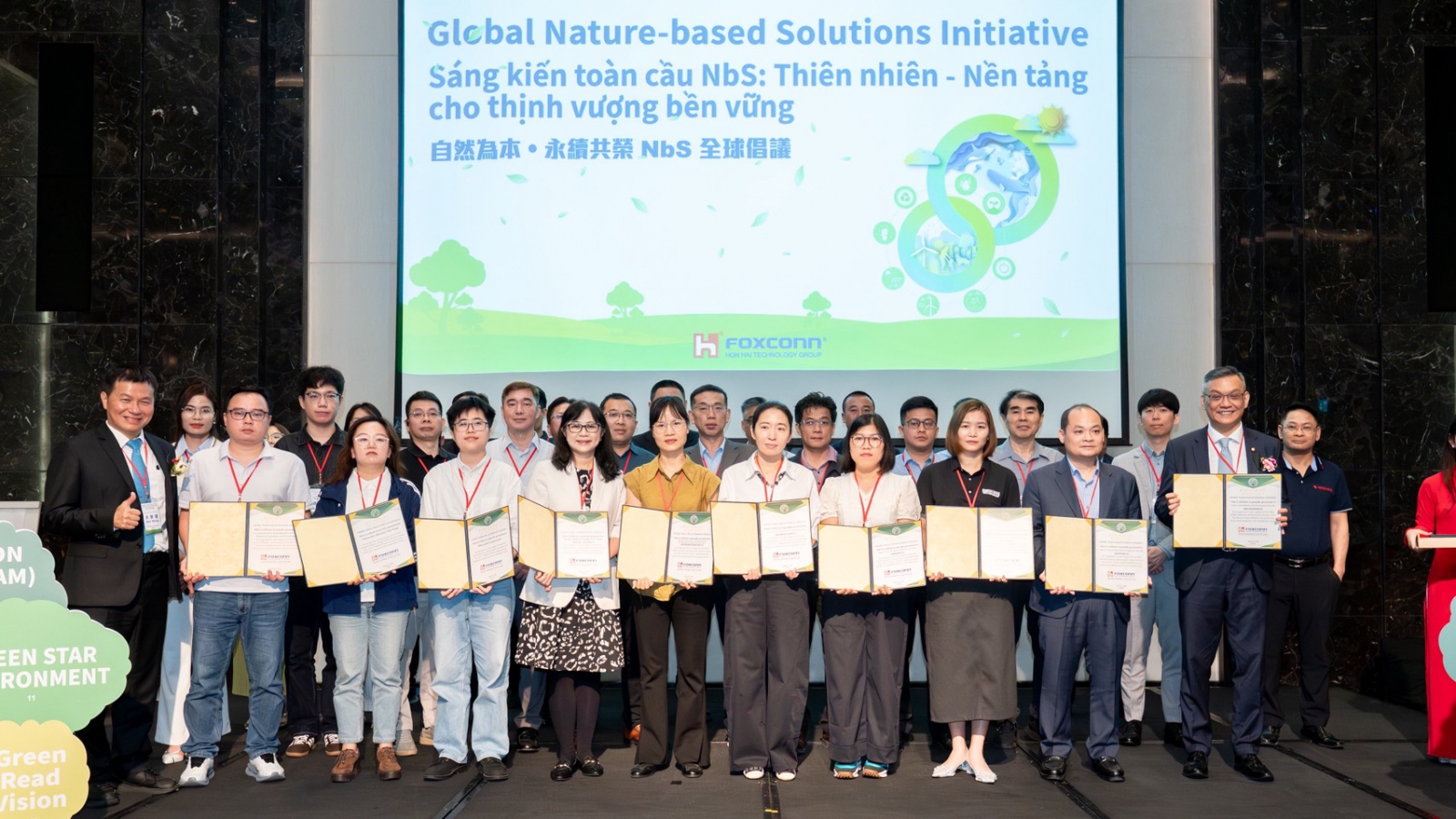
Foxconn Technology Group held its first Global Nature-based Solutions Summit in Hanoi on March 31, launching a cross-border initiative that calls on its supply chain partners to contribute to ecosystem restoration, with mangrove restoration in Vietnam as its first pilot. At the summit, Foxconn also joined hands with ten key supply chain partners to sign a joint NbS declaration.
Mangroves can serve as a buffer for water quality and coastal resilience. Foxconn said it intends the project to serve as a replicable model for supply chain partners seeking to link business operations with measurable ecological outcomes.
Foxconn launches first NbS project in Quang Ninh Province
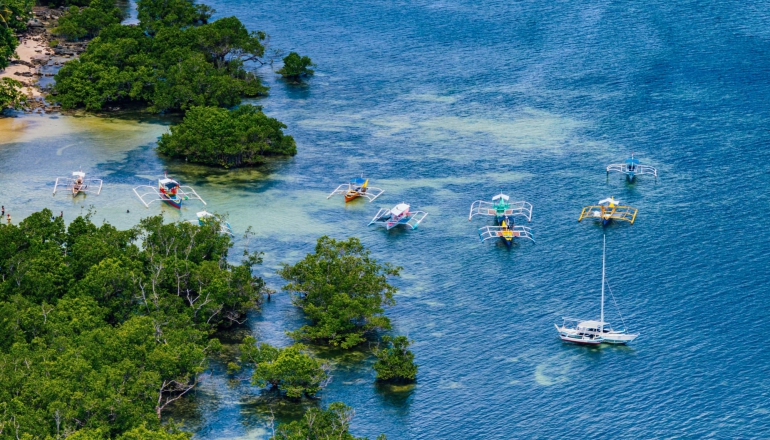
At the summit, Foxconn unveiled its first NbS project: a mangrove restoration and water compensation study in Quang Ninh Province, home to Ha Long Bay, a UNESCO World Heritage Site. The project will use remote sensing technology and AI-assisted monitoring to track restoration progress, measure carbon sequestration, and assess biodiversity outcomes.
The initiative follows a three-year roadmap through 2028. The first phase focuses on building GIS databases and deploying IoT sensors for baseline assessments and methodology development. By 2027, the project will expand to AI-driven dashboards, hydrological modeling, and field measurements of biomass, soil carbon, and greenhouse gas emissions.
In the final phase, Foxconn aims to automate monitoring, conduct annual carbon sink and biodiversity analyses, and publish results in peer-reviewed journals.
.jpg)
Foxconn's first NbS project unveiled in Quang Ninh: mangrove restoration and water compensation near Ha Long Bay. (Photo: iStock)
The program is being developed in partnership with the Quang Ninh provincial government, Vietnam National University’s University of Science (VNU-HUS), and Nature Trading Platform Co., Ltd.
The initiative marks the first time Foxconn has formally integrated nature-based solutions (NbS) into its long-term sustainability targets. Under updated 2026 targets, the company aims to carry out at least one environmental restoration activity annually in major production regions through 2030, with a global target of 80,000 participation hours per year.
Supply chain integration and biodiversity risk assessment
Foxconn said it plans to complete biodiversity dependency and impact assessments across key operating regions within five years, with findings integrated into its enterprise risk management framework.
The Vietnam initiative builds on earlier conservation programs in Taiwan. The Satoumi project, launched in 2023 in Keelung and the Northeast Coast with National Taiwan Ocean University, focuses on coastal restoration, coral reef recovery, and marine waste management.
The Satoyama project, launched in 2025 in Taoyuan with National Taiwan University, targets low-elevation hill ecosystems, combining biodiversity monitoring with soil carbon research.
Foxconn will also launch a website for the initiative, providing regular updates on the progress, data, and technology applications of various NbS projects, including the Vietnam mangrove project, to enhance transparency and credibility.