Origin and overview
The ESG Evaluation system is an official evaluation system jointly promoted by the Taiwan Stock Exchange (TWSE) and the Taipei Exchange (TPEx). It evaluates the performance of listed and OTC listed companies across the three pillars of environmental, social, and governance practices.
The framework evolved from the Corporate Governance Evaluation (CGE) launched in 2014. As global capital markets placed increasing emphasis on sustainability, and following the release of the Sustainable Development Action Plans for TWSE- and TPEx-Listed Companies in 2023 by the Financial Supervisory Commission (FSC), the TWSE announced that the existing corporate governance evaluation would be formally transformed and renamed the ESG Evaluation system starting in 2026.
Role of the ESG Evaluation in ESG ETF stock selection
As the ESG Evaluation framework was only introduced in 2026, no indices are currently directly linked to the new system. However, several indices have historically used the earlier Corporate Governance Evaluation as a screening benchmark.
Under the TWSE, the Taiwan Index Plus Corporation (TIP) is responsible for compiling a range of thematic indices. Scores from the Corporate Governance Evaluation serve as a key eligibility threshold for the Corporate Governance 100 Index. To qualify, companies must rank within the top 20% in the most recent Corporate Governance Evaluation and meet liquidity requirements[2]. Constituents are then selected based on their net profit after tax and revenue growth over the past year.
The Fubon TWSE Corporate Governance 100 ETF (00692) tracks the Corporate Governance 100 Index as its underlying benchmark. Its portfolio similarly consists of companies ranked within the top 20% of the Corporate Governance Evaluation that also satisfy liquidity and financial screening criteria.
With the launch of the ESG Evaluation in 2026 and its expanded focus on environmental and social dimensions, index methodologies may evolve in the future so that constituent selection more fully reflects a comprehensive ESG governance framework.
ESG evaluation results and structure
The ESG Evaluation is a mandatory annual assessment. All companies listed on the TWSE and the TPEx are required to participate in the evaluation[1].
- Evaluation period: The assessment covers the period from January 1 to December 31 each year. For example, the 2026 ESG Evaluation covers performance in 2026.
- Results announcement: Evaluation results are released before the end of April in the following year.
- Ranking system: Companies are ranked from highest to lowest performance. Listed and OTC listed companies are evaluated separately, and the results are disclosed in ranking tiers. Companies with strong performance may receive recognition and incentives. The evaluation outcome can also influence whether a company is included in ESG related indices, which may affect institutional investors’ asset allocation decisions.
- Evaluation authority: The process is overseen by the ESG Evaluation Committee, which consists of 14 members. The committee includes nine academic and industry experts, along with representatives from the TWSE, TPEx, Taiwan Depository & Clearing Corporation, Securities and Futures Investors Protection Center, and the Securities & Futures Institute.
ESG evaluation indicators and scoring methodology
The 2026 ESG Evaluation restructures the previous four pillar framework into three dimensions: environmental, social, and governance, covering a total of 75 indicators. The revision significantly adjusts both indicator design and weighting to highlight the importance of corporate sustainability transformation. Compared with the framework used three years earlier, which focused primarily on governance, the new system increases the weight of environmental and social factors and shifts the overall evaluation emphasis.
The updated framework draws on international sustainability standards, including the Organisation for Economic Co-operation and Development (OECD) corporate governance principles, indicators from the Asian Corporate Governance Association (ACGA), and questionnaires used in the Dow Jones Sustainability Index (DJSI). It also incorporates Taiwan’s regulatory framework, including the Company Act and the Securities and Exchange Act, creating a system that aligns with global standards while remaining suitable for local conditions. The following sections summarize the key revisions introduced in the new evaluation framework.
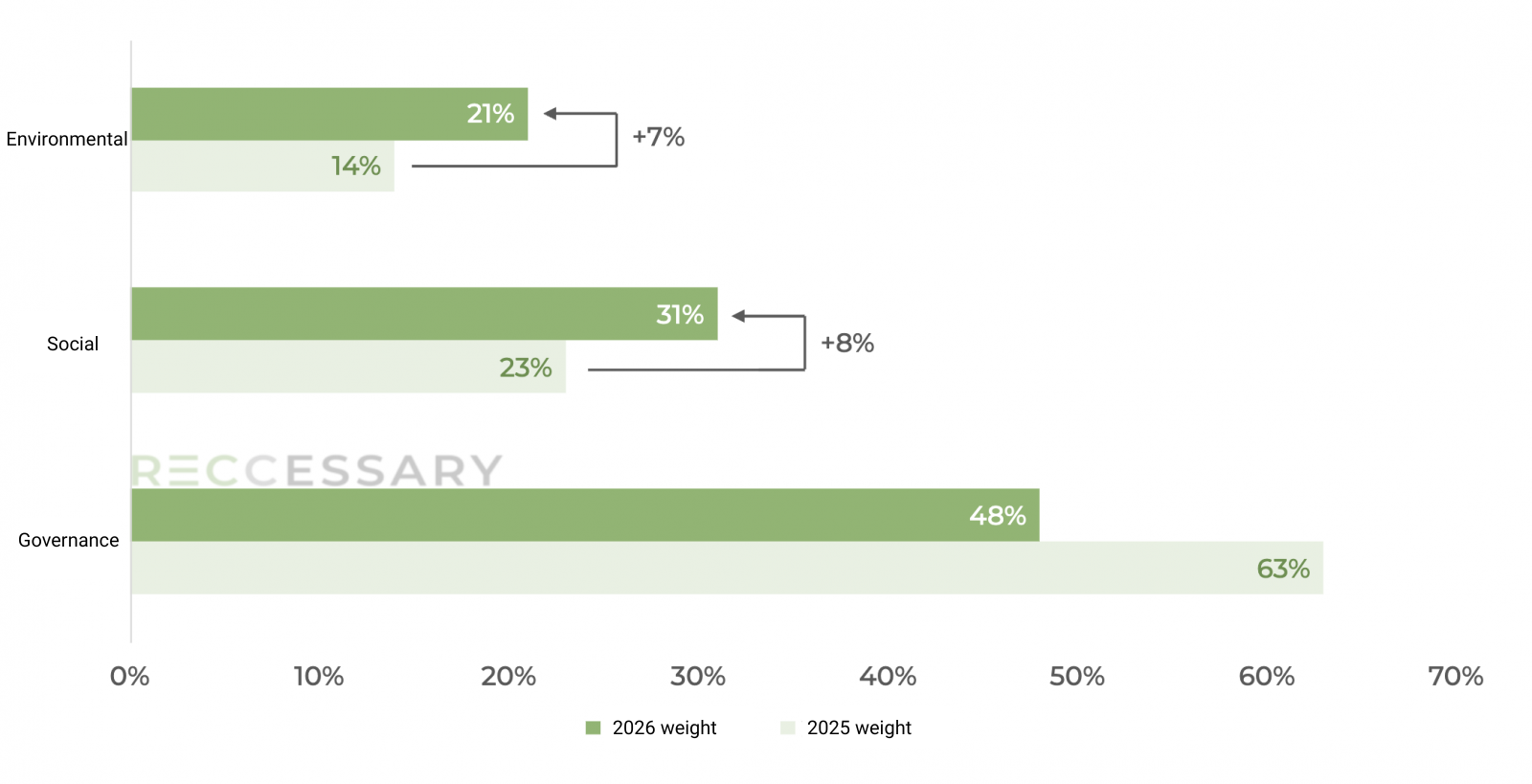
Figure 1. Comparison of evaluation weight adjustments in 2025 and 2026
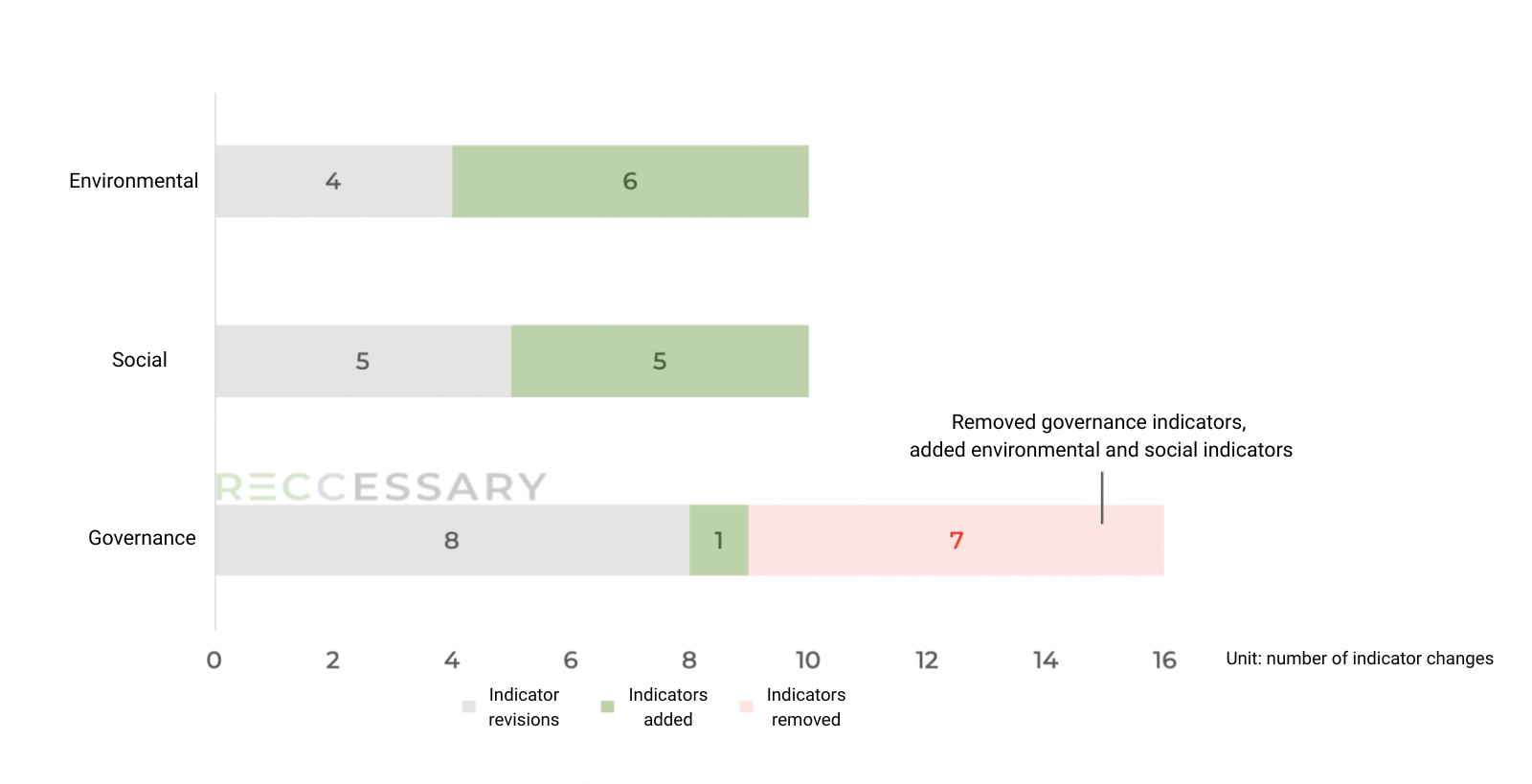
Figure 2. Indicator revisions in the 2026 ESG evaluation compared with 2025
Environmental:
- Water resources and waste: Water and waste indicators have been separated to require more detailed disclosure of related data.
- Energy management: Companies must disclose their energy usage over the past two years.
- Ecological impact: New indicators include establishing a biodiversity policy or commitment and promoting natural carbon sink strategies.
- Climate impact: The new framework adopts the structure of IFRS S2, replacing the previous climate related financial disclosure framework of Task Force on Climate-related Financial Disclosures (TCFD).
- Supply chain management: A new indicator requires companies to disclose supply chain management policies and implementation practices.
Social:
- Human rights and community relations: Companies must establish and disclose due diligence processes related to human rights and their implementation.
- Stakeholder communication: Companies are required to disclose engagement with investors, including key questions raised by investors and the company’s responses.
- Business model resilience: Companies must disclose whether they invest in domestic innovative startups and provide details of such investments.
- Labor conditions and employee welfare: New indicators include family friendly policies such as parental or caregiving support, as well as disclosure of employee turnover rates by gender and age.
Governance:
- Strengthening board structure: The evaluation reviews whether a board level sustainability committee has been established, with more than three members, relevant sustainability expertise, and participation by at least one director.
- Independent director tenure limits: Under the previous framework, a majority of independent directors could not serve more than three consecutive terms. In the 2026 evaluation, all independent directors are limited to no more than three consecutive terms.
- Improved information transparency: Companies are required to achieve at least a 90% execution rate when conducting share buybacks, or provide detailed daily disclosure of the execution progress.
The evaluation adopts a yes or no checklist approach. However, an increasing number of indicators require qualitative disclosure or quantitative data as supporting evidence. Scores are verified based on publicly available information disclosed through the Market Observation Post System, annual reports, and company websites. After the total score is calculated, companies are ranked according to their percentile performance.
For newly introduced environmental indicators such as energy management and natural carbon sinks, companies may also draw on the research insights of RECCESSARY research team to transform emission reduction outcomes into carbon credit assets with tangible economic value.
Core value of the ESG evaluation
- Driving benchmark effects: The evaluation identifies high performing companies and encourages firms to adopt voluntary practices that go beyond regulatory requirements. This helps shift corporate behavior from passive compliance toward the pursuit of best practices.
- Improving investment decisions: Evaluation results are translated into index construction and quantitative indicators, improving market transparency while providing investors with reference points for ESG related investment decisions.
- Implementing differentiated supervision: Apply differentiated oversight based on evaluation outcomes. Companies with strong performance receive recognition and awards, while those with weaker performance may face enhanced supervisory measures.
- Aligning with global standards and capital: By adopting internationally recognized ESG principles, the framework helps Taiwanese companies enhance their global visibility and supports the competitiveness of Taiwan’s capital markets within the global sustainability transition.
Source
[1] Companies are excluded if they have been listed for less than one year, have changed trading methods, have been suspended from trading or delisted, or are otherwise deemed ineligible by the evaluation committee.
[2] Refers to excluding the 20% of stocks with the lowest average daily trading value over the most recent one-year period, calculated from July of the previous year to June of the current year, based on actual trading days.
Updated: 2026/3/23
