.jpg)
The Philippine Energy Plan aims for a 50% renewable energy share by 2040, a seven-fold increase from 2023 levels. (Photo: iStock)
In recent days Taiwan’s Economic Affairs Minister Kuo Jyh-huei (郭智輝) publicly proposed a plan to import renewable energy from the Philippines to meet Taiwan’s domestic demand, sparking heated discussions on the idea’s feasibility. Many are doubtful about the costs of imported energy being lower than local production taking into consideration the construction of a 300-kilometer long submarine cable.
But apart from costs, power stability and the Philippines’ domestic demand are also important things to consider. To gain a more comprehensive understanding of this discussion, this article will introduce the Philippines’ renewable energy development and market dynamics.
The upsides and challenges of renewable energy development in the Philippines
Renewable energy capacity composed 29.4% of total installed power capacity in the Philippines in 2023. Graph 1 shows that prior to 2012 renewable energy capacity has remained constant and notable growth was stipulated under feed-in tariff (FIT) between 2013 and 2017.
But after the oversubscription and uncoordinated expansion of renewables under the FIT, the scheme has been suspended and new installed renewable capacity continues but at much slower rates. Coal capacity, on the other hand, was once overtaken by renewables 2014 and 2015 but began to surge ever since, eclipsing renewable energy’s share in the energy mix.
Yet according to the Philippine Energy Plan (2023-2050), the country will reach 35% renewable energy share by 2030 and 50% by 2040, or a seven-fold increase of renewable energy capacity in 2040 compared to 2023 level.
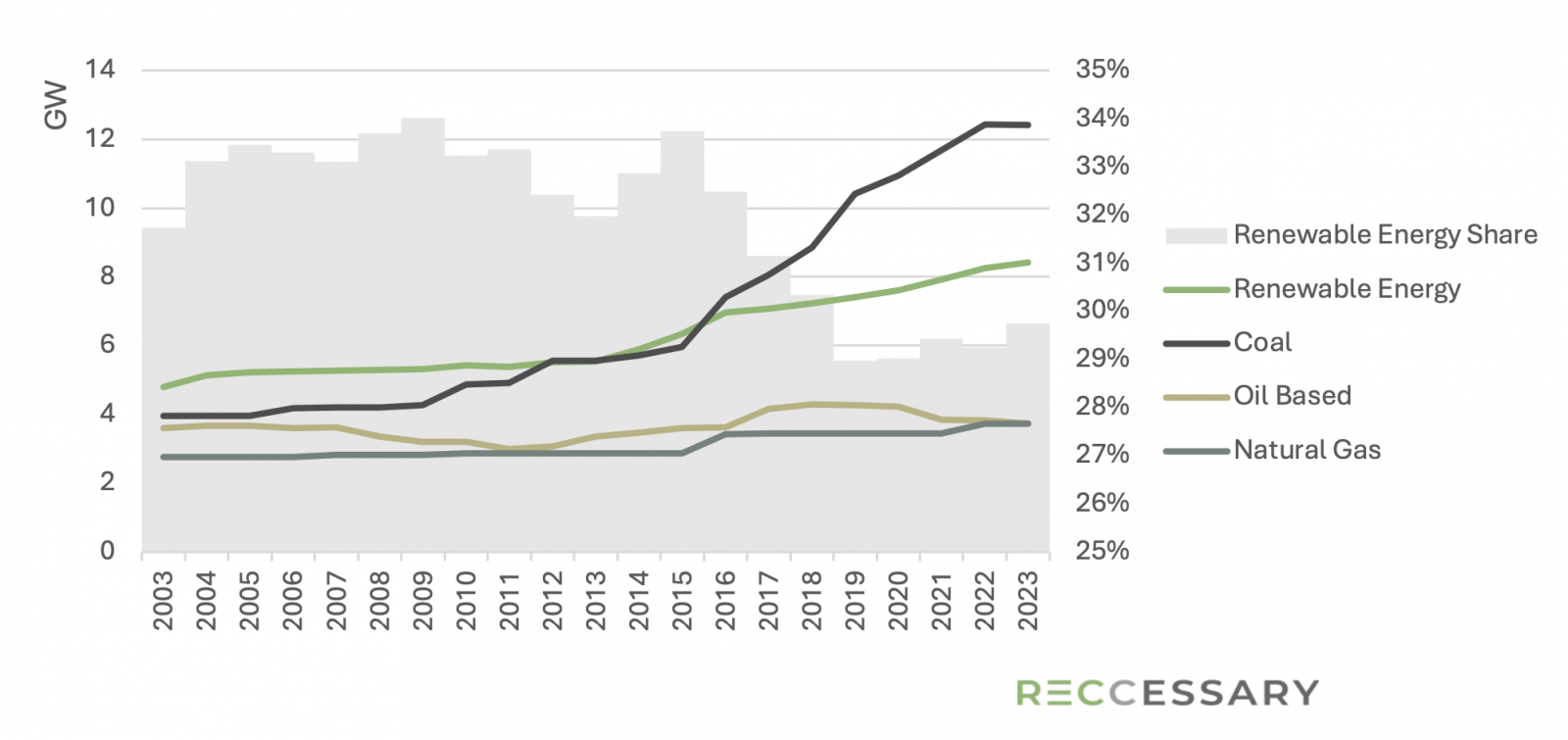
Graph 1. Installed Capacity and Renewable Energy Share (2003-2023)
Renewable Portfolio Standard (RPS)
In order to achieve the targets, a number of policies are put in place, making the Philippines one of the most progressive countries in the region in promoting renewable energy growth. One particular policy is the Renewable Portfolio Standards (RPS) policy, which requires electricity suppliers to purchase a minimum percentage of renewable energy electricity.
In 2022, the mandated renewable energy portion under the RPS has increased from 1% annual increment to 2.52% starting in 2023. In the same year, the country also removed investment restrictions on renewable energy projects to allow 100% foreign ownership, courting global private capitals for the country’s renewable energy ambition.
Green Energy Auction Program (GEAP)
Supplementing the RPS, renewable energy auction was put in place to help suppliers achieve their renewable energy goals. The Green Energy Auction Program (GEAP) started in 2022 has thus far awarded 5.4 GW of renewable energy capacity with delivery year up to 2026.