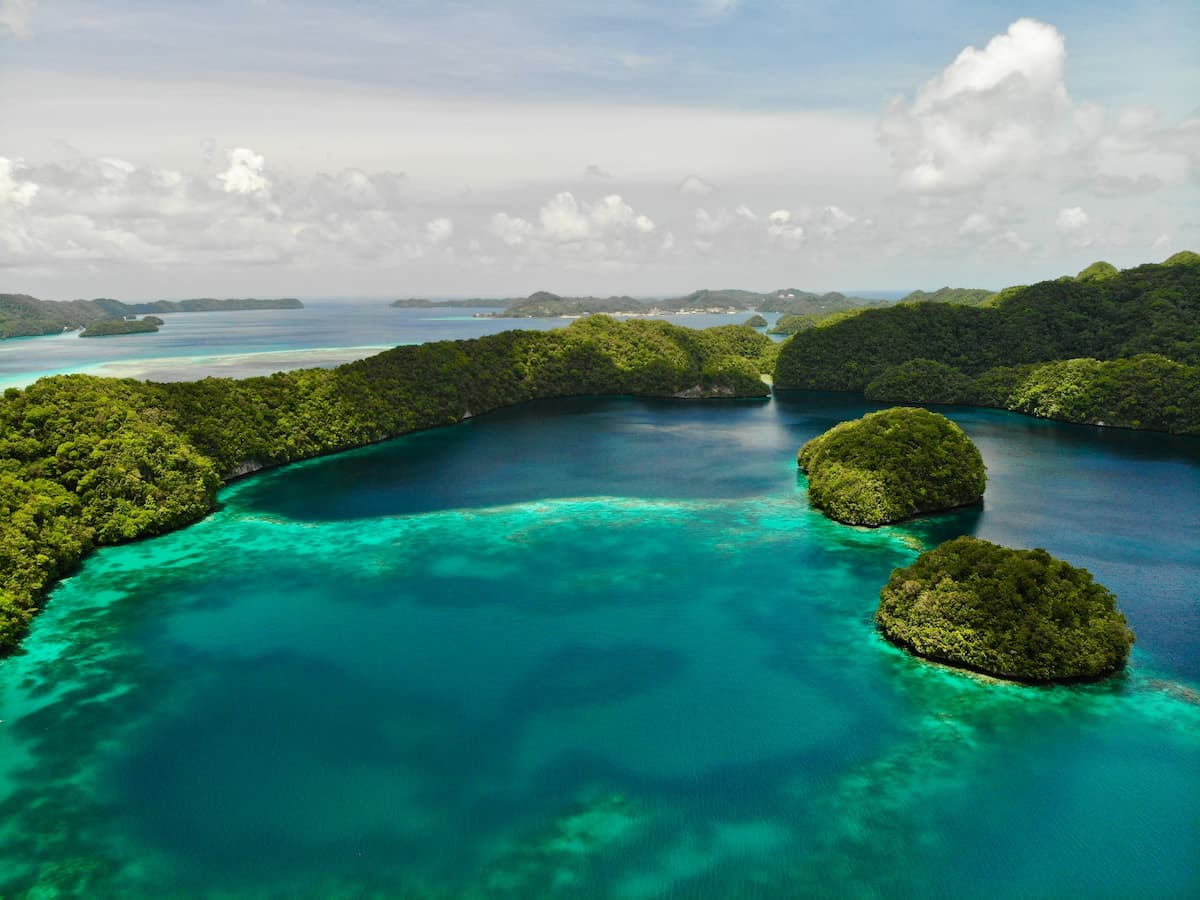
Palau boasts rich blue carbon resources and strong potential for wetland conservation. (Photo: Flickr/Holger Krupp CC BY-NC-SA 2.0)
The first part of the article highlighted the potential and pathways for overseas carbon credit development through successful cases in the Asia Pacific region. This second part shifts the focus to Taiwan’s diplomatic allies, exploring how businesses can engage in international climate action via carbon projects by looking at market trends and policies.
Compared with other markets, Taiwan’s allies provide an official cooperation framework that offers a more solid foundation for advancing Taiwan’s carbon diplomacy and fostering sustainable international partnerships.
Taiwan’s advantage in carbon diplomacy lies in its existing foreign aid foundations
Taiwan currently maintains diplomatic ties with twelve countries, primarily located in Central and South America and the Pacific Ocean. These nations offer favorable conditions for developing carbon projects, with abundant resources spanning forests, oceans, agriculture, and soil management.
With existing diplomatic foundations, Taiwan has the potential to build cooperation models that combine both market value and diplomatic significance by introducing technology and investment of private sector and advancing projects in line with international standards. For its diplomatic allies, this represents opportunities for resource integration and industrial upgrading, while for Taiwanese companies, it offers a pathway to overcome domestic regulatory barriers and expand into international markets.
Three key aspects to assess carbon market potential in Taiwan’s diplomatic allies
When evaluating carbon credit collaboration between Taiwan and its diplomatic allies, consideration should go beyond geopolitical and bilateral relations to include three key factors: price performance, project types, and regulatory cooperation.