RECCESSARY’s “ASEAN Weekly” highlights Southeast Asia’s new energy and carbon market updates. (Image: RECCESSARY)
This week’s ASEAN sustainability developments are shaped by rising geopolitical risks and shifting energy strategies. As tensions surrounding the Iran war raise concerns over disruptions to oil flows through the Strait of Hormuz, Southeast Asian countries are stepping up measures to safeguard energy security. At the same time, momentum is building for nuclear energy in the region, with Indonesia and Singapore exploring small modular reactors (SMRs) and Vietnam moving to revive its nuclear power program. Here are the key ASEAN stories from Mar. 1 to Mar. 8.
Iran war: How Southeast Asian countries respond to energy market risks
The U.S.-Israeli war on Iran could potentially disrupt the Strait of Hormuz, a critical waterway for global oil trade. Oil prices have surged, and market pressures are rippling across the globe, with Southeast Asian nations no exception. Thailand has launched emergency measures to safeguard the country’s oil and liquified natural gas (LNG) reserves, while Indonesia and Malaysia, as commodity exporters, are experiencing short-term stock market volatility but could see economic gains if energy prices remain elevated.
Thailand announced the activation of its Energy Emergency Surveillance Centre on Mar. 1, triggering emergency response plans for petroleum and LNG supplies with immediate effect. Meanwhile, energy security, once viewed as part of the broader energy transition agenda, is now moving to the center of national policy priorities. Read more here
Southeast Asia steps up nuclear plans as Indonesia, Singapore explore SMRs and Vietnam revives project
Momentum has been building across Southeast Asia in recent days as several countries step up efforts to incorporate nuclear power into their long-term energy strategies.
Indonesia is working with Japan and the United States to explore small modular reactors (SMRs), Singapore is partnering with South Korea on similar technologies, and Vietnam has received support from Slovenia to resume development of a nuclear power plant. All three countries aim to achieve net-zero emissions by 2050, and nuclear energy is increasingly viewed as a potential source of clean, reliable baseload electricity to complement renewable energy expansion. Read more here
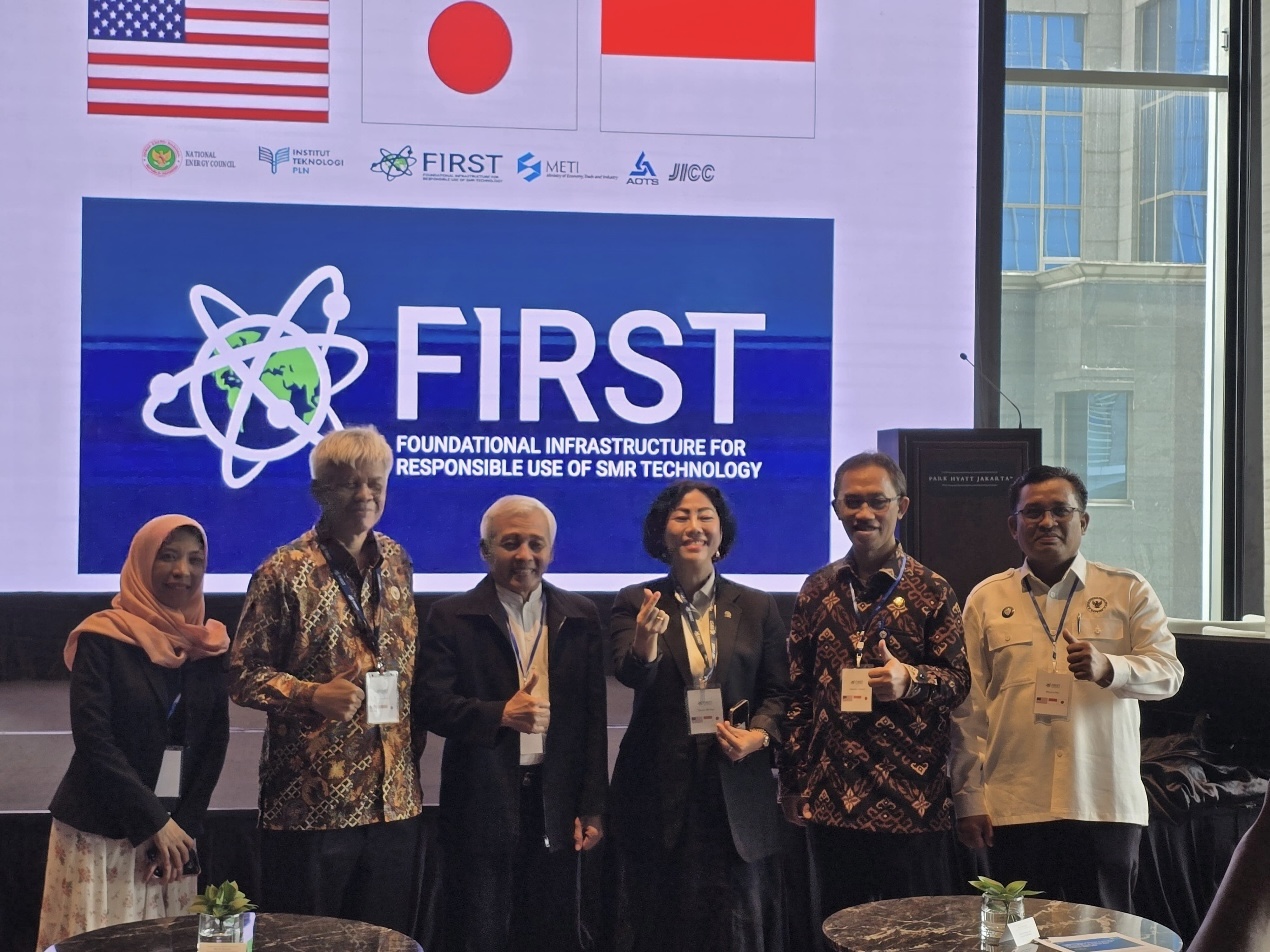
Indonesia became the first country to join the U.S.-led FIRST program as a beneficiary in 2019, supporting the responsible development of small modular reactor (SMR) technology. (Photo: Indonesia Nuclear Energy Regulatory Agency)
Hanoi rolls out incentives to speed taxi EV shift, aiming for 100% electric fleet by 2030
Hanoi has formally incorporated its taxi industry into the city’s green transport roadmap, setting a target to convert the entire fleet to electric or other clean-energy vehicles by 2030.
To meet that goal, municipal authorities will roll out preferential loan schemes, expand charging infrastructure and introduce a transport emissions monitoring system to safeguard air quality within designated low-emission zones. Read more here
Execution over incentives: Thailand and Vietnam’s structural investment shift
In today’s more fragmented trade landscape, comparing Thailand and Vietnam is no longer simply a matter of growth rates or labor costs. For many investors, the more pressing question is execution.
Vietnam continues to attract robust capital inflows, supported by export-oriented manufacturing and an extensive trade agreement network. In 2025, the country drew USD 38.4 billion in foreign direct investment, up 0.5% year on year. Manufacturing and processing remained the dominant driver, accounting for USD 9.8 billion, or 56.5% of newly registered capital.
Thailand’s FDI reached USD 43.6 billion in 2025, marking a 66% year-on-year increase. The composition, however, differed. Digital sectors led investment by value, followed by electronics and metals and materials, reflecting a tilt toward higher-value and technology-driven projects. Read more here
Navigating Vietnam's DPPA revisions: What they mean for the electricity market?
To achieve the ambitious socio-economic development targets, Vietnam urgently requires a secure, reliable and increasingly green energy supply. As the country accelerates industrial expansion and global economic integration, ensuring the sustainable availability of competitively priced renewable electricity has become a strategic priority - particularly given Vietnam’s abundant wind and solar resources. In parallel, Vietnam is advancing its electricity market toward a more competitive, transparent, and efficient electricity market, while maintaining energy security and power system stability. Read more here
Singapore unveils first National Adaptation Plan, puts heat resilience at core
Singapore has set 2026 as its Year of Climate Adaptation and begun drafting its first National Adaptation Plan (NAP), marking a shift from mitigation toward systemic climate resilience.
As part of its heat-response strategy, the Ministry of Sustainability and the Environment (MSE) has established a dedicated policy office and committed SGD 40 million (around USD 31.3 million) to research aimed at strengthening resilience among vulnerable groups, including outdoor workers. Read more here

Singapore has included heat resilience in its National Adaptation Plan and will strengthen climate protection for vulnerable groups. (Photo: iStock)
Philippines mandates 20% energy storage for renewable projects above 10 MW
The Philippines’ Department of Energy (DOE) has issued a new circular on Feb. 26, mandating the integration of energy storage systems (ESS) into the development and grid connection of variable renewable energy (VRE) power plants, including wind and solar.
Under Department Circular No. DC2026-02-0008, all VRE projects with an installed capacity of 10 megawatts (MW) or more must install ESS equivalent to at least 20% of the plant’s capacity, subject to system impact studies and technical requirements. The DOE also encourages developers to equip ESS with advanced grid-support functions, including grid-forming inverters, to help stabilize voltage and frequency and enhance overall system reliability. Read more here
Indonesia farmers count the costs as rains wash out Java durian harvest
In a quiet village in central Java, farmers report that their durian fruit trees have failed to bear fruit amid local anxieties over climate change and other environmental shifts.
Research shows climate change will increase the frequency of extreme weather events on Java, the world’s most populous island and home to around half of Indonesia’s 280 million people. For durian farmers in Banyumas, a failed harvest can be ruinous. Ganjar said he expects to earn 40 million rupiah ($2,390) this year, but the farmer’s balance sheet makes for worrying reading. Read more here
Can rising gas prices unlock Southeast Asia’s untapped biomethane potential?
The Iran war has pushed global gas markets back into focus. Concerns over supply disruptions through key energy shipping routes have once again highlighted the vulnerability of fossil fuel-dependent energy systems.
Biomethane could be a renewable substitute for natural gas, particularly in regions seeking to strengthen energy security while accelerating decarbonization. Southeast Asia, with its large agricultural base and organic waste streams, holds significant untapped potential. According to recent estimates, the region’s theoretical biogas potential reaches around 775,000 GWh per year, yet only about 1% has been developed so far. Read more here
Track ASEAN energy and carbon markets with clarity. Subscribe to RECCESSARY for policy intelligence and business-ready insights across Asia-Pacific.