.jpg)
Are structural factors, rather than incentives, now defining the Thailand–Vietnam investment divide? (Photo: iStock)
In today’s more fragmented trade landscape, comparing Thailand and Vietnam is no longer simply a matter of growth rates or labor costs. For many investors, the more pressing question is execution.
Vietnam continues to attract robust capital inflows, supported by export-oriented manufacturing and an extensive trade agreement network. In 2025, the country drew USD 38.4 billion in foreign direct investment, up 0.5% year on year. Manufacturing and processing remained the dominant driver, accounting for USD 9.8 billion, or 56.5% of newly registered capital.
Thailand’s FDI reached USD 43.6 billion in 2025, marking a 66% year-on-year increase. The composition, however, differed. Digital sectors led investment by value, followed by electronics and metals and materials, reflecting a tilt toward higher-value and technology-driven projects.
For investors weighing the two markets, the dividing line is becoming increasingly structural. Tax incentives and labor costs still matter, but they are no longer decisive on their own. Infrastructure capacity, administrative predictability, regulatory coordination, ESG readiness, and the maturity of local industrial ecosystems are increasingly shaping capital allocation decisions.
To better understand how companies are navigating this more demanding environment, RECCESSARY spoke with advisors in Vietnam and Thailand about emerging constraints, shifting risk management strategies, and where opportunities continue to hold.
From cost advantage to capacity test
Vietnam’s long-standing appeal rested on demographics, competitive wages, and strong growth momentum. That cost advantage is gradually narrowing. Average monthly income rose 8.6% annually to VND 7.7 million (USD 304) in 2024. From Jan. 1, 2026, regional minimum wages will increase by an additional VND 350,000 to VND 500,000 (USD 13 to USD 19) per month.
As the cost base shifts, the investment narrative is evolving. “Vietnam’s environment is moving from opportunity-driven to capacity-tested,” said Mickaël Driol, CEO of cross-border advisory Mekong Partners. Entering 2026, the investors best positioned to succeed are manufacturers, industrial technology firms, and supply chain operators willing to localize production, qualify domestic suppliers, and invest in workforce development.

Mickaël Driol, CEO of Mekong Partners, shares his observations on Vietnam’s evolving investment environment. (Photo: Mickaël Driol)
Talent pressures are equally evident in Thailand. In PwC’s 2026 Taiwan CEO Survey, the shortage of highly skilled workers ranked among the top challenges to business expansion.
“Our clients often tell us they struggle to find qualified talent,” said Woranath Khemasiri, Director of ASEAN and India Investment and Tax Services at PwC Taiwan.
Thailand’s Talent Landscape 2025–2029 survey, launched by the Office of National Higher Education Science Research and Innovation Policy Council (NXPO), estimates demand for 1,087,448 high-skilled positions across 10 target industries over the next five years. The largest projected gaps are in smart electronics and industrial robotics, the digital industry, and next-generation automotive manufacturing.
Beyond recruitment, human resource management presents another challenge, said Woranath. Compared with Japanese and Korean firms, which often adopt more structured planning systems, Taiwanese companies tend to move quickly and adjust along the way.
While this agility can be an advantage, it can also create friction in attracting and retaining local talent. In overseas markets, skilled professionals often have multiple employment options. If compensation structures, career progression pathways, and workplace practices are benchmarked only against Taiwan standards rather than local market expectations, companies may struggle to compete for top talent.
To mitigate workforce constraints, Woranath suggested that companies both upgrade talent strategies to international benchmarks and accelerate investments in automation and digital transformation to reduce reliance on scarce high-skilled labor.
Across both markets, labor cost is no longer the sole consideration, with labor capability and retention increasingly shaping execution risk.
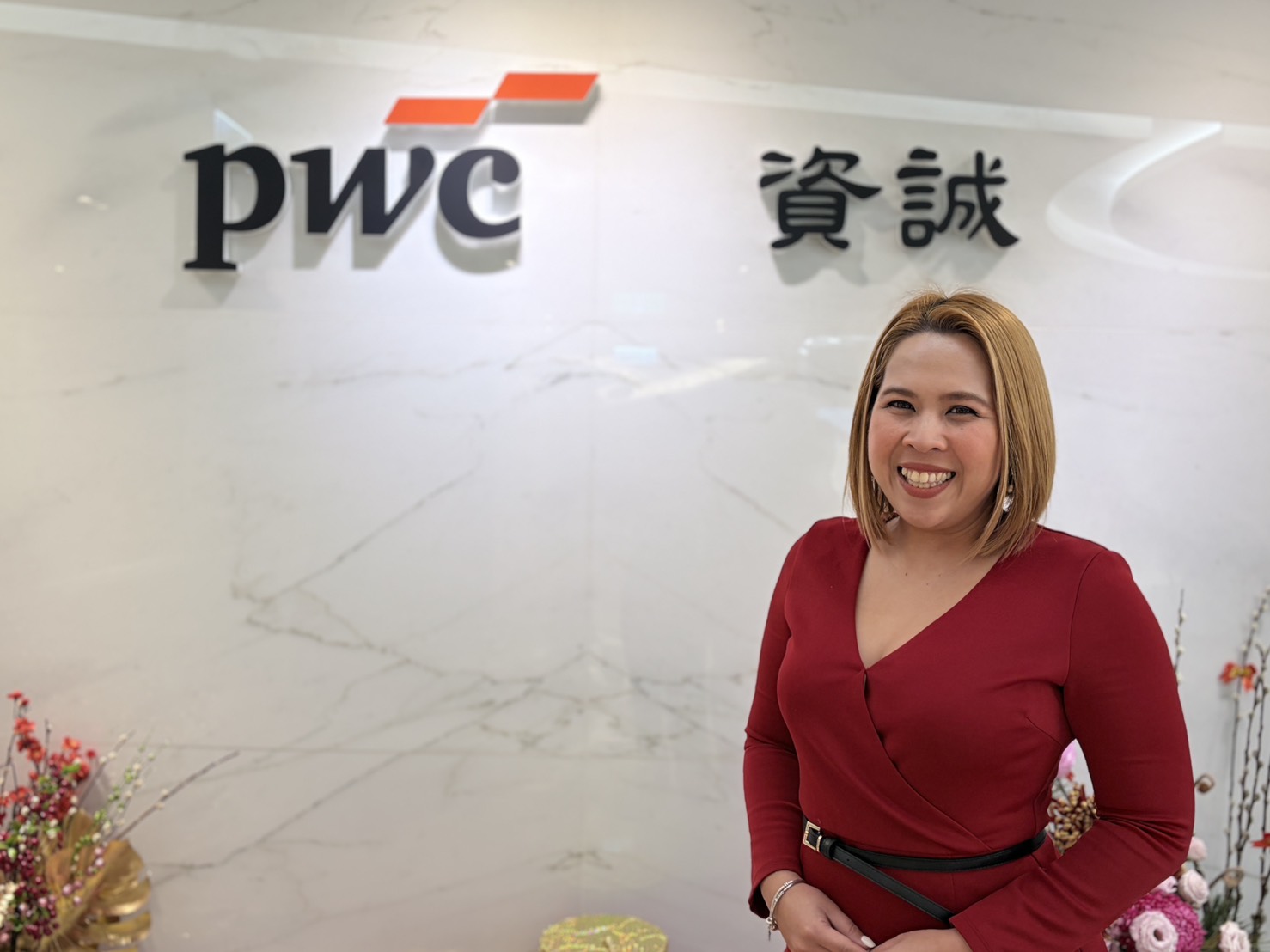
Woranath Khemasiri, Director of ASEAN and India Investment and Tax Services at PwC Taiwan, discusses investment risks and emerging opportunities in Thailand. (Photo: Wendy Lo)
Infrastructure and ESG become the new filters
As capital becomes more selective, investors are applying system-level filters: grid stability, ESG compliance capabilities, permitting consistency, and supply chain traceability.
One pressure point companies often discover late, Driol said, is utilities and grid connection timing in fast-growing industrial provinces. A factory may be completed on schedule, only for power connection or compliance certification to add unexpected months.
“A six-month delay in power connection or compliance approval can destroy more value than several percentage points of tax incentive,” Driol said.
Grid constraints remain a structural issue in Vietnam. Transmission congestion between renewable-rich regions and northern demand centers has led to curtailment of solar and wind generation. The government is pursuing grid upgrades to improve efficiency and strengthen interconnections.
In Thailand, electricity reliability is also central to execution risk, particularly for energy-intensive industries such as printed circuit board (PCB) manufacturing. Companies are increasingly deploying on-site solar. Since 2024, Thailand has eliminated the requirement for factory licenses for rooftop solar installations, easing deployment while responding to supply-chain decarbonization pressures.
Those decarbonization demands are increasingly translating into formal ESG requirements that affect supplier approval, financing terms, and site selection.
“We increasingly see financing margins and insurance conditions linked to environmental and governance performance,” Driol said.
If firms operating in a given market struggle to meet carbon disclosure standards, labor audits, or supply chain traceability requirements, the resulting compliance risk ultimately shapes capital allocation decisions. Investors are therefore assessing not only individual companies, but also the broader regulatory and operational environment that supports ESG implementation.
According to PwC’s ESG Progress Tracker Report 2025, 89% of surveyed Vietnamese companies have made or plan to make ESG commitments within two to four years, up from 80% in 2022. Adoption remains uneven, however, with foreign-invested enterprises leading implementation.
In Thailand, ESG participation is also expanding. The 2025 Stock Exchange of Thailand ESG Ratings included 265 listed companies, up from 219 the previous year.
Execution, in this context, increasingly means regulatory clarity, infrastructure readiness, and ESG credibility working together.
Vietnam shifts from tax incentives to upstream industrial upgrading
If investors are screening for execution risk, governments are screening for execution depth. At the same time, the strategic prioritization of key industries by both governments is also shaping foreign investors’ capital allocation decisions.
In Vietnam’s case, that means prioritizing investment that strengthens upstream capabilities and reduces structural dependence on imported components.
Vietnam performs strongly in electronics assembly, which continues to anchor its export performance. In 2025, exports of computers, electronic products, and components reached USD 107.75 billion, accounting for more than half of the increase in the country’s total export turnover that year.
Yet upstream capabilities remain constrained. More than 70% of Vietnam’s electronics products rely on imported components. To address this gap, Vietnam amended its Investment Law in December 2025 to emphasize higher-value upstream activities, including battery components and semiconductor design. Special incentives for qualified projects include preferential tax rates and extended exemptions.
Vietnam’s broader tax framework is also undergoing a structural shift. The country has historically relied on generous tax incentives to attract foreign direct investment, but that model is now being recalibrated.
With the implementation of global minimum tax rules, the effective advantage of very low headline tax rates is reduced for many multinational corporations. As Driol explained, part of the benefit is offset at the group level, changing boardroom evaluations toward stability and implementation consistency.
“It clearly reinforces a structural shift away from tax-led investment attraction and toward execution-led competitiveness,” Driol said.
Thailand’s PCB momentum rises, semiconductor ambitions tempered
Thailand’s push up the value chain is increasingly visible in the rapid expansion of its PCB industry. Woranath described PCBs as a “rising star,” particularly as automotive investment slows.
Between 2022 and June 2025, more than 180 PCB-related projects applied for Board of Investment (BOI) promotion, totaling over THB 200 billion. The surge reflects production relocation trends and sustained confidence in Thailand as a regional base.
The BOI supports this shift with incentives of up to 8 to 13 years of corporate income tax exemption, machinery import duty waivers, and additional tax holidays for R&D. Woranath said these incentives have played a meaningful role in attracting PCB-related projects.
As the PCB sector expands, Woranath noted that a more integrated ecosystem, spanning upstream materials through downstream applications, could become Thailand’s structural advantage in attracting related investment.
She added that electronics manufacturers often weigh Thailand against Vietnam, but the decisive factor is typically proximity to their supply chain partners and the brand’s regional headquarters. For example, suppliers serving Dell are more likely to locate in Vietnam, where Dell’s production ecosystem is concentrated, whereas those supplying HP may lean toward Thailand.
However, she is more cautious about Thailand’s ambitions in semiconductors. Although Thailand’s national strategy targets USD 79 billion in investment by 2050, she does not expect a near-term surge.
“We are unlikely to see a significant wave of semiconductor relocation in the near future,” she said, noting that Taiwanese firms are prioritizing the United States and that Thailand’s semiconductor talent pool remains limited.
In Thailand and Vietnam, the investment landscape is now defined by a two-sided execution test. Investors seek markets where infrastructure, policy, and ESG systems reduce operational risk. Governments, meanwhile, are prioritizing investors that bring capital with scale, technological depth, and long-term commitment. Sustained competitiveness will depend on whether these expectations converge, and whether both sides can execute with consistency over time.
For companies, Driol stressed that market selection should follow business function and operational requirements. If the objective is export manufacturing expansion and new supply-chain positioning, Vietnam is generally the stronger candidate, supported by its trade integration and industrial momentum. If the priority is regional headquarters functions, integration into automotive supply chains, or operations in highly regulated sectors, Thailand often offers a more suitable platform.
As Woranath put it, “What matters most is a clear strategy from day one. If the company knows what it is building and how it intends to execute, it can navigate any market.”
'Vietnam vs. Thailand competitiveness' series
- Energy as a competitive lever: How Vietnam, Thailand compete for green manufacturing investment
- Energy as a competitive lever: How GreenYellow is building renewable energy solutions for manufacturers in Vietnam
- Energy as a competitive lever: WHAUP integrates green power and infrastructure for industrial growth
- Energy as a competitive lever: CCET navigates renewable opportunities and constraints in Thailand
RECCESSARY’s upcoming webinar, “Beyond ASEAN: Mastering Decarbonization Strategy in Thailand & Vietnam,” will take place on April 21.
The session will unpack net-zero regulations, CBAM readiness, green power procurement strategies, and what lies ahead for low-carbon manufacturing across Vietnam and Thailand.
Seats are limited. Register now.