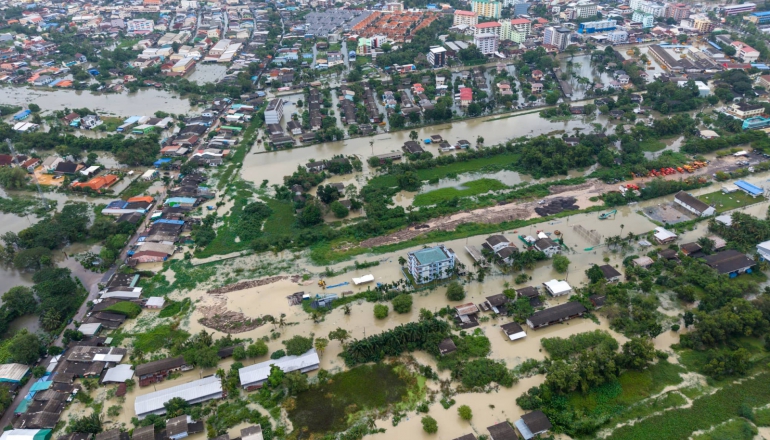
In a quiet village in central Java, farmers report that their durian fruit trees have failed to bear fruit amid local anxieties over climate change and other environmental shifts.
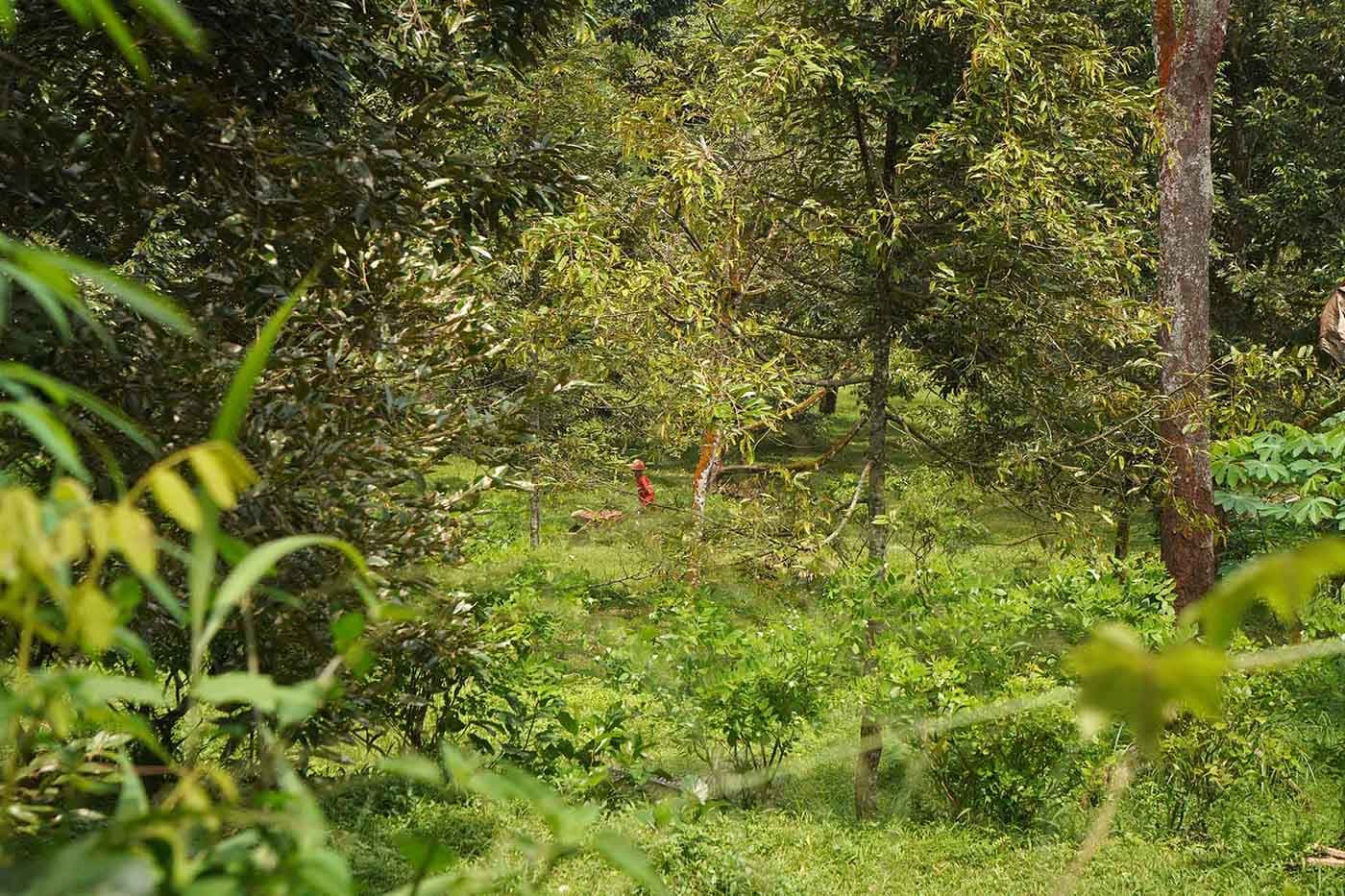
Here in the Banyumas hills, farmers have propagated their own durian for three decades. Image by L Darmawan/Mongabay Indonesia.
The first two months of the year would ordinarily see Ganjar Budi Setiaji hurrying around Plana village’s durian orchard, here in the hilly Javanese district of Banyumas. But on the last Tuesday of January, the 53-year-old father instead appeared restless.
“In 2024, I harvested 3,500 durians from 300 trees,” Ganjar told Mongabay Indonesia, a little ruefully. “I’ve had only 500 this year.”
The durian fruit farmed by Ganjar is a mainstay in much of Southeast Asia, where its unusual texture and intense flavor profile splits opinion.
Last year, Indonesia’s food minister rushed out trade data showing the archipelago’s superior production volume after Malaysia announced the durian as the kingdom’s national fruit, the latest bout of cultural fencing between the neighbors.
Here in the Banyumas hills, farmers have propagated their own durian heritage since a hajj pilgrim known locally as Mbah Kromo planted an unusual durian tree in 1985 at his home in Karangsalam village.
.jpg)
Ganjar shows drums used in the fermentation process to produce natural fertilizer. Image by L Darmawan/Mongabay Indonesia.
A few years later, Mbah Kromo began offering seeds from the parent tree to his neighbors. Appreciation for the Kromo durian grew as the trees flourished across the district.
Ganjar slices through a thorny Kromo durian, revealing a sweet fruit with the texture of thick cheesecake, an acquired taste to many.
The Kromo durian is also unusual for producing a heavyweight fruit than can, people here say, grow up to 10 kilograms (22 pounds), with a rind almost 2 centimeters, nearly an inch, in thickness.
Ganjar has grown these durian since around 2012. At first, he supported the trees’ growth by blending standard chemical fertilizer with a mulch of compost. But since 2023, he relies only on a homespun blend of nitrogen, phosphorus and potassium, a method bringing advantages in a crowded marketplace.
“The organic profile has a significant impact on the flavor,” Ganjar said.
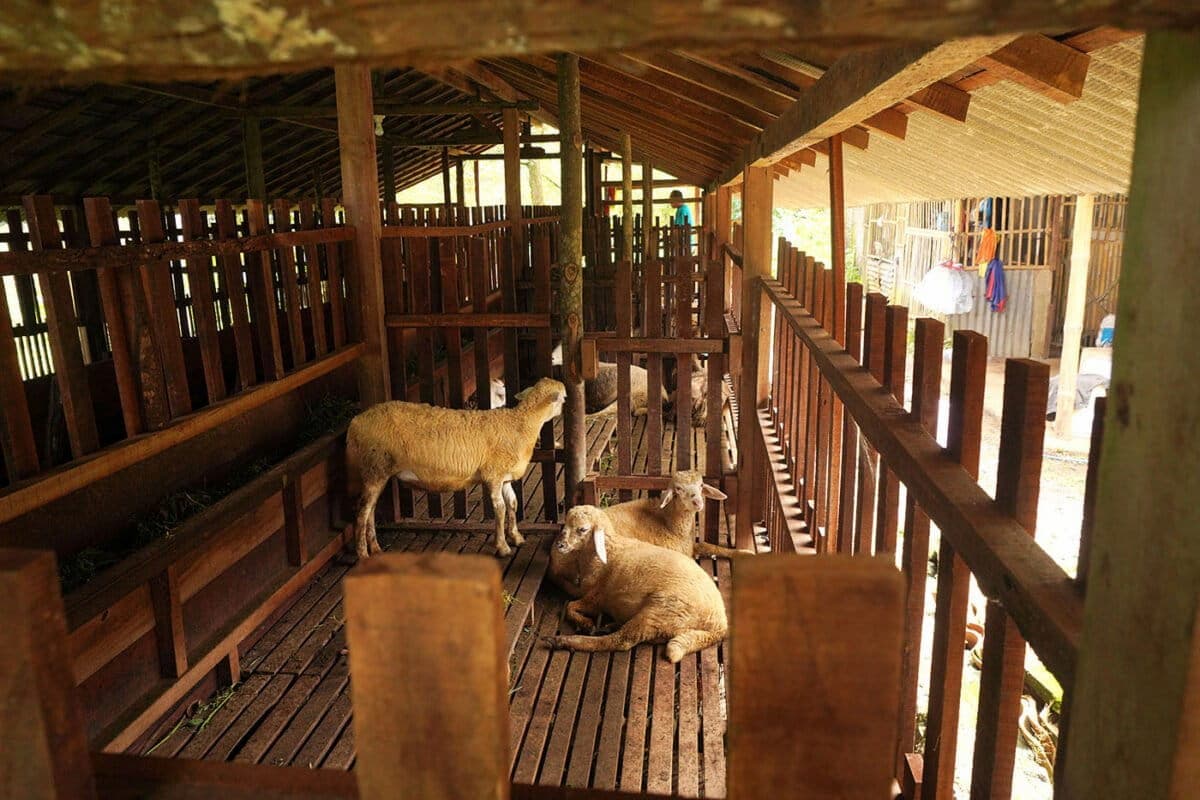
In his durian orchard, Ganjar raises sheep to collect their manure, which is used to make organic fertilizer. Image by L Darmawan/Mongabay Indonesia.
Failed harvests
In January and February, the road through Kebumen, an hour’s drive toward Mount Slamet from Ganjar’s orchard in Plana village, would usually be lined with stallholders hawking durian.
But not this year, said Barkah Pujianto, the elected head of Kebumen viilage.
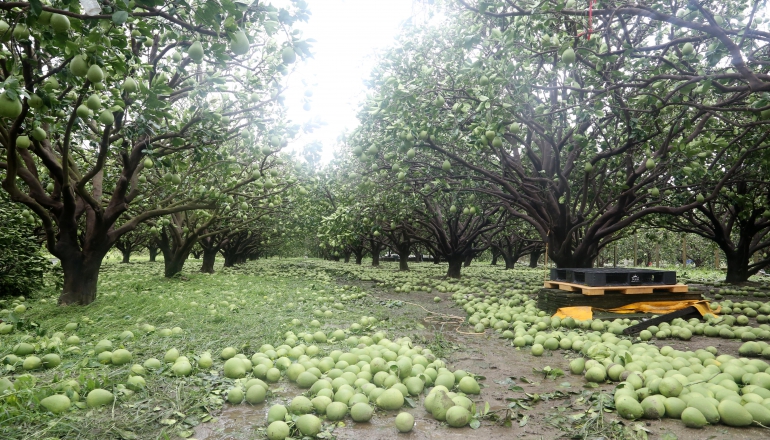
“It’s because most harvests were unsuccessful,” Barkah said. “Some unpredictable weather like extreme rainfall and wind caused the fruit to fall off.”
That presents fraught consequences for many households here, which depend on a healthy fruit harvest to buy school uniforms and pay out-of-pocket health care costs, among other typical household expenditure.
A typical durian tree should yield up to 3 million rupiah ($178) per harvest, Barkah said, around 20% more than the monthly minimum wage in Banyumas district.
Loekas Susanto, a scientist and lecturer at Jenderal Soedirman University in Purwokerto, the Banyumas district seat, said extreme weather any year threatened the district’s durian harvest.
“Heavy rainfall will cause the flowers to fall off, which ultimately is going to prevent the fruit from developing,” Loekas said.
“The durian harvest should have been in January-February, after a three- or four-month flowering period,” Loekas added. “Due to the high rainfall, even during the dry season, there wasn’t a lot of fruit.”
Durian harvest failures are not uncommon in growing areas across Indonesia during unusually wet seasons, often aggravated by climate patterns like La Niña.
In Langkat, a district of North Sumatra province better known for its oil palm industry, durian farmers saw widespread failures amid heavier rainfall in 2020.
Loekas said durian growers needed to ensure they fed sufficient nutrients to trees after the previous harvest.
“For example, by adding potassium to fortify the flowers so they can develop into fruit during times of high rainfall,” he said. “That would be one way.”
But Ganjar has already received training from fieldworkers at Gadjah Madah University, a prominent higher education institution in the city of Yogyakarta.
He now concocts a witch’s brew of calcium from eggshells, potassium from banana stems, nitrogen from bacteria, and phosphate from bat droppings.
“That fertilizer is applied almost once every two weeks,” he said.
Research shows climate change will increase the frequency of extreme weather events on Java, the world’s most populous island and home to around half of Indonesia’s 280 million people.
For durian farmers in Banyumas, a failed harvest can be ruinous. Ganjar said he expects to earn 40 million rupiah ($2,390) this year, but the farmer’s balance sheet makes for worrying reading.
“Production costs are around 75 million rupiah [around $4,450],” he said. “If you use nonorganic materials, it can reach 150 million [$8,900].”
Author: L. Darmawan
This article was originally published on Mongabay under the Creative Commons BY NC ND licence. Read the original article.