
RECCESSARY’s “ASEAN Weekly” highlights Southeast Asia’s new energy and carbon market updates. (Image: RECCESSARY)
This week in ASEAN, Thailand is considering a major expansion of advanced nuclear power, with its new 25-year power plan targeting 9 GW of small modular reactors (SMRs) by 2050. In Vietnam, Ho Chi Minh City is following Hanoi in advancing urban transport decarbonization, with low-emission zones set to be introduced in phases from July 2027. Here are the key ASEAN stories from Aug. 24–30.
Ho Chi Minh City plans low-emission zones from 2027, targets full vehicle transition by 2040
Following Hanoi, Ho Chi Minh City has recently announced plans to introduce low-emission zones, with a phased rollout set to begin in July 2027.
Vehicles that fail to meet emissions standards will face gradually tighter restrictions in the city center. The city aims to have all vehicles either electrified or running on low-carbon fuels by 2040. Read more here

Ho Chi Minh City has millions of motorcycles and plans to introduce low-emission zones. (Photo: iStock)
Thailand eyes 9 GW of SMRs by 2050 as private investment comes into play
Thailand is expected to release a draft of its new Power Development Plan (PDP) in September. All four options currently under consideration include small modular reactors (SMRs) in the country’s future power mix, with installed capacity targeted to reach 9,000 MW by 2050.
The government is also reportedly considering allowing private companies to develop and operate SMRs as part of efforts to accelerate the energy transition and achieve net-zero emissions. Read more here
Laos bets on AI, data centers and clean energy under new five-year plan
Laos is stepping up efforts to keep pace with global trends in technology and low-carbon energy. Under its newly announced five-year investment strategy, the government has identified data centers, artificial intelligence (AI) and renewable energy as key areas for development. Meanwhile, incentives for electric vehicles are also starting to boost EV sales. Read more here
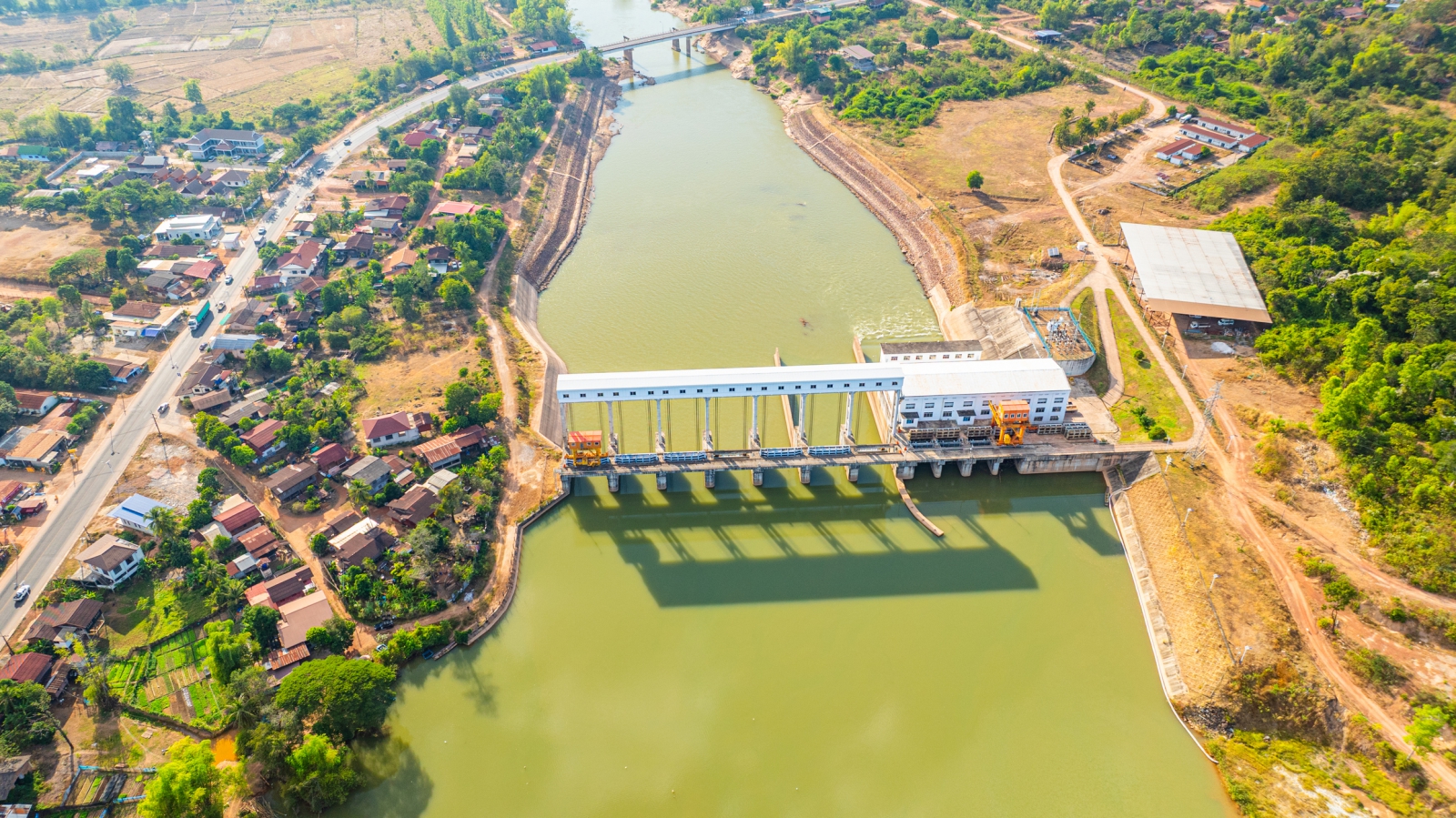
Laos has abundant hydropower resources, which the government hopes to leverage to support the growth of technology and electric vehicles. (Photo: iStock)
Why climate capital is failing to reach Indonesia’s captive coal plants
International financing for decarbonization efforts in Indonesia has expanded in recent years. The launch of the country’s Just Energy Transition Partnership (JETP) in 2022 came with pledges worth USD 20 billion, drawn from a group of developed countries.
But funding directed specifically at transitioning from captive coal power remains limited. Much of the challenge is due to the widespread industrial use of this power option in Indonesia, which entails building off-grid, dedicated power stations fuelled by coal. They represent a major obstacle to decarbonizing Indonesia’s energy-intensive industries. Read more here
Indonesia launches Molinas to build homegrown electric motorcycle ecosystem
Indonesia is preparing to roll out Molinas, a homegrown electric motorcycle initiative designed to build an entirely domestic ecosystem — from vehicle manufacturing and batteries to charging infrastructure and after-sales services. The supply chain will bring together the government, state-owned enterprises and private companies.
President Prabowo Subianto’s administration hopes the initiative will capitalize on Indonesia’s vast nickel resources, reduce dependence on imported fuels and accelerate the country’s path toward net zero. Read more here
Captive coal threatens Indonesia’s bid to become global EV battery hub
The ambition of Indonesia, the world’s top producer of nickel, to dominate nickel and electric vehicle (EV) battery supply chains may seem a pure boon to the clean energy transition. In fact it could undermine global decarbonisation efforts because so much of the country’s industrial facilities still rely on “captive” coal-fired power plants which supply electricity to them directly. Read more here
Track ASEAN energy and carbon markets with clarity. Subscribe to RECCESSARY for policy intelligence and business-ready insights across Asia-Pacific.


