.jpg)
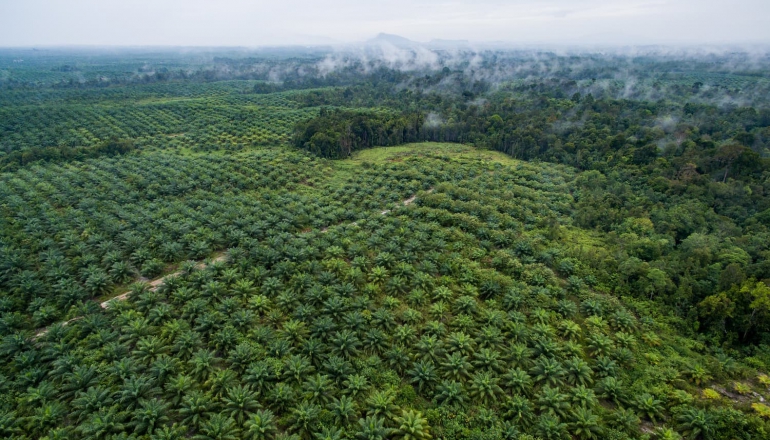
Abundant palm trees in Southeast Asia provides a strong foundation for bioenergy development. (Photo: iStock)
At COP30 in Belém, Brazil, advancing sustainable fuels emerged as a key agenda. With Southeast Asia holding vast biomass resources, the region is seen as central to global biofuel expansion. Brazilian President Luiz Inácio Lula da Silva signaled openness to work with the Global South to shape a unified standard for the biofuel market.
RECCESSARY presents the “Unlocking ASEAN bioenergy” series, taking an ASEANcentric view to explore the current state of the industry and its challenges. The series examines policy directions in Indonesia, Thailand, and Vietnam, and concludes with a focus on opportunities and risks in the Malaysian market through real business case studies.
Palm oil mills generate far more waste than the local demand can absorb, and because many mills are located deep in the interior, it has been difficult to transport that waste elsewhere for combustion, said James Lu, CEO of Power Diagnostics Service (PDS) Malaysia, an energy monitoring company based in South Korea. Lu sees strong potential in Sarawak’s abundant raw materials and is actively discussing bioenergy development partnerships with local firms.
PDS plans to begin with the implementation of energy monitoring systems and gradually expand into bioenergy power development.
According to data Lu has obtained, there are roughly 400 palm oil mills in East Malaysia’s Sarawak region, and most operate independently. Each mill’s annual electricity demand could theoretically consume five million tons of biomass, but in reality the supply of biomass is more than twice what is needed. This oversupply highlights not only the potential for scaling up bioenergy development in ASEAN, but also the possibility of exporting biomass resources.
Malaysia is the world’s second-largest producer of palm oil, following only Indonesia. The production process generates various byproducts such as palm empty fruit bunches (EFB), palm kernel shells (PKS), and palm fibers, which are commonly used by factories as feedstock for bioenergy.
Since palm trees absorb carbon dioxide through photosynthesis, burning these residues for energy is considered nearly carbon-neutral, generating minimal net emissions.
Biomass energy, in fact, encompasses a wide array of inputs, conversion pathways, energy carriers, and end uses, forming a complex and diverse value chain. According to the 8th ASEAN Energy Outlook (AEO8), although biofuels currently make up the smallest share of total fuel demand, they are projected to grow at an average annual rate of 4.1% between 2022 and 2050—matching coal as one of the region’s fastest-growing fuel sources.
For many ASEAN countries, the strongest case for developing bioenergy lies in enhancing energy security and reducing reliance on fossil fuels, said Phetkeo Poumanyvong, energy and agricultural economist at the Economic Research Institute for ASEAN and East Asia (ERIA). Bioenergy helps buffer against the geopolitical risks and price volatility tied to petroleum imports. It also serves as a catalyst for rural development by turning agricultural waste into new income sources, supporting local economies.