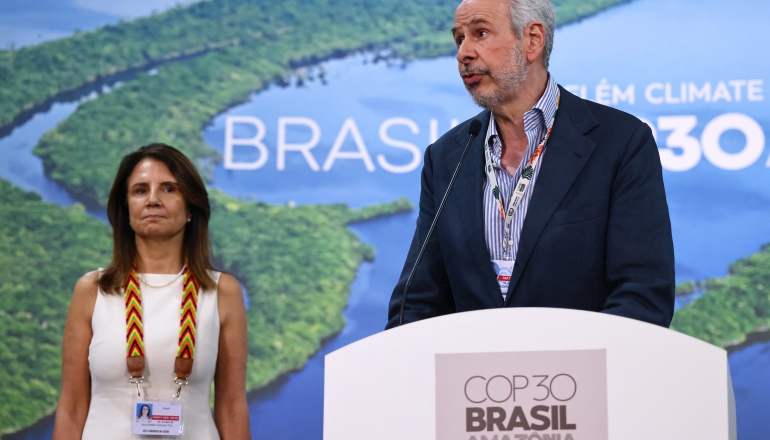
TFFF, first proposed by Brazil at COP28 in 2023, officially launched at COP30. (Source: COP30)
This year’s COP30 brought the world’s climate spotlight to the Southern Hemisphere, as leaders gathered in Belém—a gateway city to the Amazon rainforest. With forest protection, climate finance, and updated Nationally Determined Contributions (NDCs) at the heart of the agenda, the summit also marked the 10th anniversary of the Paris Agreement, drawing global attention. RECCESSARY unpacks the key decisions and emerging trends from this landmark event.
On the eve of COP30, an innovative mechanism aimed at transforming global forest protection financing was officially kicked off. The Tropical Forests Forever Facility (TFFF), initiated by host country Brazil, seeks to establish a sustainable fund with up to USD 125 billion. The facility is designed to provide stable financial support for 74 developing countries working to protect forests, using investment returns to sustain funding.
Brazil has emphasized that once fully capitalized, TFFF could become one of the world’s largest multilateral investment funds for nature conservation. Although the mechanism attracted USD 5.5 billion in pledges on its first day, it has also drawn criticism. Representatives from some Global South countries have expressed skepticism about the potential risks of “financializing nature” embedded in the initiative.
Amazon in focus at COP30 as Brazil frames TFFF as key shift in forest protection
By hosting COP30 in Belém, a port city on the edge of the Amazon rainforest, Brazil drew global attention back to the “lungs of the Earth.” As a vital part of the global carbon cycle, the Amazon stores the equivalent of 20 years’ worth of global carbon emissions, holds 10% of the planet’s terrestrial biodiversity, and generates billions in ecosystem service value. For Brazil, home to vast rainforest territories, securing long-term financing to curb deforestation emerged as a central theme of the summit.