Suspension can temporarily contain increasing capacity, but the real issue lies in the slowing of the industry’s decarbonisation, writes Jing Ling
.jpg)
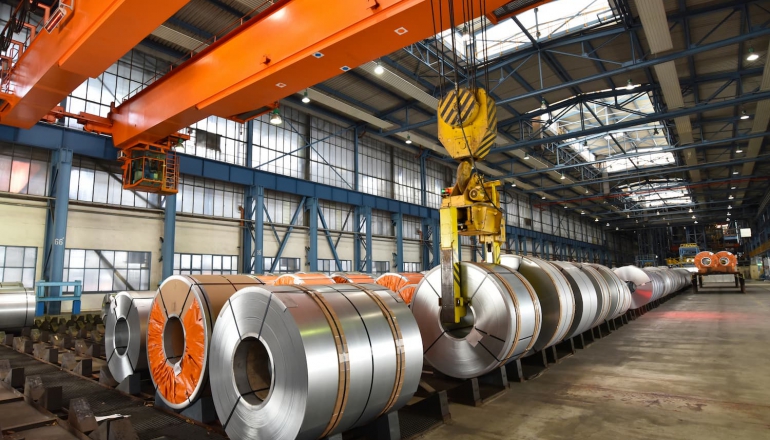
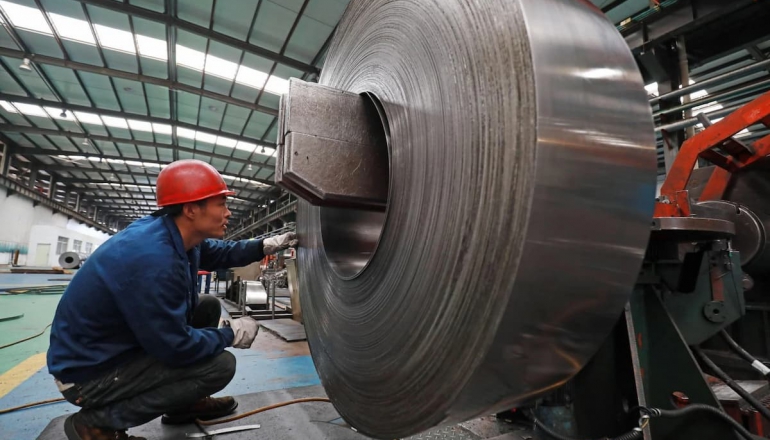
A worker on the strip production line in a factory in Luannan, Hebei province, China. (Image: YongXin Zhang / Alamy)
On 23 August, China’s Ministry of Industry and Information Technology (MIIT) issued a notice suspending new steelmaking production projects while it reviews a policy that aimed to control overcapacity in the sector.
The capacity replacement policy, introduced in 2014, required steelmakers to offset new production projects by retiring outdated equipment. As well as easing overcapacity, it was hoped this would modernise equipment and processes, reduce pollution and, since 2020, cut carbon emissions. Its suspension follows mixed results, and raises questions about the future of China’s steel industry.
Steel production accounts for around 15% of China’s carbon emissions. And while the capacity replacement policy has helped phase out older, more polluting facilities, production of crude steel has continued to rise. The suspension could therefore curb overcapacity in the short term, but it also risks stalling essential decarbonisation initiatives, such as the shift towards electric arc furnaces (EAFs), which are less carbon-intensive.
Tracing the development of Hubei’s steel industry – China’s leading steel-producing province – it’s possible to analyse the impact of capacity replacement and what its suspension might mean for the industry’s future.
The industry is going green, but expansion hasn’t stopped
In 2014, the MIIT issued a notice on implementing capacity replacement for industries with severe overcapacity, including steel, cement, and aluminium. This was a response to State Council guidance on resolving overcapacity and to its air pollution action plan. Over the past decade, the MIIT has published four capacity-replacement policies to guide industry development.