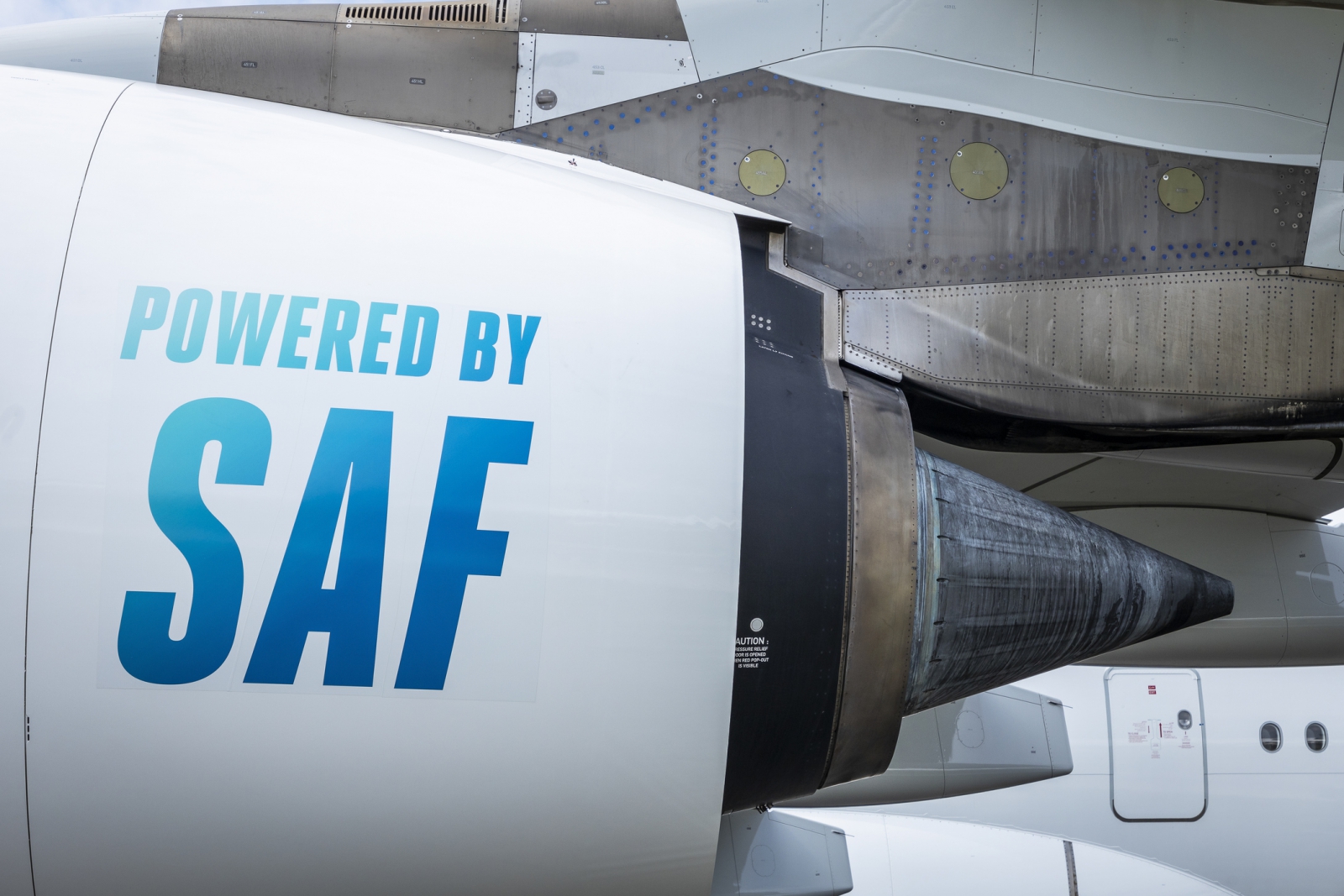
SAF is regarded as one of the effective solutions for decarbonizing aviation. (Image source: iStock)
Editor’s note: As global aviation decarbonization accelerates, sustainable aviation fuel (SAF) is gradually moving toward commercial use. Taiwan, however, still faces challenges in feedstock supply, technology and market development. In this first article in the “New Opportunities for Sustainable Fuels” series, Jong-Shun Chen, Associate Research Fellow at the Center for Green Economy of the Chung-Hua Institution for Economic Research, looks at how Taiwan can develop its SAF industry, with a focus on policy, technology and industry planning.
In recent years, net-zero emissions have become a shared global goal, but aviation remains one of the hardest sectors to decarbonize. Cars can be electrified and factories can run on renewable energy, but long-haul flights will continue to rely on liquid fuels for the foreseeable future. SAF is therefore widely recognized internationally as the most important and practical solution for the aviation industry to achieve net-zero emissions.
Around the world, SAF is moving from research and development toward early market adoption. The European Union, the United Kingdom, Japan, Singapore and South Korea have all introduced SAF targets and related policies. The EU has also begun implementing a mandatory blending requirement, showing that aviation decarbonization is no longer just an environmental issue, but also a matter of national competitiveness and industrial development.
Capacity alone won’t build a market: Policy design is key to Taiwan’s SAF development
For Taiwan, SAF development has three major implications.
First, it would help maintain the international competitiveness of Taiwan’s aviation industry. Taiwan relies heavily on international trade and air transport, with tourism, business travel and the semiconductor industry all depending on international flight networks. As global aviation markets tighten their decarbonization requirements, a lack of domestic SAF supply could leave airlines facing higher carbon costs and affect the country’s overall competitiveness.
Second, SAF could create new opportunities for green industries. It involves more than fuel production, with a supply chain covering feedstocks, manufacturing, logistics, certification and trading. With early planning, Taiwan could develop SAF as a new area of growth for its energy transition and green industrial development.
Third, developing SAF could strengthen Taiwan’s energy security and help it keep pace with international markets. As aviation fuel supply becomes increasingly linked to carbon management requirements, establishing domestic production capacity and a regulatory framework at an early stage could help Taiwan better manage external supply disruptions and meet changing international requirements.
However, the main challenge for Taiwan’s SAF development is not supply or demand, but policy. A common situation is that suppliers want a clearer picture of future market demand before investing in production facilities, while buyers need confidence in a stable supply before increasing their use of SAF. This leaves both sides waiting for the other to act, making it difficult for the market to take shape. The priority, therefore, is to put mechanisms in place to create demand and give both suppliers and buyers the confidence to move forward.
In 2025, the government included SAF in its flagship decarbonization action plan. The Civil Aviation Administration also considered a target for Taiwan-based airlines to use a 5% SAF blend by 2030, while Taoyuan, Songshan and Kaohsiung airports began offering blended SAF. CPC Corporation and Formosa Petrochemical Corporation have also been preparing for commercial production. These are positive steps, but clearer policy direction and stronger market signals are still needed to help the industry grow.
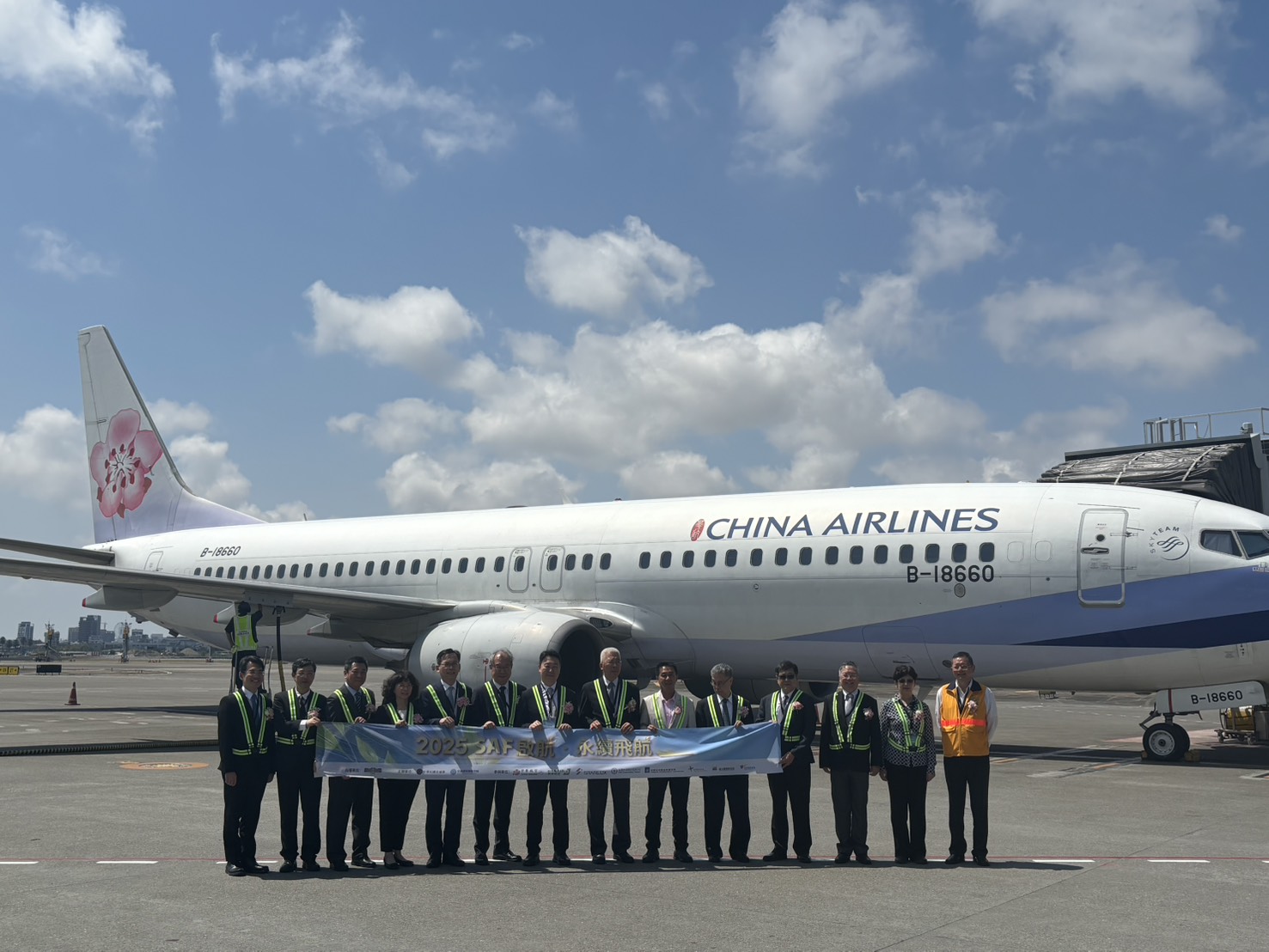
CPC Corporation, Taiwan is expected to begin producing its own SAF this year. (Image: Min-Chien Chuang)
From HEFA to ATJ: Competition between domestic SAF technologies enters a new phase
In terms of technology, hydroprocessed esters and fatty acids (HEFA) is currently the most mature SAF production pathway, using used cooking oil as its main feedstock. Taiwan collects around 80,000 metric tons of used cooking oil each year, enough to produce an estimated 60,000 to 70,000 metric tons of SAF. That would fall short of the 150,000 metric tons a commercial plant could produce annually, particularly as demand is expected to grow after 2030. Taiwan would therefore need to allow feedstock imports.
The need to import feedstocks also raises the question of why Taiwan should explore other technologies when HEFA is already well established, with a technology readiness level (TRL) of 7–8. The main reason is the limited global supply of fats and oils, which restricts how much SAF HEFA can produce. While it can help meet near-term demand, it may not be enough to support long-term growth.
This is why countries such as the United States, the United Kingdom and Japan are also looking at alcohol-to-jet (ATJ) technology. ATJ uses alcohol as its feedstock, which can come from sources such as fuel ethanol and industrial alcohol, as well as cellulosic ethanol in the future. This wider range of potential feedstocks offers greater scope for scaling up production. Alcohol can also be used to produce gasohol or, through a multi-product production model at the same facility, green methanol for the shipping industry.
In the past, the biggest concern about ATJ was its relatively high carbon intensity (CI). In recent years, however, the United States has significantly reduced ethanol’s carbon intensity through low-carbon farming practices, precision agriculture, more efficient production processes and carbon capture technologies. Some low-carbon ethanol can now achieve emissions reductions close to those of HEFA. In other words, the question is no longer whether ATJ can reduce emissions, but how to obtain low-carbon ethanol that meets international standards.
Taiwan could improve the emissions performance of its SAF through three measures: introducing certified low-carbon ethanol, developing second-generation cellulosic ethanol from agricultural residues, and establishing a system to manage carbon intensity. As long as fuels meet the required emissions-reduction standards, different technologies should be allowed to compete fairly rather than having one pathway chosen in advance.
A three-phase SAF strategy: Build the market by 2030, expand supply by 2035, then look to the Asia-Pacific
Taiwan could take a phased approach to SAF development, beginning with a first phase from 2026 to 2030. The focus would be on building the necessary regulatory framework and creating a market for SAF rather than maximizing production. Priorities would include putting certification and blending systems in place, developing the supply chain and conducting demonstration projects. These steps would help airlines, fuel suppliers and the public become more familiar with SAF.
A 3% blending target combined with policy subsidies could support the operation of a demonstration plant with an annual capacity of 80,000 metric tons. By 2030, the goal is to establish a market where SAF is better understood and more widely accepted.
The second phase, from 2030 to 2035, would focus on expanding the supply chain and scaling up production. This would involve gradually moving beyond HEFA to include ATJ and other technology pathways, with policy support helping to build investor confidence. Raising the blending target to 5% could support a commercial plant with an annual capacity of 150,000 metric tons.
From a market perspective, the significance of 2035 would lie not only in a higher blending ratio, but also in Taiwan having enough SAF available to attract international airlines to refuel here. If Taiwan can offer a stable supply, reasonable prices and comprehensive certification services, it could have the opportunity to move from being a SAF user to becoming a regional supplier.
The third phase, beginning after 2035, would focus on taking Taiwan’s SAF industry to the next level. By this stage, the government should gradually shift from promoting the market to regulating it. HEFA, ATJ, Fischer-Tropsch (FT), power-to-liquid (PtL) and other emerging technologies should compete on equal terms under the same regulatory and carbon-management framework.
The focus would also expand beyond meeting domestic demand to serving the wider Asia-Pacific market. To build a competitive SAF industry with an international presence, Taiwan would need to work toward annual production of 300,000 to 800,000 metric tons and attract more international airlines to refuel here.
Taiwan’s SAF development strategy can be summarized in three sentences:
-
By 2030, make SAF visible in Taiwan’s market.
-
By 2035, make the world willing to refuel with SAF in Taiwan.
-
After 2035, allow different technologies to compete in the market while working toward annual production of 300,000 to 800,000 metric tons for international markets.
It is worth emphasizing again that the biggest risk facing Taiwan’s SAF development today is not immature technology or insufficient feedstocks, but unclear policy. Without clearer policy direction, Taiwan could miss a critical window of opportunity in the global industrial transition.
In fact, if the government can put the right policies and systems in place, support domestic market growth, and encourage technological innovation and fair competition, Taiwan could do more than reduce aviation emissions. It could also build its own SAF industry over the next decade and become a key green energy supplier in the Asia-Pacific region.
This article was contributed by Jong-Shun Chen, Associate Research Fellow at the Center for Green Economy, Chung-Hua Institution for Economic Research.
Have insights on energy or carbon issues? Share your perspective with us! Send your submission to reccessary@gmail.com for a chance to be featured. Submissions may be edited for clarity and style.
