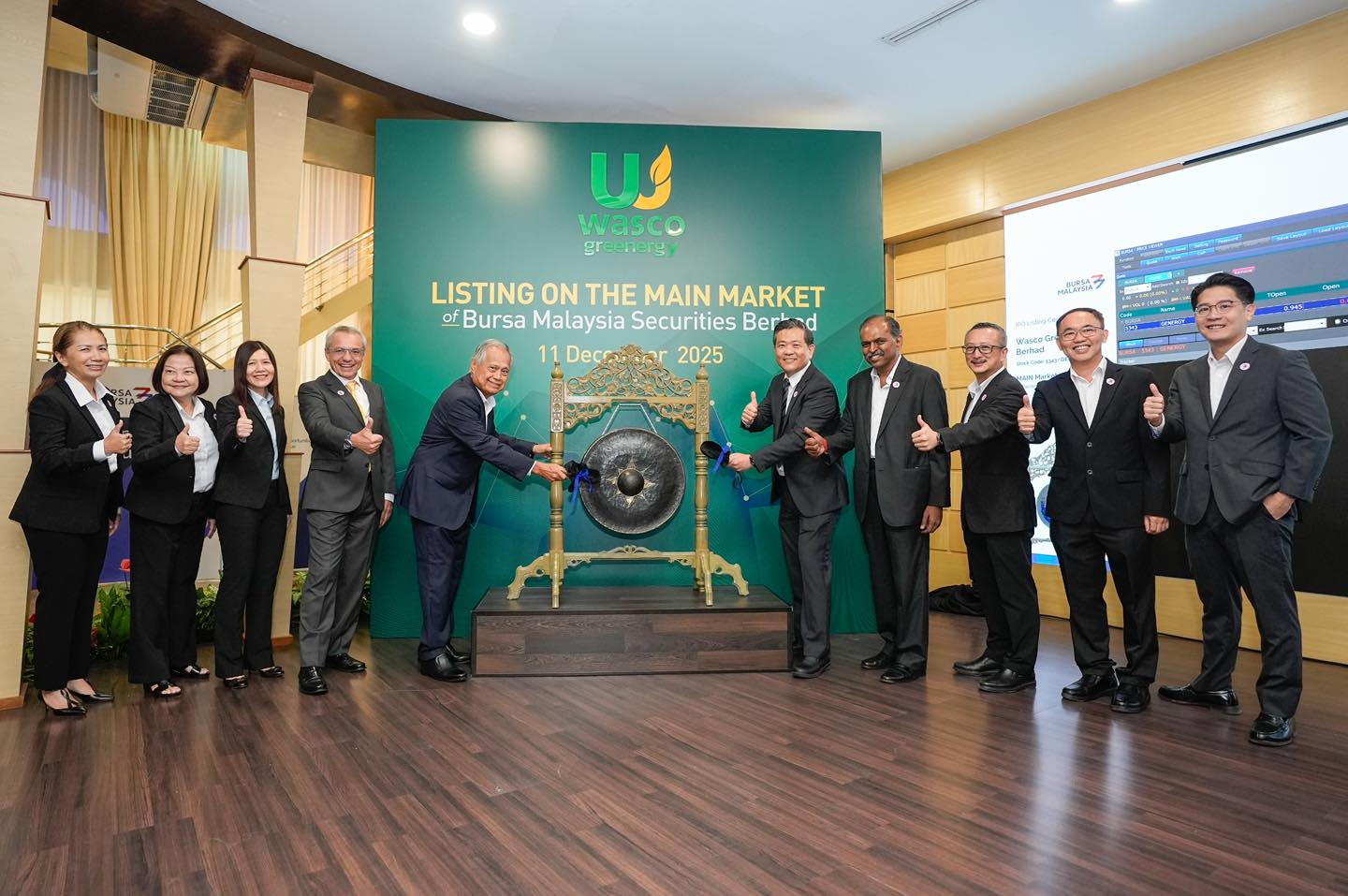
Bioenergy arm Wasco Greenergy, a unit of Malaysian energy solutions provider Wasco, went public in 2025. (Image: Bursa Malaysia)
At COP30 in Belém, Brazil, advancing sustainable fuels emerged as a key agenda. With Southeast Asia holding vast biomass resources, the region is seen as central to global biofuel expansion. Brazilian President Luiz Inácio Lula da Silva signaled openness to work with the Global South to shape a unified standard for the biofuel market.
RECCESSARY presents the “Unlocking ASEAN bioenergy” series, taking an ASEANcentric view to explore the current state of the industry and its challenges. The series examines policy directions in Indonesia, Thailand, and Vietnam, and concludes with a focus on opportunities and risks in the Malaysian market through real business case studies.
Malaysia’s National Biomass Action Plan published in 2023 projected up to 182 million tons of biomass output annually, with the potential to generate RM17 billion (around TWD 132.4 billion) in economic value by 2030. The plan has since attracted a growing wave of investment, not only from major energy equipment suppliers but also from a broader mix of smaller players, including consulting firms and other service providers, now moving to tap into the sector’s rising momentum.
Wasco pivots to bioenergy with subsidiary IPO to tap new markets
Malaysian energy solutions provider Wasco is a flagship player in the country’s bioenergy sector with over three decades of experience. Through its wholly owned subsidiary Wasco Greenergy and a joint venture with Japan’s Shinko Metal, the company now holds roughly 70% market share in Malaysia’s biomass steam turbine market. This success reflects how Wasco has extended its traditional expertise in oil and gas equipment into the emerging bioenergy field.
In November 2025, Wasco Greenergy was listed on the Bursa Malaysia stock exchange.
According to CEO Lee Yee Chong, Wasco Greenergy’s strength lies in its ability to deliver end-to-end solutions, from biomass processing equipment and boilers to power generation systems and turbines. This integrated supply chain gives the company a competitive edge. Its core markets today are Malaysia and Indonesia, and it has also secured projects in countries with extensive palm plantations such as Colombia and Ghana.
Strong industry prospects are fueling broader momentum across the sector. Other energy giants, including Malaysia’s national oil company Petronas, Italy’s Eni Group, and Japan’s bioenergy firm Euglena, have partnered to develop a biofuel refinery in Johor. The facility is planned to produce sustainable aviation fuel (SAF), hydrotreated vegetable oil (HVO) and bionaphtha, with commercial operations expected to begin in 2028.