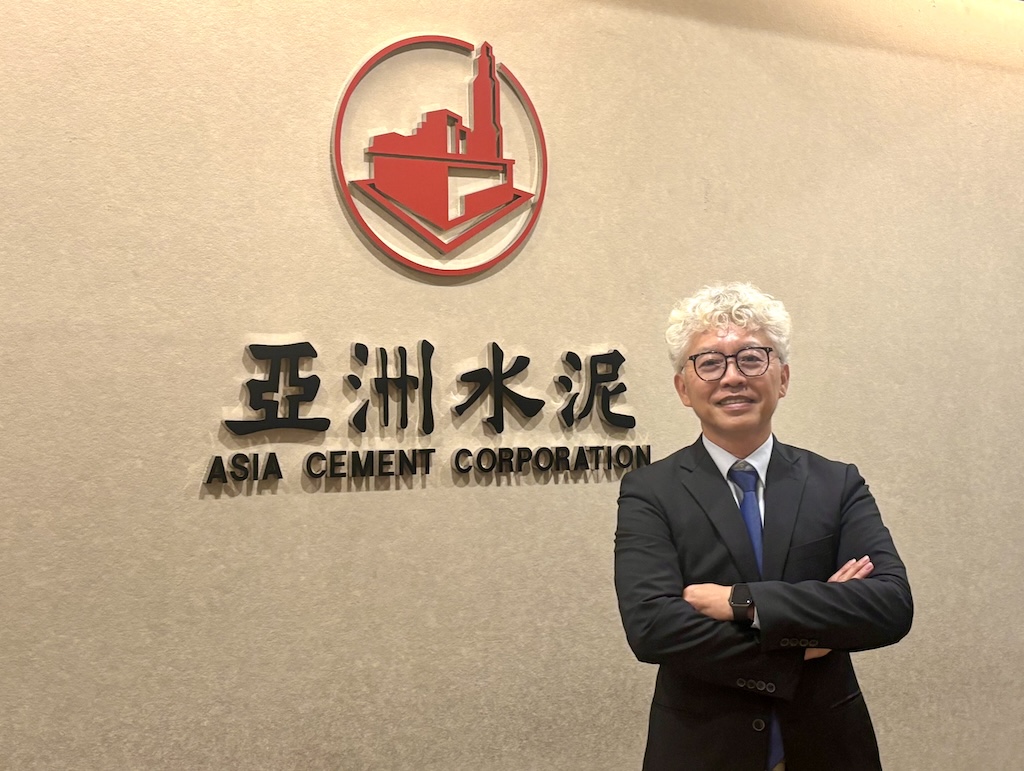
Walker Chen, chief deputy plant manager at Asia Cement’s Hualien facility, says the company updates its carbon reduction goals every one to two years and is now working on its 2030 targets.(Photo: Daisy Chuang)
With Taiwan’s carbon fee now in place, the EU’s Carbon Border Adjustment Mechanism (CBAM) in effect, and global sustainability standards evolving, 2026 marks a pivotal shift from voluntary ESG commitments to policy-driven action. This moment calls on companies to assess whether their operations truly reflect low-carbon competitiveness. In this feature series, RECCESSARY explores how businesses are responding to rising regulatory pressure by turning decarbonization into practical, long-term strategies — from policy changes and industry practices to technological pathways.
Taiwan’s carbon fee officially took effect in 2025 and began collection on Jan. 1, 2026, sending a clear signal that carbon emissions now come with a price. For domestic companies emitting over 25,000 metric tons of carbon annually, this marks the start of a new regulatory era. RECCESSARY spoke with Asia Cement Corporation (ACC) and China Steel Corporation (CSC), both among the first to be covered by the carbon fee, to understand how they are shaping their decarbonization paths, selecting preferential rate options, and balancing emissions cuts with industrial competitiveness.
High-emitting industries face initial impact as carbon fees raise operating costs
Taiwan’s economy depends heavily on manufacturing, and many key industries that support growth are also major sources of carbon emissions. Under the current carbon fee system, the general rate is set at TWD 300 per metric ton of carbon. Companies that implement approved reduction plans can qualify for lower rates. With Plan B, the fee falls to TWD 100 per ton, and under Plan A it drops to TWD 50.
Cement and steel are classified as high carbon‑leakage risk sectors under draft guidelines announced by the Ministry of Environment on Dec. 18, 2025. As a result, they are eligible for an additional 80% reduction in fees, lowering the payable rate to TWD 20 per ton under Plan B and TWD 10 under Plan A.