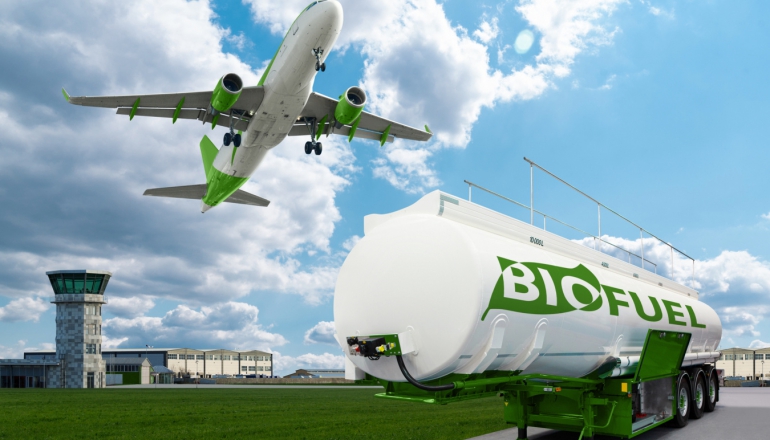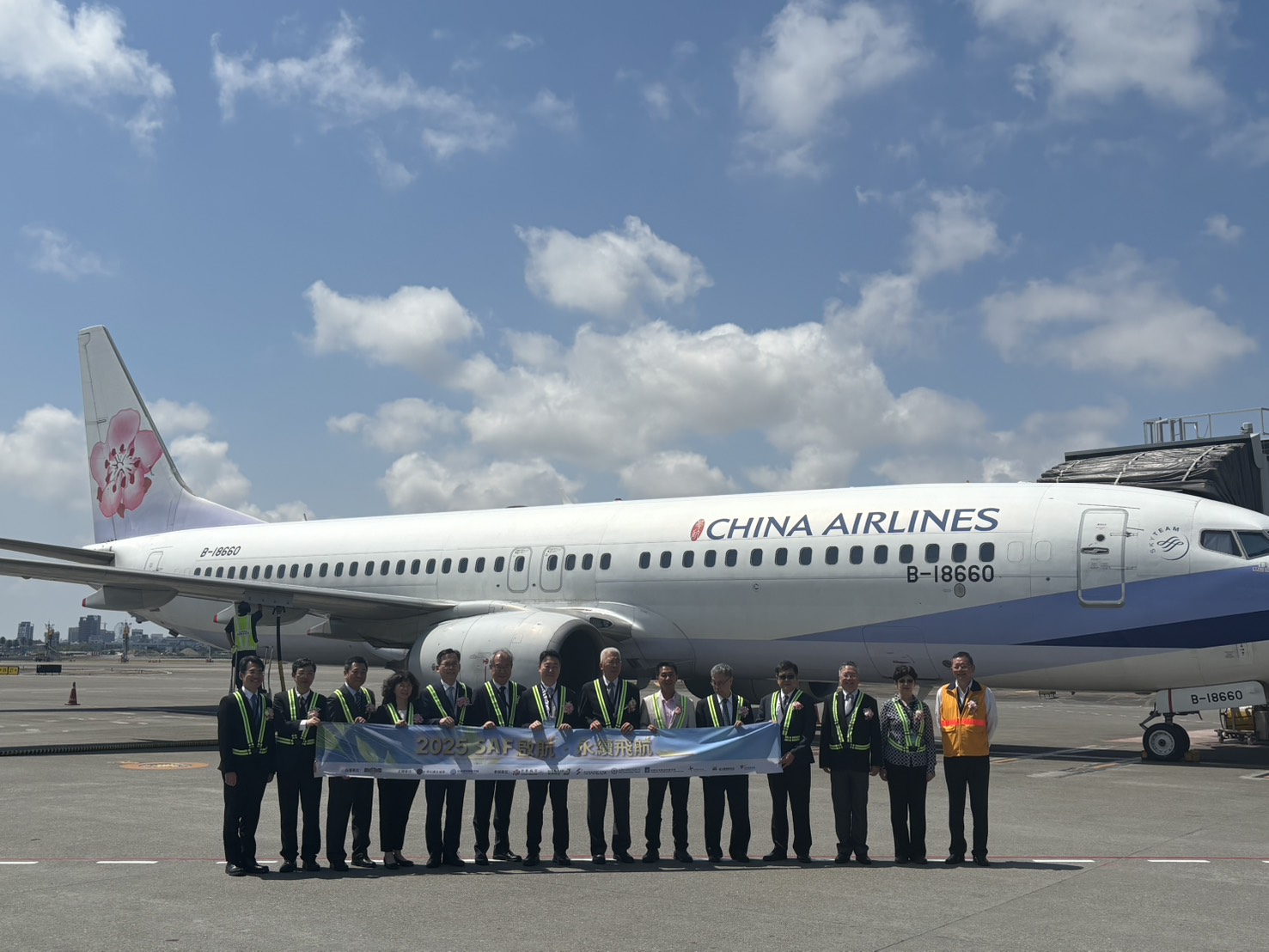
Songshan, Taoyuan and Kaohsiung airports adopted SAF in April, with local airlines on board. (Photo: Daisy Chuang)
Sustainable aviation fuel (SAF) has emerged as a core strategy in aviation’s push to cut carbon emissions. In April, Taiwan reached a milestone as China Airlines, EVA Air, and Starlux Airlines added SAF to flights departing from domestic airports for the first time. Despite the breakthrough, SAF remains two to five times more expensive than conventional fuel, and supply remains limited with no fully scaled production chain in place.
In this article, RECCESSARY tracks the decarbonization efforts of Taiwan’s three major carriers and speaks with experts about how the SAF supply chain may take shape.
Stricter global rules drive Taiwan’s SAF adoption
For airlines, cutting carbon emissions is not only about meeting internal ESG goals, it’s also driven by increasingly stringent international regulations. Aviation accounts for roughly 2.5% of global carbon emissions, prompting the International Civil Aviation Organization (ICAO) to implement measures such as the Carbon Offsetting and Reduction Scheme for International Aviation (CORSIA), which requires airlines to reduce emissions from international flights. In 2024, the International Air Transport Association (IATA) updated its net-zero roadmap, placing greater emphasis on SAF and advancing aircraft energy technologies.