RECCESSARY’s “ASEAN Weekly” highlights Southeast Asia’s new energy and carbon market updates. (Image: RECCESSARY)
This week in ASEAN, sustainability developments range from corporate performance rankings to energy policy shifts. Thai companies gained stronger global visibility in S&P Global’s Sustainability Yearbook 2026, with 13 firms achieving Top 1% CSA rankings. The Philippines formalized nuclear energy in its new power policy framework and finalized a seven-phase licensing roadmap, targeting commercial operations by 2032. Below are the key ASEAN stories from Feb. 23–Mar. 1.
Thai companies secure top 1% rankings in S&P Global Sustainability Yearbook 2026
Thai corporations are increasingly visible in global sustainability rankings, reflecting the growing importance of sustainability performance as a measure of competitiveness. In the Sustainability Yearbook 2026, released by S&P Global, 48 Thai companies were selected.
Among them, 13 companies achieved the prestigious Top 1% S&P Global Corporate Sustainability Assessment (CSA) Score distinction.Those making the list include PTT Public Company Limited, PTT Global Chemical Public Company Limited, SCG Packaging Public Company Limited, and Airports of Thailand Public Company Limited. Read more here
Philippines prioritizes nuclear in power framework, finalizes 7-phase licensing roadmap
The Philippines has unveiled a new power policy framework that formally prioritizes nuclear energy and other emerging technologies over conventional coal to meet the country’s round-the-clock electricity needs. The government also completed a comprehensive licensing and permitting roadmap for nuclear power plant projects.
Under the new framework, power generation projects will be categorized based on load requirements, guiding developers to align investments with the government’s preferred energy mix. The country is targeting the start of nuclear power operations by 2032. Read more here
OCBC allegedly exploits loopholes to finance coal-powered nickel mining
OCBC has come under scrutiny over allegations that it exploited disclosure gaps when extending loans to Harita Group, without adequately spelling out how financing nickel mining could lead to expanded captive coal-fired power capacity and, in turn, heighten climate risks.
In response, OCBC said its corporate financing complies with relevant regulations, adding that it is unrealistic to require nickel producers in Indonesia to rely entirely on renewable energy at this stage. Read more here
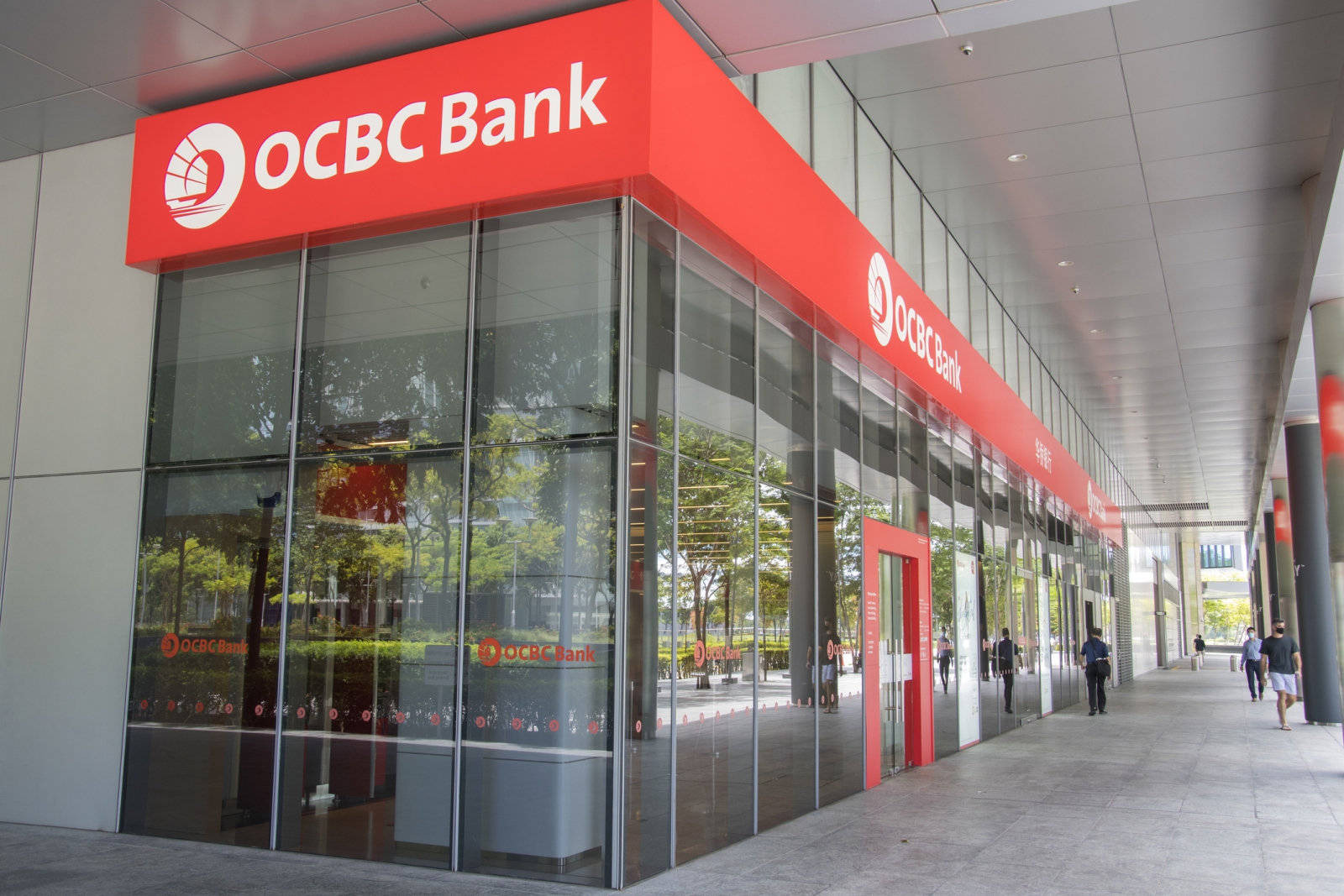
OCBC accused of using a loophole in loans to Indonesian nickel miner. (Photo: iStock)
Rondo’s thermal battery points to a new path for industrial decarbonization in Southeast Asia
When Rondo Energy switched on the world’s first cement heat battery in Thailand in November 2025, it offered a glimpse of how one of industry’s most stubborn emissions problems might finally be tackled.
In an interview with RECCESSARY, Kira Rundel, Rondo’s director of business development for Australia and Asia-Pacific, explained how thermal batteries, built from familiar industrial materials and designed to integrate with existing systems, could offer a scalable pathway for decarbonizing industrial heat across Southeast Asia. Read more here
How Thailand and Vietnam’s power reforms will reshape corporate energy strategy
AI-led data center investments and Southeast Asia’s manufacturing boom are intensifying corporate concerns over power supply security and electricity prices. Thailand and Vietnam are both preparing to roll out new power sector policies in 2026, moves expected to reshape national power systems, accelerate renewable energy deployment and influence electricity prices and the broader power market. The changes will have material implications for corporate energy strategies and cost management. Read more here
Natural gas in the Philippines: A test case for Southeast Asia’s energy transition
On 19 January 2026, Philippine President Ferdinand Marcos Jr proudly announced the discovery of new natural gas reserves just 5 kilometers east from the original Malampaya gas field off the coasts of Palawan. With an estimated 98 billion cubic feet (2.77 billion cubic metres) of natural gas, Malampaya East-1 was touted by Marcos as a discovery that will “significantly boost the country’s energy supply and strengthen long-term energy security.” But rather than securing the country’s energy future, the discovery underscores the danger of doubling down on natural gas when a faster pivot to renewables is urgently needed. Read more here
Rethinking Malaysia’s path to net zero: The role of the Climate Change Bill and carbon markets
As Malaysia prepares to table its long-awaited Climate Change Bill and National Carbon Market Policy in Parliament, the country stands at an important inflection point. For the first time, climate ambition is being translated into a formal legal and institutional framework. This is a necessary and overdue step. Yet, legislation alone will not determine whether Malaysia’s transition to net zero succeeds. Without the proper use of carbon markets, this ambition would fail. Read more here
.jpg)
Interest in carbon markets has accelerated rapidly, from voluntary carbon trading with the establishment of the Bursa Carbon Exchange (BCX) to discussions around national registries, domestic projects and cross-border cooperation. (Photo by Bursa Malaysia / Facebook)
A lighter footprint for Lunar New Year in Southeast Asia as e-hongbao adoption grows
Across Southeast Asia, Lunar New Year celebrations are marked by the exchange of hongbao, ang pow, or li xi. But the tradition of gifting money in red packets also carries an environmental cost. Increasingly, convenience and sustainability concerns are nudging people toward electronic red packets, a shift that governments and banks in the region are actively encouraging. Read more here
Track ASEAN energy and carbon markets with clarity. Subscribe to RECCESSARY for policy intelligence and business-ready insights across Asia-Pacific.