RECCESSARY’s “ASEAN Weekly” highlights Southeast Asia’s new energy and carbon market updates. (Image: RECCESSARY)
This week’s ASEAN sustainability roundup highlights developments in energy storage, green transport, and renewable fuels. The Philippines has passed a national Energy Storage Systems (ESS) Act. Thailand moves to secure data center investment by tightening power purchase rules ahead of the Feb. 8 general election, even as climate and renewable energy issues remain largely absent from the campaign. Here are the key ASEAN stories from Feb. 2 to Feb. 8.
Thailand tightens power purchase rules to lock in data center investment
To prevent investment by energy-intensive industries such as data centers from flowing overseas, the Thai government plans to strengthen requirements tied to electricity purchase agreements. Under the proposed rules, companies would be required to provide bank guarantees or collateral to ensure they fulfill their power purchase commitments.
The measure would also apply to firms participating in Thailand’s pilot Direct Power Purchase Agreement (DPPA) scheme, as authorities seek to bolster investor confidence in the country’s energy development. Read more here
Google joins Singapore’s first centralized SAF procurement trial ahead of aviation green levy
Google and Singapore Airlines are among nine companies participating in Singapore’s first government-led, national-level sustainable aviation fuel (SAF) procurement initiative, according to a Feb. 2 statement.
Under the scheme, the companies will take part in a voluntary trial to purchase SAF through the Singapore Sustainable Aviation Fuel Company Ltd. (SAFCo), a special-purpose entity set up to centrally procure SAF. The trial comes ahead of Singapore’s plans to introduce a world-first green levy on departing flights from October, with proceeds earmarked for SAF purchases. Read more here
Opinion: Subsea power cables as catalysts of the energy transition in Southeast Asia
The ASEAN Power Grid (APG) has entered a new era of unprecedented momentum. For the first time in nearly 30 years since APG was launched, sustained political support is driving concrete progress on cross-border grid initiatives. In the last three years, ASEAN has achieved two breakthroughs that has been out of reach for almost three decades: the shift from purely bilateral electricity trading to a multilateral framework, and consistent momentum towards the development of subsea power cable projects, which can transform energy trade in archipelagic Southeast Asia. Read more here
Vietnam to mandate E10 biofuel nationwide from June, keep E5 until 2030
Vietnam is stepping up its bioenergy push. Starting in June, all qualifying unleaded gasoline sold nationwide will be required to contain a 10% bio-ethanol blend, known as E10.
The Ministry of Industry and Trade (MOIT) said the policy has been vetted across multiple agencies and deemed feasible, with supply security and fuel quality identified as the top priorities. Existing E5 gasoline will continue to be produced and sold in parallel until the end of 2030. Read more here
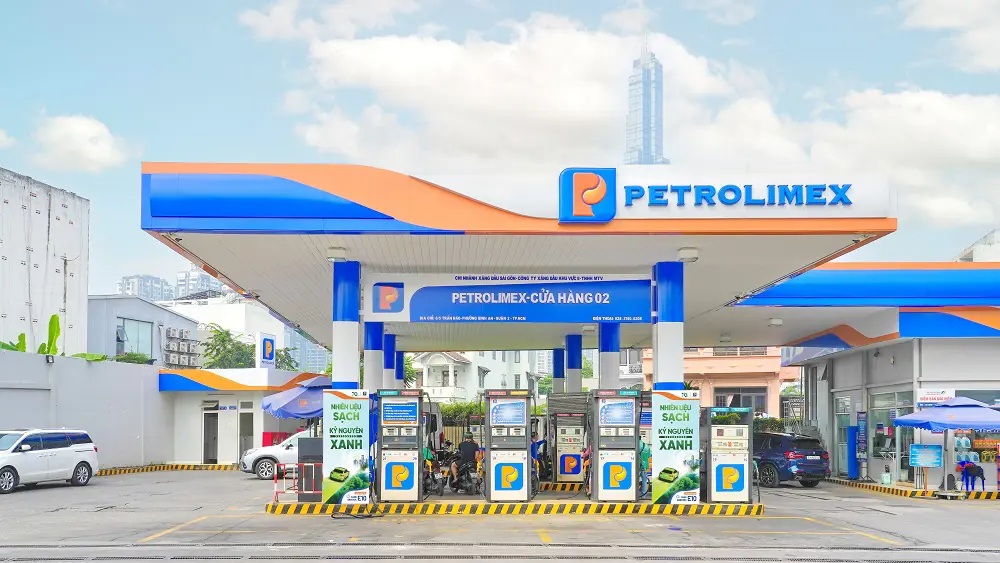
Vietnam’s state-owned fuel distributors, Petrolimex and PVOil, are already selling E10 gasoline in Hanoi, Ho Chi Minh City. (Photo: Petrolimex)
Why Vietnam’s rapid rise and Thailand’s slower growth tell different investment stories
Vietnam recorded 8.02% GDP growth in 2025, GDP at current prices reached USD 514 billion, placing it among the fastest-growing economies globally. According to Nikkei Asia, the country is on course to overtake Thailand in nominal GDP as early as this year, potentially becoming Southeast Asia’s third-largest economy.
Thailand’s macroeconomic picture is, by contrast, more subdued. The Organization for Economic Co-operation and Development (OECD) forecasts Thailand’s real GDP growth at around 1.5% in 2026, lagging most ASEAN peers. Read more here
Singapore startup launches mobile EV chargers in Malaysia as fixed infrastructure lags
A mobile energy storage–equipped EV charging station has made its first appearance in Malaysia. Singapore-based startup Kelle Energy has launched a mobile EV charger integrated with battery storage, designed to address gaps where fixed charging infrastructure falls short.
The system can also receive solar power, store electricity, and help manage peak demand, with initial deployments targeting fleets operating on short-term leased sites and locations where installing permanent chargers is not feasible. Read more here
Analysis: Why climate remains sidelined in Thailand’s election debate and what the next government can do
Thailand will head to the polls on Feb. 8, voting in elections for the House of Representatives alongside a referendum to replace the 2017 Constitution. Despite the growing toll of climate-related disasters, climate and renewable energy have not moved to the center of the campaign, with most candidates continuing to focus their campaigns on economic growth. Read more here
.jpg)
As Thailand heads to the polls on Feb. 8, experts explain why climate remains sidelined in the election debate and what the next government must do on energy. (Photo: iStock)
Philippines sets national energy storage framework, leads near-term deployment in ASEAN
The Philippines passed House Bill 6676, or the Energy Storage Systems (ESS) Act on Wednesday, establishing a national policy framework for the development, utilization, and commercialization of energy storage systems.
The legislation positions energy storage as a core enabler of grid reliability and renewable energy integration across both grid-connected and off-grid areas. It supports the government’s long-term target of raising the share of renewable energy in the power mix to 50% by 2040. Read more here
Indonesia seeks Australian investment in $5 billion waste-to-energy program
Indonesia is stepping up efforts to attract foreign investment into its waste-to-energy (WtE) programme, with Danantara, the country’s sovereign wealth fund overseeing the initiative, recently pitching the plan to Australian companies during a high-level business visit.
Danantara used the opportunity to brief Australian delegates on Indonesia’s WtE roadmap, aiming to expand cross-border cooperation in waste incineration power projects. The fund also moved to clarify recent remarks by President Prabowo Subianto, who had understated the programme’s projected investment needs, stressing that total funding requirements remain unchanged at around USD 5 billion. Read more here
Track ASEAN energy and carbon markets with clarity. Subscribe to RECCESSARY for policy intelligence and business-ready insights across Asia-Pacific.