RECCESSARY’s “ASEAN Weekly” highlights Southeast Asia’s new energy and carbon market updates. (Image: RECCESSARY)
This week in ASEAN, the Philippine government has stepped up oversight of more than 200 power infrastructure projects nationwide, including the Terra Solar project, with its first phase set to start commercial operations in the first quarter. Meanwhile, the Malaysian government has recently come under criticism for insufficient oversight in addressing greenwashing, allowing fossil fuel advertisements to make misleading claims. Below are the key ASEAN developments from Dec. 29–Jan. 4.
Why credible sustainability disclosures now matter to investors across ASEAN
Across Southeast Asia, sustainability reporting is entering a new phase as regulators move to align corporate disclosures with standards set by the International Sustainability Standards Board (ISSB). What was once a patchwork of national ESG frameworks is gradually giving way to a more consistent, investor-oriented baseline designed to make sustainability information comparable across markets. Read more here
Philippines tightens power project oversight ahead of Terra Solar’s 2.5 GW launch
The Philippine government is tightening oversight of more than 200 power generation projects to ensure timely delivery and strengthen energy security, as the first phase of the 2.5 GW Terra Solar project moves closer to commercial operation in early 2026.
In a statement, the Department of Energy (DOE) said it has intensified active monitoring across 200 power generation and energy storage projects under construction, aiming to ensure that committed capacity is delivered on schedule over the next three years. Read more here
Vietnam secures €76 million AFD funding for first pumped-storage hydropower project
Vietnam’s first pumped-storage hydropower project has secured backing from the Agence Française de Développement (AFD) and a group of international financial institutions.
Vietnam Electricity (EVN) and AFD signed a loan agreement on Dec. 26, under which the project is expected to receive EUR 76 million (approximately USD 89.4 million) in financing. The funding is set to enhance the flexibility of Vietnam’s power grid and further support the integration of renewable energy. Read more here
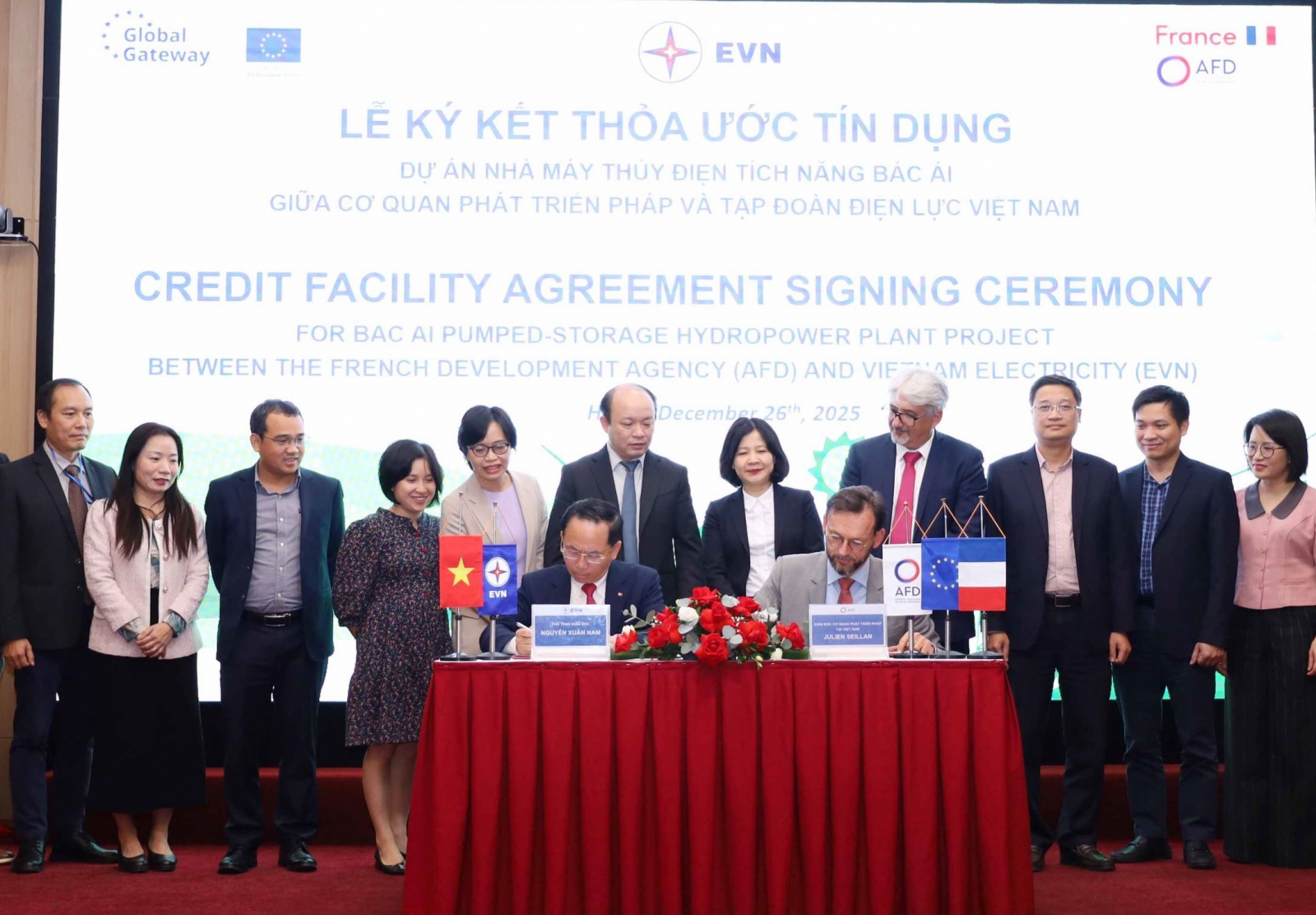
Vietnam Electricity (EVN) and France’s AFD sign a loan agreement. (Photo: EVN)
From burgers to biomass: Borneo Oil builds green ambitions through U.S. Nasdaq-bound associate
For decades, Borneo Oil Berhad was best known for a familiar brand on Malaysia’s fast-food menus. Today, the group’s ambitions extend well beyond franchised restaurants, spanning natural resources, renewable energy, and circular economy technologies. The gradual transformation is now drawing renewed attention as its U.S.-based associate moves closer to a Nasdaq listing. Read more here
Vietnam EV taxi operator GSM eyes Hong Kong IPO to fuel regional growth
Vietnamese electric-vehicle taxi operator Green and Smart Mobility JSC (GSM), part of the Vingroup ecosystem, is weighing a Hong Kong listing that could value the company at USD 2 to 3 billion, according to two sources cited by Reuters. If it proceeds, the deal would mark the first Hong Kong IPO by a Vietnamese firm and could raise at least USD 200 million. Read more here
Malaysia faces first climate lawsuit over greenwashing oversight
Environmental non-profit RimbaWatch has launched Malaysia’s first climate-related lawsuit, accusing the government of failing to rein in greenwashing and allowing misleading fossil fuel advertising to go unchecked. The group says regulatory inaction by the Ministry of Domestic Trade and Cost of Living (KPDN) and the Ministry of Natural Resources and Environmental Sustainability (NRES) has left consumers exposed to false climate claims. Read more here
 Malaysia RimbaWatch has sued two government ministries, accusing them of failing to curb alleged corporate greenwashing. (Photo: Court of Kuala Lumpur)
Johor–Singapore Special Economic Zone to unlock renewable power trade and SME opportunities in 2026
The Johor–Singapore Special Economic Zone (JS-SEZ) is set to reshape Johor’s energy landscape from 2026, prompting local players to scale up renewable energy supply, storage and supporting infrastructure. Rising demand is driven not only by industrial growth within Johor, but also by cross-border electricity exports facilitated through Energy Exchange Malaysia (Enegem). Read more here
Three forces set to shape Thailand’s renewable energy investment path
Thailand is set to hold a general election in February, prompting industry watchers to closely monitor how the next government will advance climate-related policies.
Looking ahead to 2026, three key factors are expected to shape the country’s renewable energy trajectory: the long-delayed Power Development Plan (PDP), the role of artificial intelligence (AI) in accelerating low-carbon transformation, and the expansion of direct power purchase agreements (DPPAs). Together, these developments are likely to influence strategic decisions by developers and investors. Read more here
Southeast Asia’s 2025 marked by fatal floods, fossil fuel expansion and renewed mining boom
2025 has been a year of global upheaval, and Southeast Asia was no exception, with massive disruption caused by changes in U.S. policy and the intensifying effects of climate change. Across Southeast Asia, every element of conservation was disrupted, from wildlife crime prevention to reforestation projects, as well as studies on fish in the Mekong River and vital environmental reporting in Indonesia. Even after the dust settled, very few funding alternatives have emerged, as European countries also cut foreign aid budgets (including funds earmarked for conservation) in favor of military spending. Read more here
Track ASEAN energy and carbon markets with clarity. Subscribe to RECCESSARY for policy intelligence and business-ready insights across Asia-Pacific.