RECCESSARY’s “ASEAN Weekly” highlights Southeast Asia’s new energy and carbon market updates. (Image: RECCESSARY)
This week in Southeast Asia, renewable energy, carbon governance, and marine sustainability take center stage. Indonesia’s Danantara fund backs PLN to speed up green projects, while the government cracks down on illegal palm oil and mining. Vietnam finalizes its pilot carbon allowance rules and pushes forward low-carbon transport. Below are ASEAN’s key stories from Dec. 22–28.
Indonesia bets sovereign wealth fund to speed up PLN renewable projects
Indonesia’s sovereign wealth fund Danantara on Dec. 22 signed a preliminary agreement with state-owned utility Perusahaan Listrik Negara (PLN), committing to provide funding support and assist in the development of renewable power projects.
Government data show that Indonesia’s renewable energy share had fallen short of its targets as of October 2025, with experts citing continued policy support for coal and insufficient incentives as key barriers to renewable energy growth. Read more here
Indonesia’s largest-ever forest crackdown could collect $8.5 billion from palm oil, mining firms
Indonesia could collect up to USD 8.5 billion in fines by 2026 from palm oil producers and mining companies found to be operating illegally in forest areas, Attorney General Sanitiar Burhanuddin said on Dec. 24.
The government’s forest enforcement task force has already seized control of 4.1 million hectares of illegal plantations and mines involving 20 palm oil companies and one nickel miner, said Burhanuddin. The area reclaimed is roughly equivalent in size to the Netherlands, underscoring the scale of long-standing land-use violations. Read more here
Philippines scales blue carbon with $1 billion financing, blue economy law
The Philippines is stepping up efforts to sustainably manage its marine ecosystems and natural capital, backed by USD 1 billion in international financing and the passage of a national blue economy framework.
The Asian Development Bank has approved a USD 500 million policy-based loan to support the country’s blue economy agenda, with a focus on strengthening marine ecosystem protection against climate-driven risks such as extreme weather and plastic pollution. The financing package is complemented by co-financing of around USD 235 million each from France’s Agence Française de Développement and Germany’s KfW Development Bank. Read more here
Vietnam approves pilot carbon allowance rules, targeting nationwide rollout by 2028
Vietnam’s government on Dec. 24 approved detailed arrangements for a pilot carbon emissions allowance scheme, outlining how allowances will be calculated and adjusted based on three key criteria.
The authorities plan to collect data from three priority sectors—power generation, steel and cement—before refining the regulations, with the aim of fully rolling out a nationwide emissions allowance system by 2028 and accelerating the formation of Vietnam’s carbon market. Read more here
Korea’s LS Group to invest $17.6 million in Vietnam rare earth magnet supply chain
South Korea’s LS Group announced on Dec. 17 that it will invest in Vietnam’s rare earth sector, committing KRW 25.8 billion (USD 17.6 million) to expand related facilities at its plant in Ho Chi Minh City. The investment aims to establish a supply chain for rare earth permanent magnets, a core material for high-growth energy and technology applications such as robotics, wind turbines, and electric vehicles. Read more here
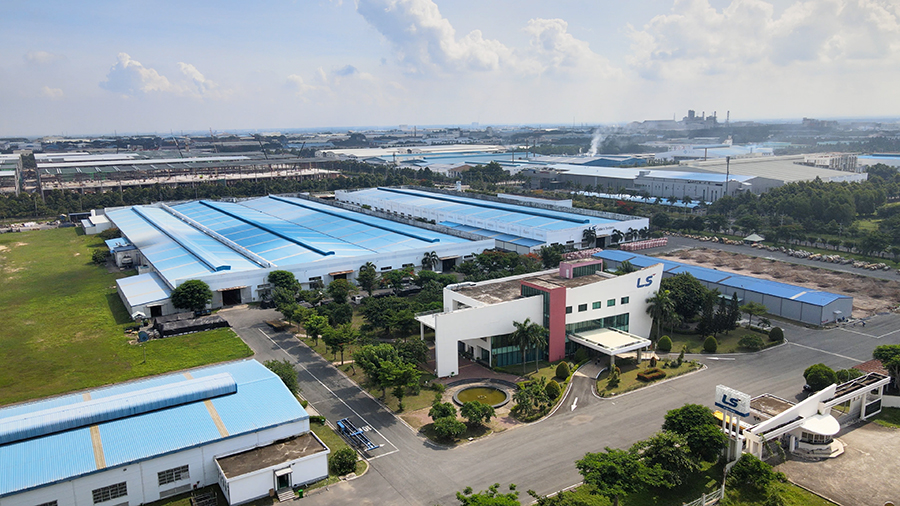
LS Cable & System’s Vietnam subsidiary plant. (Photo: LSCV)
How Hanoi plans to curb air pollution with electric buses, taxis by 2030
Hanoi is stepping up efforts to fully transition to green transportation by 2030, with the city government pledging to expand low-carbon public bus services and roll out supporting measures such as charging infrastructure and preferential financing to accelerate the electrification of tour buses and taxis, in a bid to curb worsening urban air pollution. Read more here
Vietnam's Vinh Long in talks with Sembcorp on renewables, eco-industrial parks
Vietnam’s Vinh Long province is in talks with Singapore’s Sembcorp Industries to explore investment opportunities in renewable energy and an eco-industrial park, as the province seeks to position itself as a clean energy hub for the Mekong Delta and beyond.
Lawrence Chan, head of Vietnam–Singapore Industrial Parks (VSIP) in Vietnam, said on Dec. 22 that Sembcorp’s strategy aligns closely with Vietnam’s national energy transition goals, as well as with the technical readiness needed to unlock Vinh Long’s renewable energy potential. Read more here
Slow and Sustainable: Discovering Southeast Asia’s eco-friendly experiences
Travel in Southeast Asia has long followed a familiar loop of beaches, temples, and Instagram checklists. Beyond those well-trodden routes, however, a quieter form of tourism is taking shape — one that places greater emphasis on local communities, lighter environmental footprints, and experiences that don’t need a filter to feel meaningful.
Across the region, these alternatives are less about seeing more, and more about traveling differently. Ecotourism already accounts for up to 45% of Indonesia’s tourism income, underscoring its growing economic role. Read more here
Critical mass: The complexity of Malaysia’s nuclear reboot
Nuclear power is back on the table for Malaysia. The imperatives are clear: the country must increasingly feed energy-intensive sectors such as data centres. In addition, Malaysia risks becoming a net gas importer within 10 to 20 years despite producing oil and gas (O&G). But nuclear power’s revival is anything but straightforward. Malaysia is reopening its once-shelved nuclear file under much tighter political, environmental, and geoeconomic constraints than the public debate reflects. Read more here
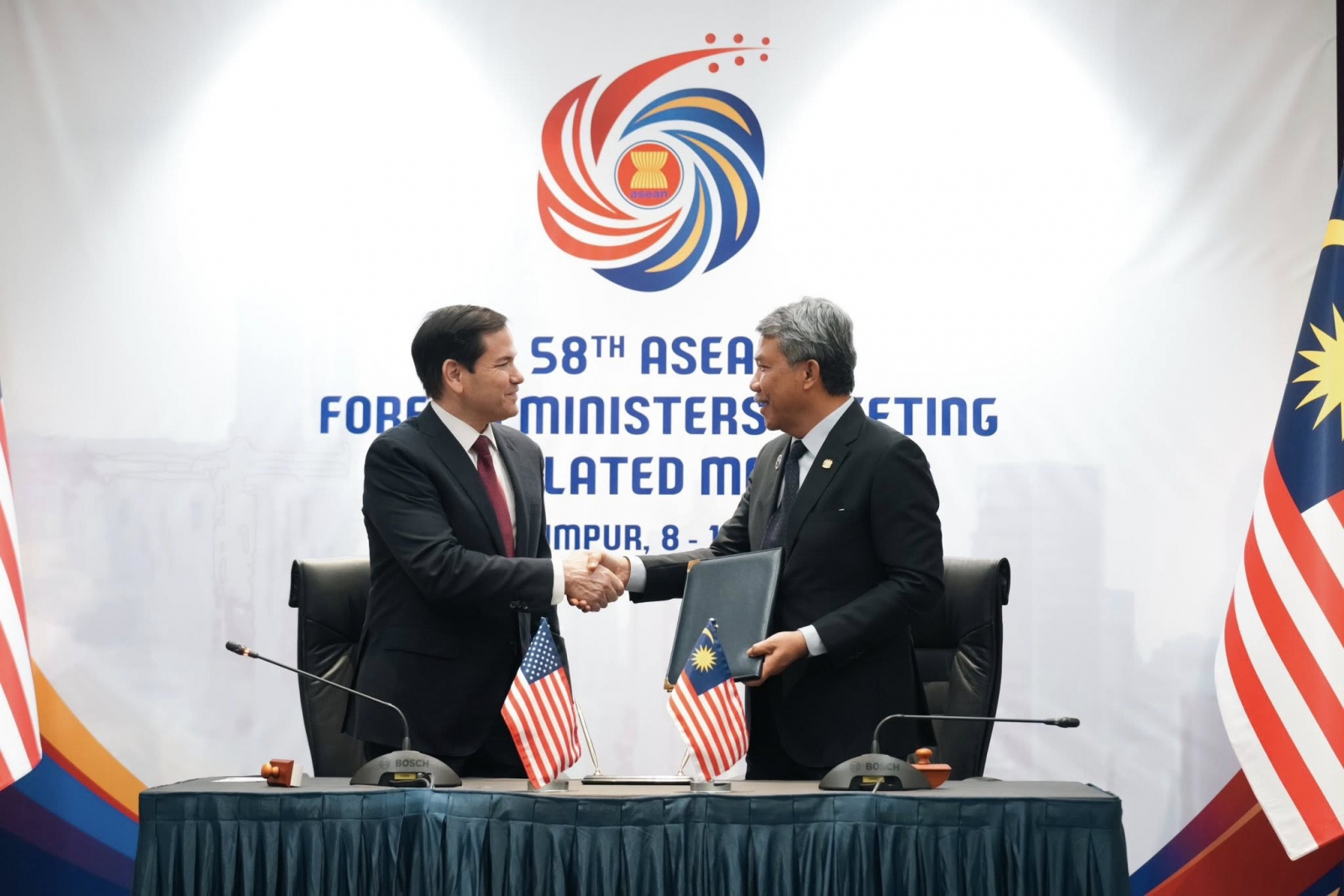
US Secretary of State Marco Rubio and Malaysian Foreign Minister Mohamad Hasan signed a memorandum of understanding concerning strategic civil nuclear Cooperation (NCMOU) with the aim of advancing peaceful nuclear cooperation between the United States and Malaysia on 10 July 2025. (Photo: Mohamad Hasan's Facebook)
Track ASEAN energy and carbon markets with clarity. Subscribe to RECCESSARY for policy intelligence and business-ready insights across Asia-Pacific.