RECCESSARY’s “ASEAN Weekly” highlights Southeast Asia’s new energy and carbon market updates. (Image: RECCESSARY)
This week in ASEAN, sustainability developments are shaped by shifting energy policies and accelerating low-carbon transitions. Indonesia has confirmed a delay to its B50 biodiesel mandate, while Thailand pushes ahead with electric mobility, power sector planning, and CBAM compliance.
Vietnam’s draft climate targets highlight rising investment needs, as carbon pricing and energy transition policies continue to reshape the region. Below are ASEAN’s key stories from Jan. 12–18.
Indonesia postpones B50 biodiesel mandate as fiscal, supply pressures mount
Indonesia has officially postponed its plan to mandate a 50% biodiesel blending rate (B50), originally slated for 2026. Following a government meeting on Jan. 14, Deputy Minister of Energy and Mineral Resources Yuliot Tanjung confirmed that the country will instead maintain its current B40 policy.
Tanjung noted that higher diesel output from the Balikpapan refinery is expected to be sufficient to meet existing B40 demand. Following the announcement, Malaysia’s benchmark palm oil prices turned volatile and retreated from their January highs. Read more here
Thai Honda debuts first electric motorcycle, targets Vietnam export in 2026
Thai Honda has unveiled its first electric motorcycle in Thailand, following approval under the country’s national EV plan. The model will be produced locally and is slated for export to Vietnam later this year.
The launch coincides with the company’s plan to introduce 11 new motorcycle models in 2026, spanning both internal combustion engine (ICE) and electric variants, said Yuichi Shimizu, president of Thai Honda. The expanded lineup reflects the company’s push to address shifting market demand while maintaining its ICE portfolio. Read more here
Thailand’s CBAM-compliant exports rise nearly 55% in 2025, driven by steel and aluminum
The European Union’s Carbon Border Adjustment Mechanism (CBAM) officially came into force on January 1, 2026, placing immediate pressure on carbon-intensive industries. As climate policy and carbon pricing tighten, Thailand’s steel and aluminum manufacturers moved early to adjust their export structures.
Between January and October 2025, Thai exports compliant with EU CBAM requirements surged nearly 55%, highlighting the sector’s resilience amid increasingly stringent European environmental standards. Read more here
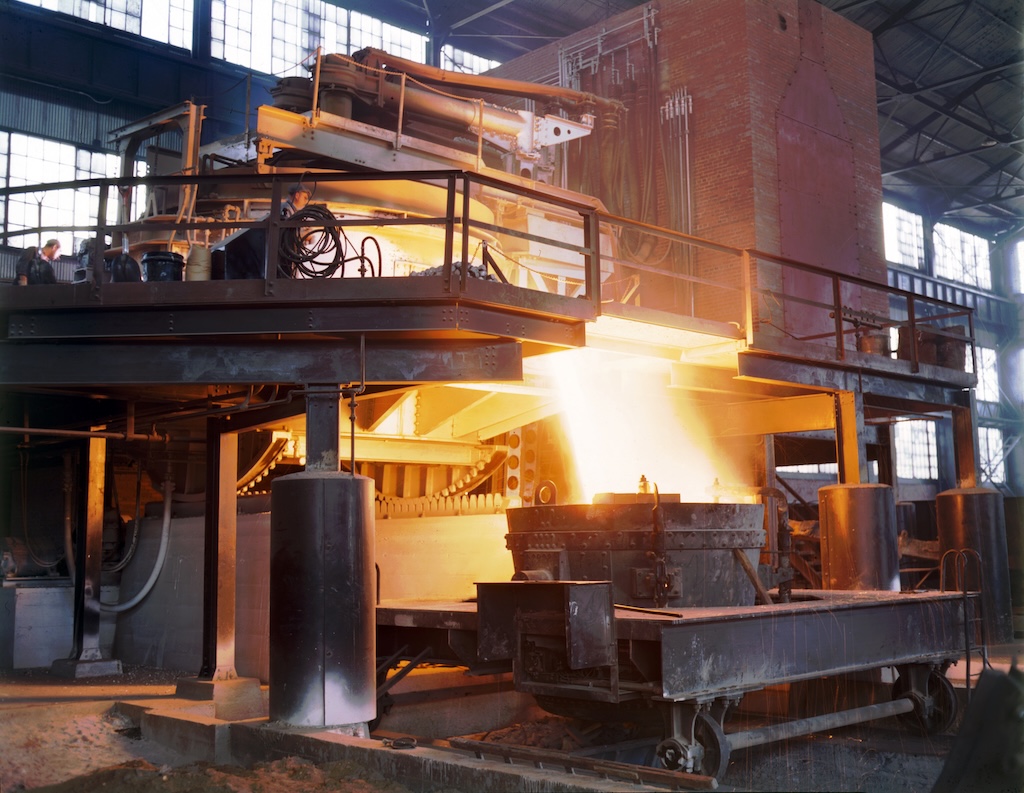
As 2026 begins, the EU’s Carbon Border Adjustment Mechanism takes effect, while Thailand passes its Climate Change Bill. (Photo: Wikimedia Commons)
New PDP to spark Thailand’s power sector growth: Which firms are 2026 front-runners?
Thailand’s power sector is heading into 2026 with a more upbeat outlook, even as broader economic challenges weigh on the country. Ahead of the release of a new Power Development Plan (PDP), Maybank Securities (Thailand) has upgraded its view on the sector from neutral to positive.
A key catalyst is the long-awaited PDP, expected to be released for public hearing soon. The new plan is likely to feature a larger pipeline of new power capacity than the previous draft, reflecting rising electricity demand driven by the expansion of data centers and accelerating electric vehicle (EV) adoption. Read more here
Vietnam targets 41.7% emissions cut by 2035 in draft NDC 3.0
Vietnam is preparing to submit an updated Nationally Determined Contribution (NDC), with officials saying at a recent technical consultation event that the draft has been assessed based on socio-economic impacts, financing needs, and potential costs.
Under the mitigation scenario, Vietnam projects economy-wide emissions reductions of 41.7% by 2035, compared with a business-as-usual pathway, requiring additional investment of up to USD 179.4 billion. Read more here
Sarawak to impose carbon levy on energy sector to fund carbon, circular economy roadmaps
Sarawak will introduce a carbon levy on facilities in the oil, gas and energy sectors this year, with proceeds channelled into a dedicated Climate Change Fund aimed at supporting the state’s long-term decarbonization strategy.
Revenue from the levy will be used to finance renewable energy deployment, energy efficiency programmes, forest conservation, grid modernisation and climate-resilience initiatives. The state is also laying the groundwork for forest carbon credits and a broader circular economy framework, positioning carbon pricing as a pillar of its development model. Read more here
Japan eyes Southeast Asia’s biomass potential as region targets 17 GW by 2030
Japanese companies and policymakers are increasingly viewing biomass as a strategic bridge for Southeast Asia's coal-dependent grids. This shift was underscored at a Jan. 14 webinar hosted by JCOAL and the Clean Energy Future Initiative for ASEAN, where experts highlighted biomass as a key tool for cutting emissions without dismantling existing infrastructure.
Southeast Asia is expected to add around 17 GW of biomass capacity by 2030, according to Monika Merdekawati, Senior Officer at the Sustainable and Renewable Energy Department of the ASEAN Centre for Energy, positioning the region as one of the world’s fastest-growing bioenergy markets. Read more here
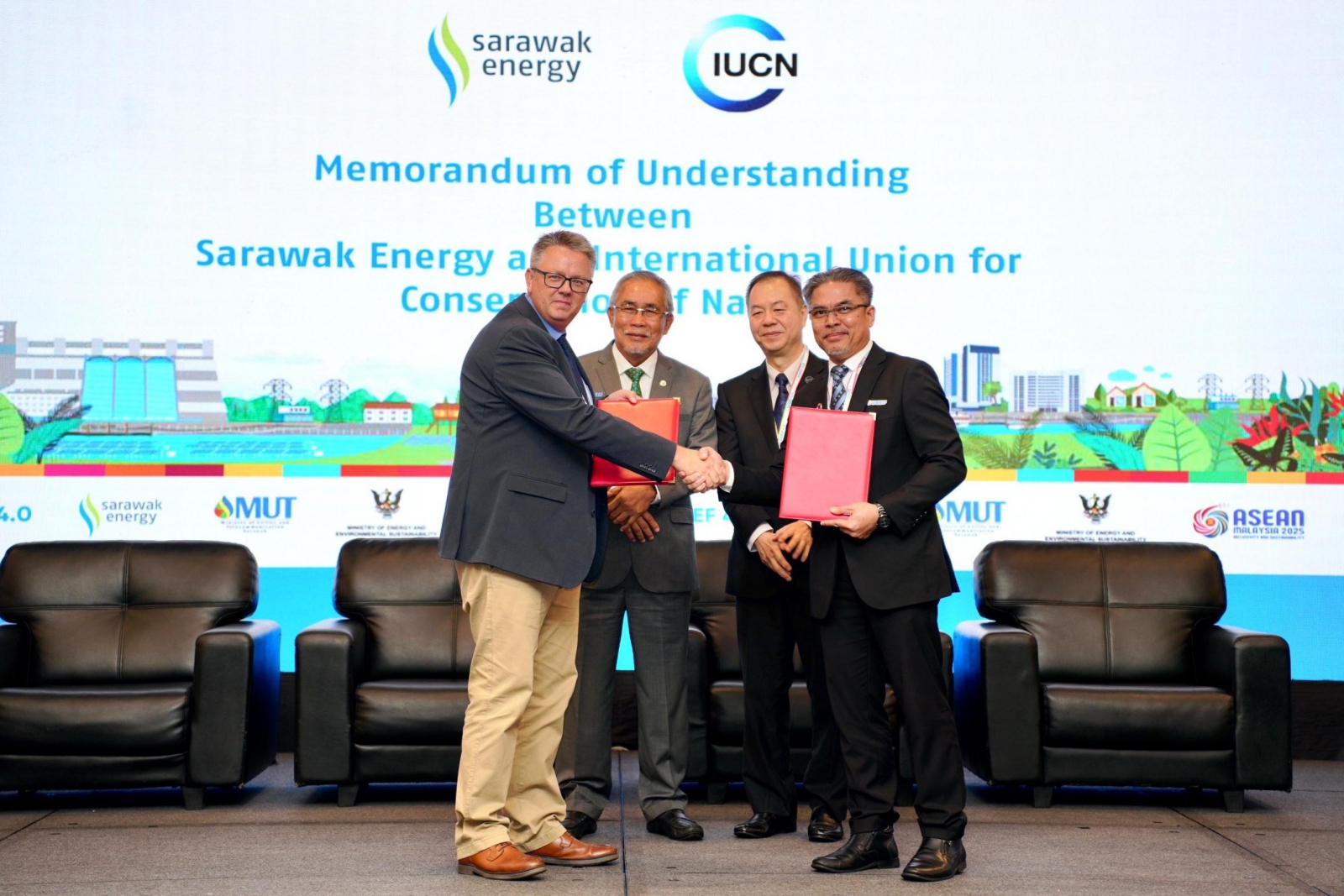
Sarawak Energy has been issued a carbon study permit and aims to collaborate with the International Union for Conservation of Nature. (Photo: Sarawak Energy)
ASEAN power grid secures LTMS-PIP 2.0 deal to expand Laos-to-Singapore power exports
The ASEAN Power Grid’s (APG) only existing multilateral electricity trading scheme has finally secured a new agreement. Malaysia’s national utility Tenaga Nasional Berhad (TNB) announced on Jan. 14 that the second phase of the Laos–Thailand–Malaysia–Singapore Power Integration Project (LTMS-PIP 2.0) has been formally signed, paving the way for an additional 100 MW of electricity exports from Laos to Singapore within the next two years.
Separately, Sarawak in East Malaysia is also pressing ahead with its power export ambitions. Sarawak Premier Abang Johari said he is confident electricity supply to Sabah could begin within two months, as the state continues to expand cross-border power connections. Read more here
After years of progress, Indonesia risks ‘tragedy’ of a deforestation spike
After years of uneven progress, deforestation in Indonesia is poised to accelerate, owing to widespread logging, expanding plantations and mining. In December, Indonesia’s forestry minister, Raja Juli Antoni, indicated the Southeast Asian nation had lost more forest during the first nine months of 2025 than the annual totals for any of the first three years of this decade.
A reacceleration in the rate of Indonesia’s deforestation risks drawing attention to the country’s spotty climate record. At No. 6, Indonesia ranks among the top greenhouse gas emitters after China, the U.S., India, the EU and Russia, according to the EU’s 2025 Emissions Database for Global Atmospheric Research. Read more here
Track ASEAN energy and carbon markets with clarity. Subscribe to RECCESSARY for policy intelligence and business-ready insights across Asia-Pacific.