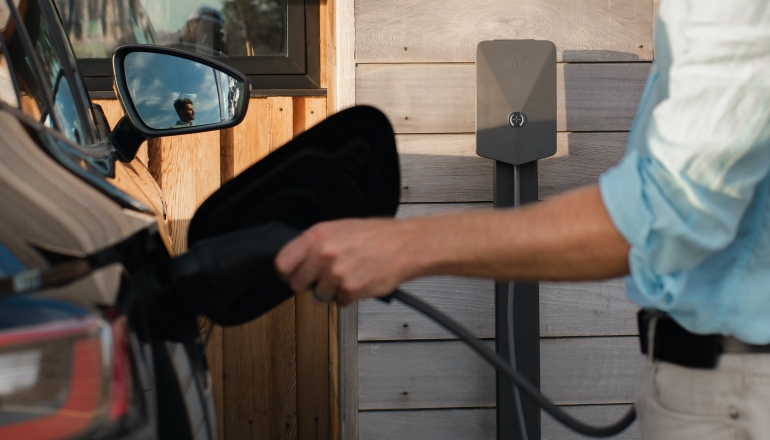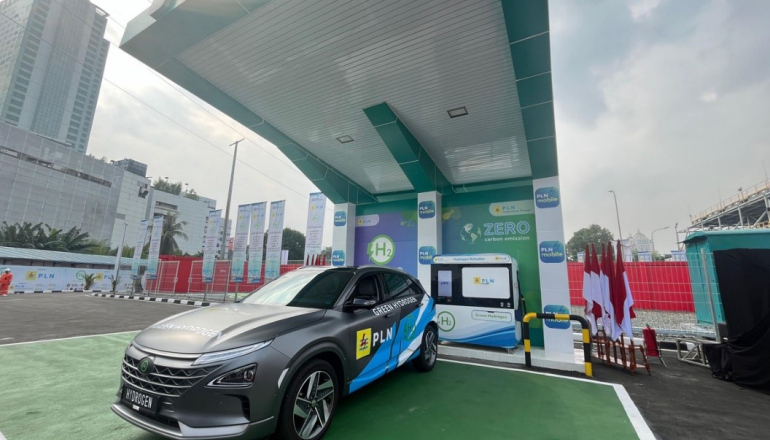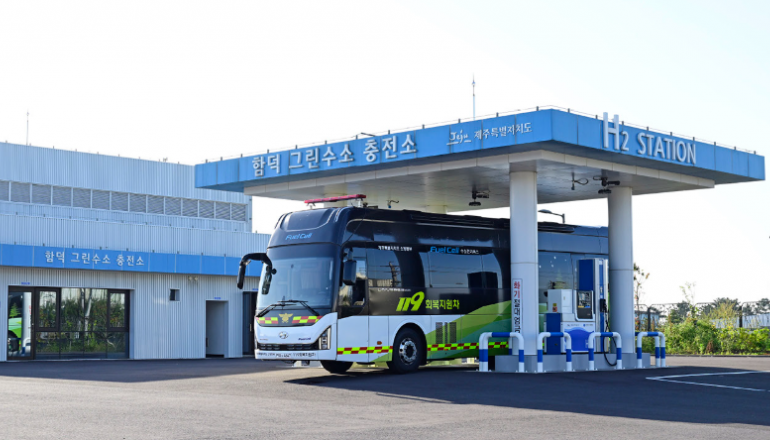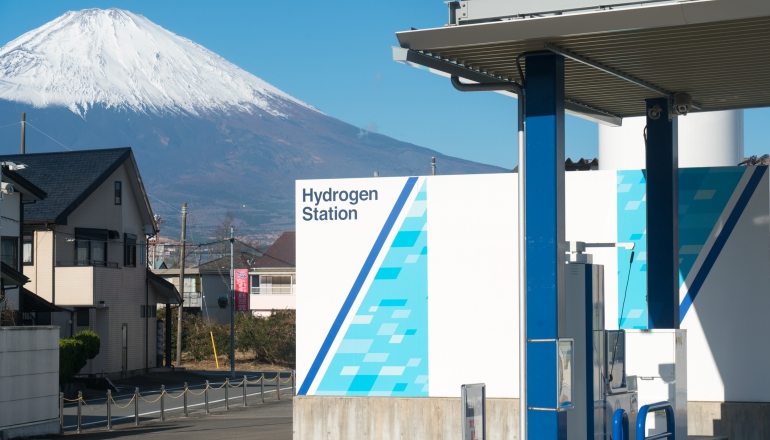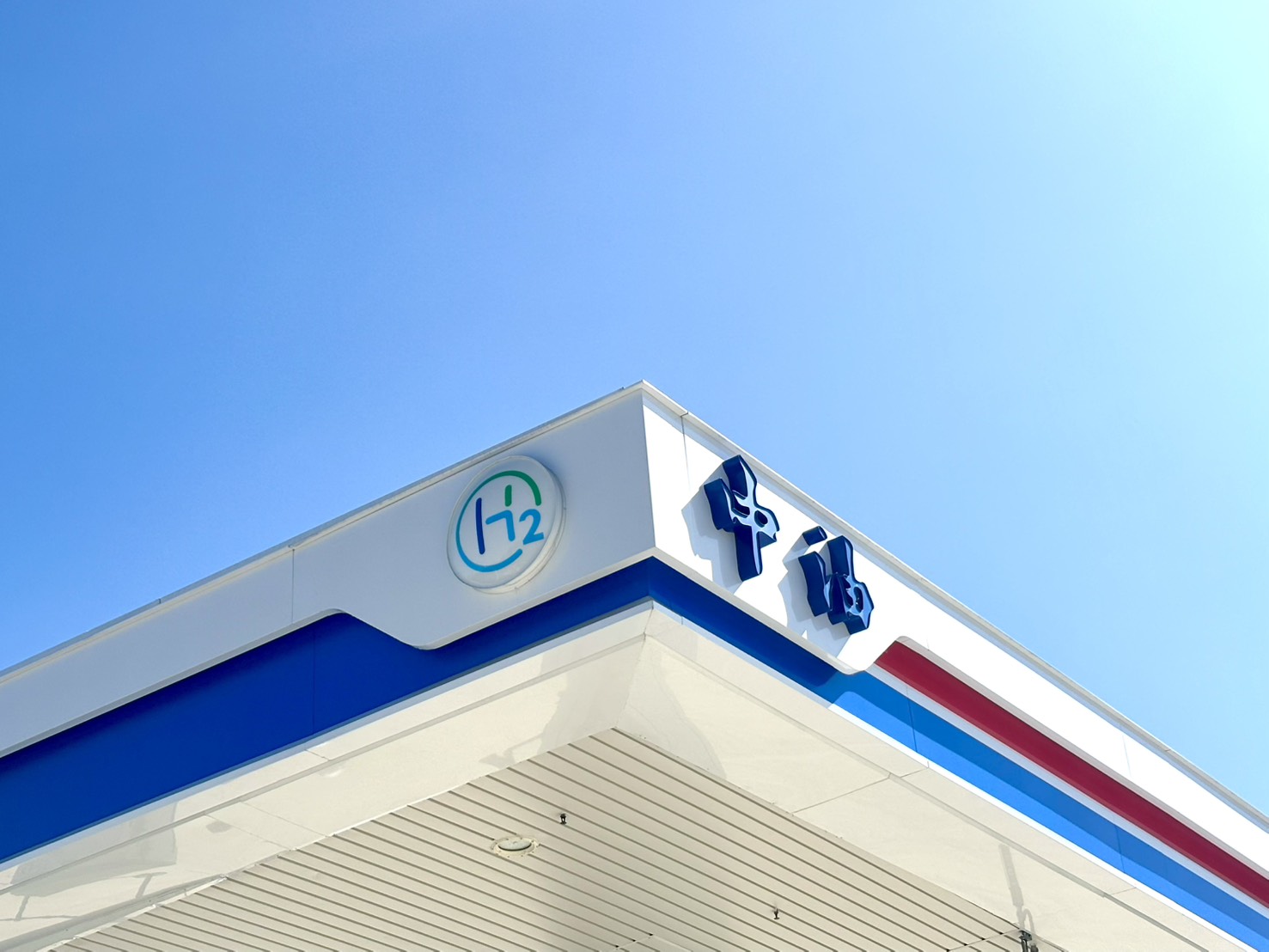
CPC’s Nanzi hydrogen station in Kaohsiung and Linde LienHwa’s demonstration hydrogen station in Tainan are launched on Dec. 12, marking a new chapter for hydrogen-powered transportation in Taiwan. (Photo: Daisy Chuang)
After years of anticipation, Taiwan’s first two hydrogen refueling stations finally opened on Dec. 12. CPC’s hydrogen station in Nanzi, Kaohsiung, and Linde LienHwa’s demonstration station in the Tree Valley Park, an industrial site in Tainan’s Xinshi District, are now operational, breaking the longstanding “chickenandegg” dilemma that has hindered the adoption of hydrogen vehicles and laying a foundation for wider use of hydrogen transportation in Taiwan.
However, with construction costs reaching NTD 150 million and CPC’s Nanzi station taking four years from planning to launch, questions remain about how soon a third or fourth station might follow. Beyond public support, what policy measures are needed to accelerate the rollout of hydrogen infrastructure?
CPC first to qualify for NTD 15 million hydrogen operations subsidy
Hydrogen is considered a key pathway for Taiwan to achieve net-zero emissions, with the government aiming for hydrogen to account for 9-12% of the power mix by 2050. Transportation is one of the primary sectors for hydrogen application, and to encourage private sector investment, the Ministry of Economic Affairs (MOEA) has introduced subsidies for hydrogen fuel and station operations.
According to Article 6, Section 2 of the Energy Administration’s Stationary Fuel Cell Power Generation System Subsidy Program, the combined subsidy cap for hydrogen fuel and operational costs will reach NTD 15 million in 2026. Currently, CPC is the only operator eligible for these subsidies.