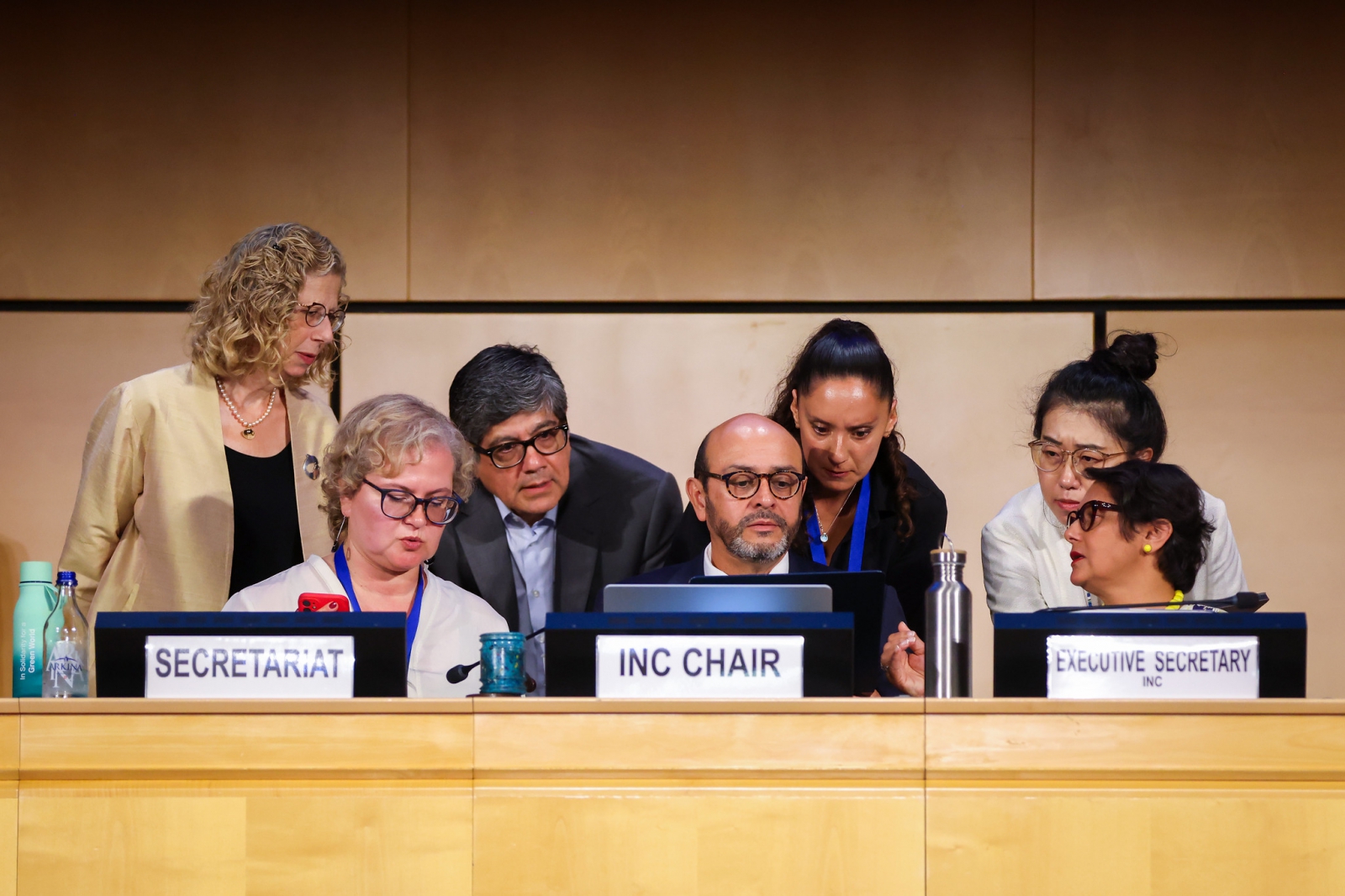
Luis Vayas Valdivieso (center), chair of the global plastic pollution treaty negotiations, discusses the draft with committee members. (Photo: Florian Fussstetter/ UNEP)
After an eleven-day marathon negotiation, the United Nations’ global plastic pollution treaty talks in Geneva concluded around 9:00 a.m. on Aug. 15. Although Chair Luis Vayas Valdivieso extended proceedings and urgently presented a second revised draft, the committee failed to reach consensus, ending the session abruptly. RECCESSARY analyzes the changes in those draft proposals and examines the stances of oil-producing nations, major plastic-consuming countries, and environmental groups.
Aimed at reducing plastic pollution, the treaty would become the world’s first legally binding agreement on plastic reduction if successfully adopted. Since 2022, six rounds of in-person negotiations have taken place, but divisions remain unresolved, particularly over whether regulations should target upstream production or downstream waste management. The latest draft takes a more flexible approach, emphasizing the need to adjust goals based on each country’s circumstances and economic conditions.
Division 1: Source reduction or downstream management?
On issues like climate change and plastic reduction, UN member states are broadly divided into two major alliances: High Ambition Coalition and Like-Minded Group. The former pushes for more aggressive targets to curb global temperature rise, with members including the EU, the U.K., and countries across Africa and Latin America. The latter composed mainly of oil-producing nations like Saudi Arabia, Kuwait, Iran, Malaysia, and Russia, which favors voluntary measures over biding plastic reduction commitments.