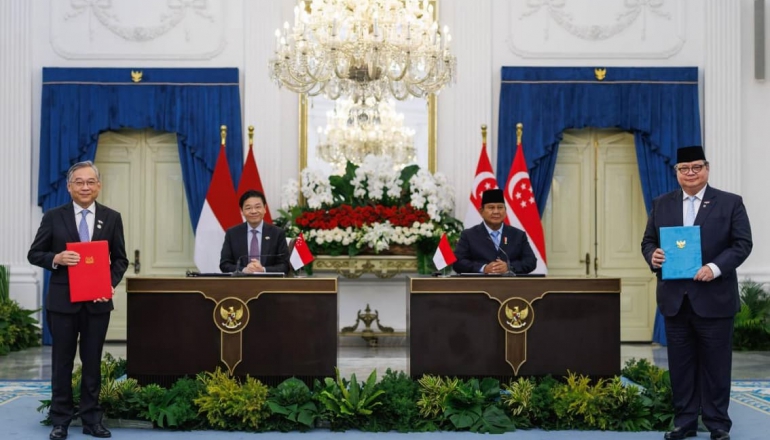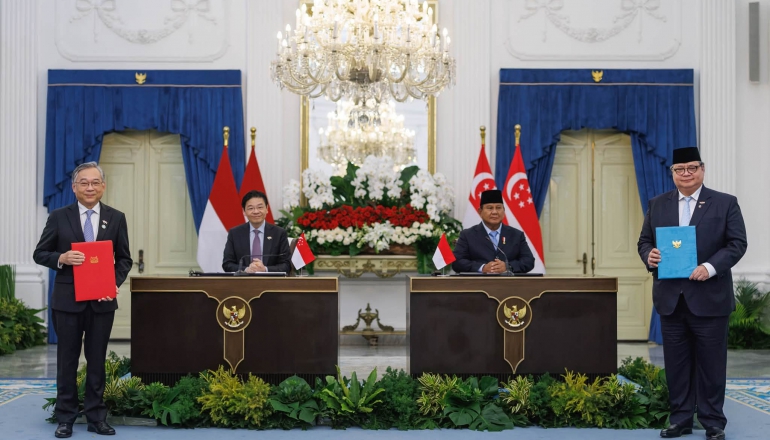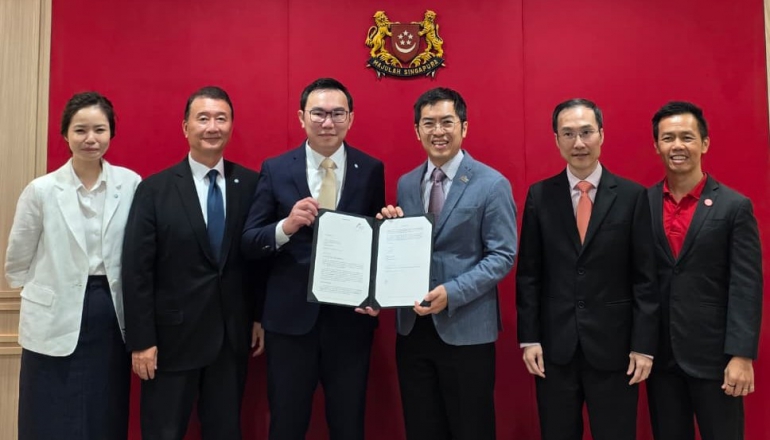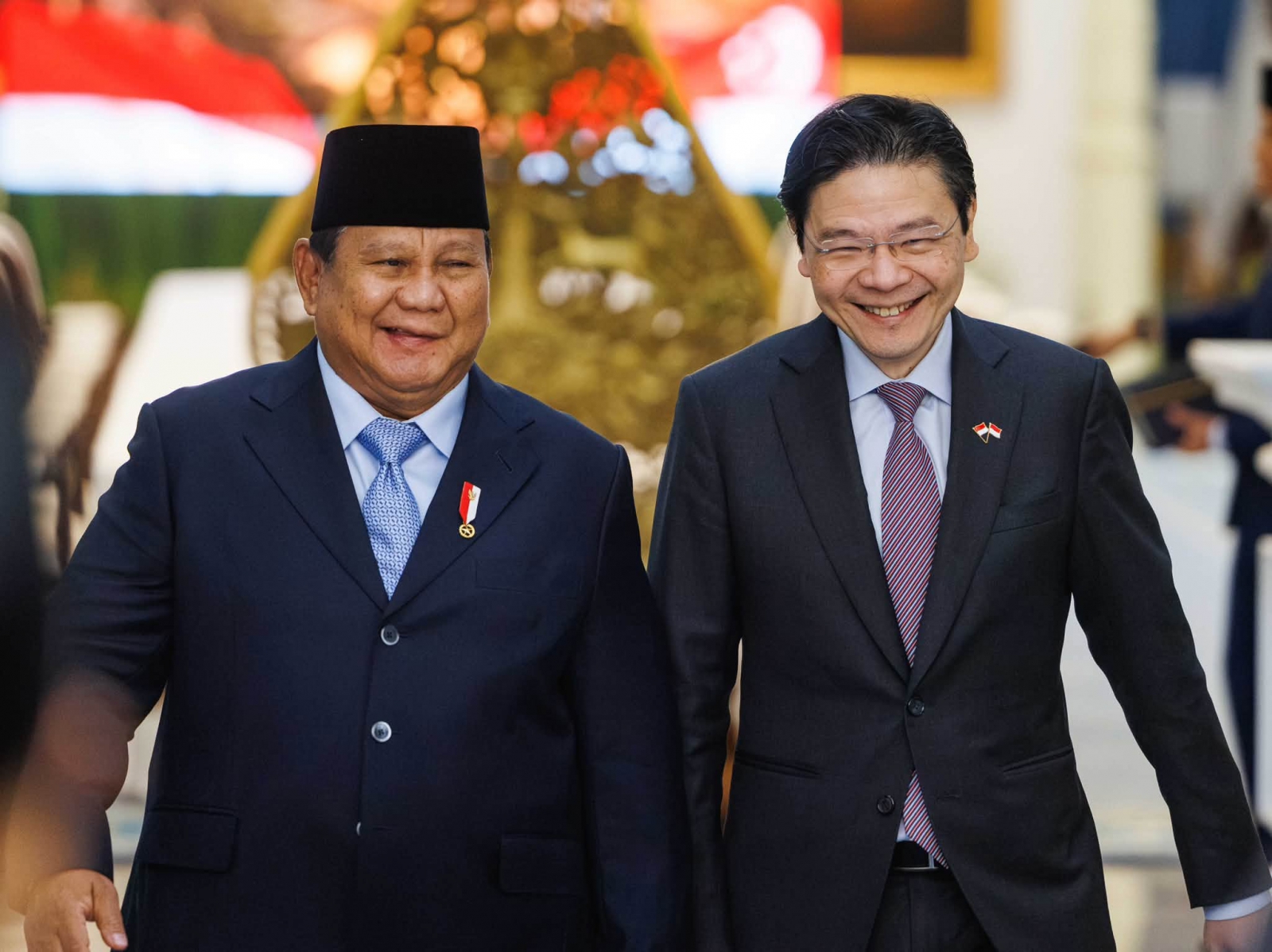
Singapore Prime Minister Lawrence Wong (黃循財) visited Indonesia in July, meeting President Prabowo Subianto and witnessing the signing of several agreements between the two countries’ governments and businesses. (Source: Lawrence Wong's Facebook)
Cross-border electricity trade between Singapore and Indonesia took a major step forward in July. A series of memorandums of understanding (MOUs) were signed in the presence of the two countries’ leaders, giving the proposed low-carbon electricity trade greater political backing and sending a positive signal to the market.
But turning these commitments into a commercially viable arrangement that meets the needs of all parties will require many details to be worked out.
RECCESSARY spoke with the Sustainable Energy Association of Singapore (SEAS) and several industry experts, who expressed strong expectations for electricity trade between Singapore and Indonesia. At the same time, they highlighted significant uncertainties surrounding the cross-border partnership. These include how wheeling charges will be calculated, how the cost of subsea infrastructure will be shared and what role energy regulators will play.
Unlock the full article to explore three key takeaways:
- Singapore plans to import 6 GW of low carbon electricity by the end of 2035, with 3.4 GW expected to come from Indonesia.
- Indonesia estimates the electricity trade could generate USD 30 billion to USD 50 billion in solar investment and create 418,000 jobs.
- Experts expect electricity exports to Singapore to begin as early as 2028, but PLN’s role and ownership of transmission infrastructure remain key unresolved issues.