This week’s ASEAN sustainability update highlights corporate shifts in response to rising energy risks and accelerating green manufacturing trends. Thailand’s fuel and power price surge is pushing retailers to reassess renewable strategies, while Vietnam’s Vingroup is moving away from LNG toward renewables and storage. In Malaysia, a South Korean firm will build a clean energy-powered semiconductor-grade polysilicon plant in Sarawak. Key ASEAN developments for March 30–April 5.
From cost pressures to clean power: Thai businesses rethink energy strategy
As fuel and electricity prices climb, businesses across Thailand are reassessing their energy strategies, stepping up investments in rooftop solar, electrifying transport fleets, and improving energy efficiency. Interest is also growing in advanced nuclear technologies, electric vehicles, and energy storage solutions.
In the near term, major consumer goods producers—including instant noodle giant Thai President Foods and Coca-Cola bottler Haad Thip—have pledged to absorb rising costs rather than pass them on to consumers, aiming to avoid further weakening already soft demand. Read more here
Malaysia set for Southeast Asia’s first clean energy semiconductor-grade polysysilicon plant
Southeast Asia’s first semiconductor-grade polysilicon plant powered by clean energy is set to be built in Sarawak, Malaysia.
The International Finance Corporation (IFC), a member of the World Bank Group, announced on March 30 that it will extend a loan of up to USD 125 million to OCI TerraSus (OCI TRS), the Malaysian subsidiary of South Korea’s OCI Holdings. The financing will support the construction of an advanced chip material facility, which is expected to begin commercial operations in 2029. Read more here

Southeast Asia’s first semiconductor-grade polysilicon plant powered by clean energy will be located in Sarawak. (Image: iStock)
Vietnam revives nuclear power with Russia deal for 2,400 MW plant
Vietnam and Russia signed an agreement on March 23 to build the Ninh Thuan 1 nuclear power plant, reviving a project shelved in 2016 over cost and safety concerns. The deal covers two Russian-designed reactors with a combined capacity of 2,400 MW.
The International Energy Agency projects Vietnam's electricity demand to double by 2030, driven by rapid industrialisation and data center growth. For Russia, the deal reinforces its push to export nuclear technology across Southeast Asia. Read more here
Thailand’s new cabinet faces energy crisis: Can it keep power prices competitive?
Thailand formed a new cabinet on March 31, ending months of limited authority under a caretaker government and clearing the way for stalled energy initiatives.
The transition comes at a difficult moment, as a global energy crisis has sent diesel prices surging from USD 90 to USD 210 per barrel, roughly three to four times pre-crisis levels, according to Finance Minister Ekniti Nitithanprapas. Business leaders are calling on the incoming administration to treat energy prices as its most urgent priority. Read more here
Vingroup seeks exit from $6.8 billion LNG project as energy risks escalate
Vietnam’s largest liquefied natural gas (LNG) power project is facing a potential halt, as conglomerate Vingroup moves to abandon its development in favor of renewable energy and battery storage, citing mounting financial risks for both the company and the state. Read more here
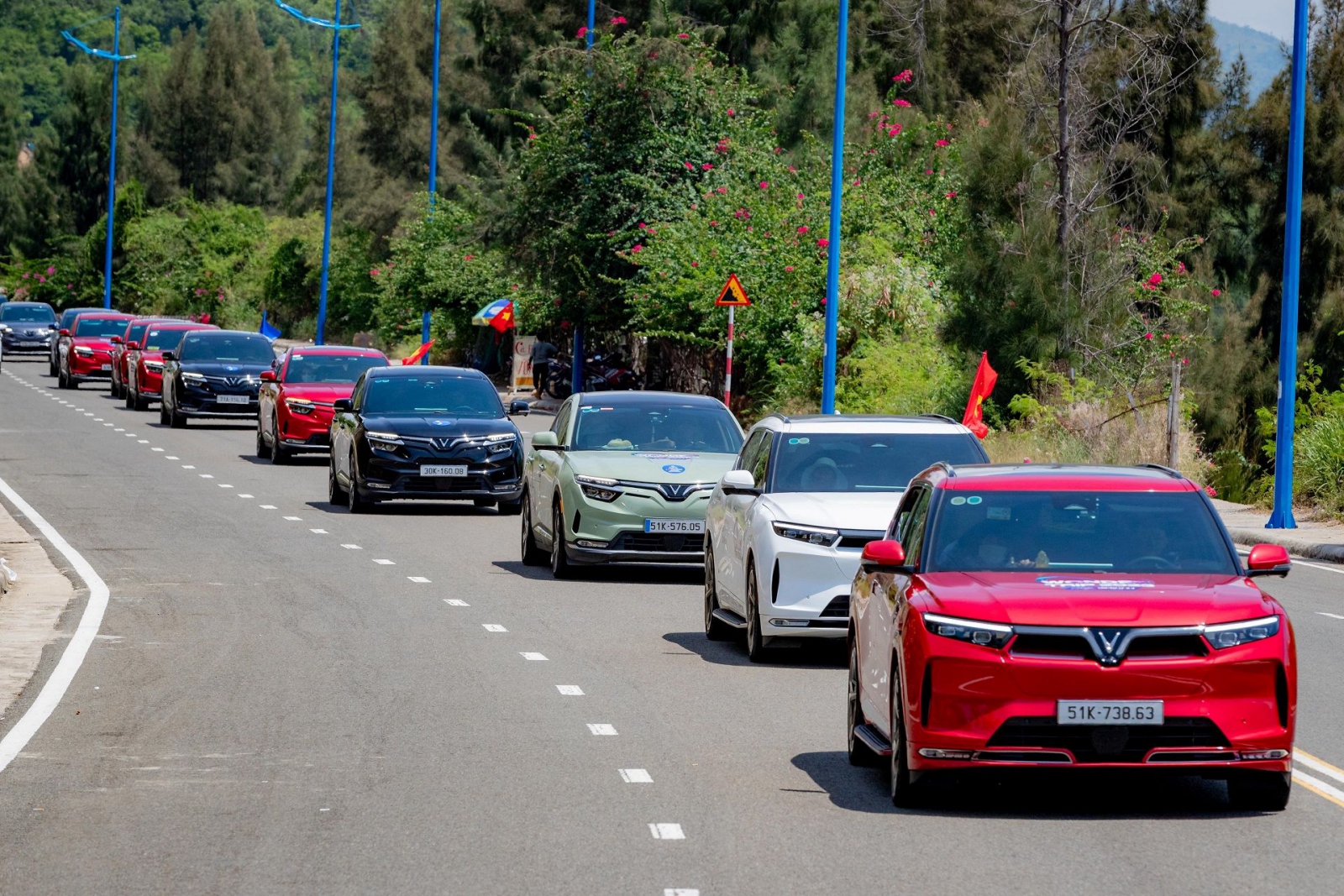 VinFast announced an extension of its trade-in incentives for customers switching to electric vehicles. (Photo: Vingroup)
Foxconn integrates nature-based solutions into supply chain with Vietnam mangrove project
Foxconn Technology Group held its first Global Nature-based Solutions Summit in Hanoi on March 31, launching a cross-border initiative that calls on its supply chain partners to contribute to ecosystem restoration, with mangrove restoration in Vietnam as its first pilot. At the summit, Foxconn also joined hands with ten key supply chain partners to sign a joint NbS declaration. Read more here
Fuel shock drives EV surge across Asia-Pacific, Thailand commercial uptake set to rise
Asia-Pacific countries reported a surge in electric vehicle (EV) registrations in March 2026, as rising fuel prices and expanded subsidy programs accelerated the shift away from combustion engines.
Thailand’s battery electric vehicle (BEV) market is projected to exceed 120,000 units this year, supported by volatile oil prices that are pushing consumers toward alternatives to gasoline-powered cars, according to the Electric Vehicle Association of Thailand (EVAT). Read more here
Malaysia to revise renewable energy policy to strengthen energy resilience
Malaysia, despite being a net energy exporter, is growing increasingly wary of the ripple effects from rapidly shifting global energy markets.
The country’s Energy Commission warned that consumers should brace for higher electricity tariffs this year. Meanwhile, the government is preparing to reassess policies on solar power and renewable energy exports as part of broader efforts to strengthen national energy resilience. Read more here
Energy as a competitive lever: How Vietnam and Thailand are competing for green manufacturing investment
Vietnam has twice Thailand's renewable energy share, but that number alone doesn't determine where manufacturers put their factories. Based on interviews with energy analysts, RECCESSARY finds that grid reliability, transmission infrastructure, and policy design, are the real variables shaping where foreign investment flows in Southeast Asia's two biggest manufacturing hubs. For companies with RE100 or CBAM compliance obligations, the gap between renewable capacity on paper and renewable electricity actually deliverable to a factory is where competitive risk lives. Read more here
Vietnam’s nuclear revival meets a tightening global uranium market
Vietnam’s return to nuclear power comes at a more complex moment than earlier policy cycles may have anticipated.
Globally, nuclear energy is regaining political support as governments seek firm, low-carbon sources of electricity. From China to the United Kingdom and the United States, countries are extending the life of existing reactors while planning new capacity. For Vietnam, where electricity demand is rising rapidly and decarbonisation pressure is mounting, the appeal of nuclear power is clear.
Yet the global context has shifted. Vietnam is no longer entering a dormant market — it is entering one that is tightening. Read more here
Waste colonialism is alive in Southeast Asia
In August 2025, Malaysian campaigner Wong Pui Yi stood outside the UN headquarters in Geneva and made an appeal to Global North nations: “Stop treating the Global South as the rubbish bin for plastic waste you cannot handle.”
During that meeting, representatives from 184 countries failed to reach an agreement on a treaty to end plastic pollution. But the need for one has not gone away, particularly for Southeast Asian nations. Read more here
Track ASEAN energy and carbon markets with clarity. Subscribe to RECCESSARY for policy intelligence and business-ready insights across Asia-Pacific.