





WHA expands into Thailand data centers, urges grid upgrades for renewables
Thailand’s leading industrial estate developer WHA Group is expanding into data center parks, as it seeks to capture rising demand from foreign technology firms.

Thailand’s leading industrial estate developer WHA Group is expanding into data center parks, as it seeks to capture rising demand from foreign technology firms.

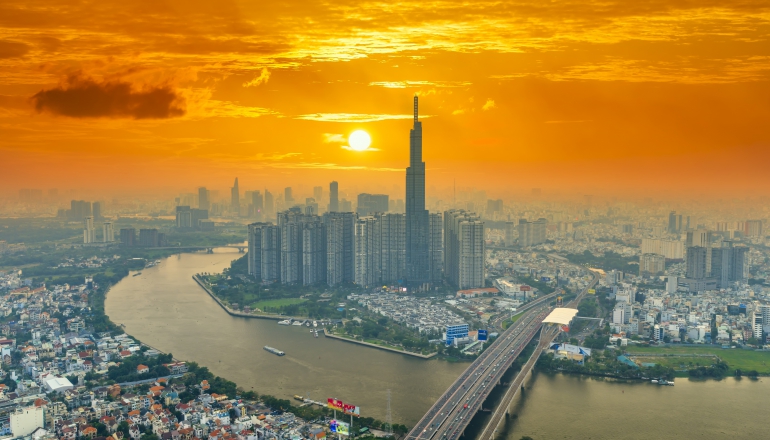
Following Samsung’s landmark direct power purchase agreement (DPPA) in Vietnam, Foxconn on June 9 announced a strategic partnership with Canadian investment firm Brookfield to co-develop 1 GW of renewable energy capacity in the country.


Following Samsung’s landmark direct power purchase agreement (DPPA) in Vietnam, Foxconn on June 9 announced a strategic partnership with Canadian investment firm Brookfield to co-develop 1 GW of renewable energy capacity in the country.

Taiwan's AI and semiconductor industries could add over 5 GW of electricity demand by 2030, while 12-day gas reserves expose supply risk. Investors say energy resilience now shapes the investment case for Taiwan.


Indonesia's Danantara subsidiary DSI will become sole export channel for coal, palm oil and nickel. IDX fell 3.54% on the announcement as S&P warned of execution risk and trade disruption.

A newly published report by Indonesia’s human rights commission, Komnas HAM, includes new evidence of environmental and public health harms caused by the nickel mining industry in eastern Indonesia.


Textile recycling startup Syre plans to invest $750 million in a fabric recycling facility in Gia Lai Province, central Vietnam, offering clients such as Nike and Target an alternative supply chain solution outside China.

New Wide Group cut Vietnam plant emissions 50% ahead of SBTi targets using biomass. But Scope 3 upstream materials now exceed Scope 1+2 combined—the next frontier for Taiwanese textile makers.


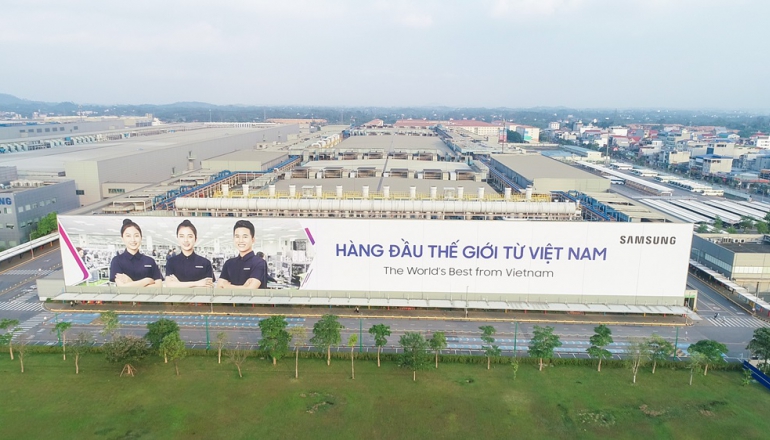
Samsung Electronics’ Vietnam Thai Nguyen Co. (SEVT) announced on June 1 that it has become the first company in Vietnam to complete negotiations and sign a direct power purchase agreement (DPPA) via the national grid—setting a new milestone for the countr

NVIDIA's DSX platform tackles AI factory overprovisioning—up to 40% wasted power—while Vera CPU delivers 1.8x faster agentic workloads. Taiwan supply chain now spans 150 partners for Vera Rubin.


Thailand’s leading industrial estate developer WHA Group is expanding into data center parks, as it seeks to capture rising demand from foreign technology firms.

Singapore-based conglomerate Keppel has stepped up its decarbonization efforts, boosting its renewable electricity usage by 20 percentage points within a year.


Southeast Asia, home to a global manufacturing supply chain, plays a key role in achieving net zero goals. Via Reccessary's market information, research, and sustainability data, companies can stay ahead of the trend and seize opportunities of the energy transition in Southeast Asia.
About usWhether you are looking to purchase green energy or considering investing in renewable energy projects, our compilation of the energy environment, policies and regulations, as well as the market potential of various countries will provide you with a quick overview of the current situation, challenges, and viable green energy solutions in Southeast Asia, allowing you to develop energy transition strategy.
Buyers' ToolkitAccess essential ESG data intelligence of major companies across industries worldwide. Review your own performance on the path to carbon reduction and take actions to enhance your competitiveness.
MoreAn ESG score isn't just a number. Share your ESG performance to show your progress toward sustainability and prove that your company is a forward-thinking entity that will satisfy investor's needs.
More
The compilation of carbon taxes under different schemes enables companies to assess the carbon cost for operations in different countries.
Carbon labels show the carbon emissions generated by companies and products at the stages of raw materials, manufacturing, transport, distribution, usage, and disposal, as a consideration for consumers when making purchases, and to encourage companies to go low-carbon in their product development.
Carbon trading mechanisms are introduced by governments to encourage businesses to reduce their emissions and sell excess credits for revenue, thus achieving carbon neutrality.
Profit/non-profit renewable energy initiatives, such as RE100, aim to stimulate the use of renewable energy by businesses and communities.
Green energy labels are created to ensure a reliable source of Renewable Energy Certificates (RECs), which come in various types depending on regional requirements.
Renewable Energy Certificates (RECs) or Energy Attribute Certificates (EACs) is a tracking tool acting as a proof of green power generation and consumption, with each certificate representing 1 MWh of green electricity.